
Tag: fly fishing

Opening Day in the Sierra is almost upon us (April 27), and according to writer Darcy Ellis, it heralds at least a decent season. Ellis penned “Epic season taking shape,” but after reading her piece in the Inyo Register Eastern Sierra Fishing Guide, I’m not sure “epic” is exactly the word the average fisherman would use.
“All of the elements have come together in 2013 for a banner fishing season: plenty of water, even more fish and lots of angling-related action for fishermen and their families,” read the article’s lead sentence.
Ample water is based on an interview with a Dept. of Fish and Wildlife environmental scientist, quoted as saying that “… we’re not anticipating low water this year.” Adequate water is one of the key criteria before the DFW will plant fish.
With the Monrovia fire still smoldering as I write this, it may surprise parched Southern Californians to hear this sort of prognostication. It also surprised the California Dept. of Water Resources.
“The snowpack is at 54 percent of normal, so it’s not looking good,” said Jennifer Lida, an information officer for the department.
The last manual survey of the year, in which DWR surveyors actually go into the mountains instead of relying on electronic sensors, is scheduled in about two weeks on Echo Summit, near Lake Tahoe. This measurement traditionally documents the wetness of any given season. Snowpack normally provides about a third of California’s water as it melts into streams, reservoirs and aquifers. The short-term good news is that “most key storage reservoirs are above or near historic levels,” according to the department.
Given this scenario, I’d get my fishing in early. Last year in the Golden Trout Wilderness, one favorite creek had turned into runs of unconnected water by August.
Still it looks like there will be lots of trout in the middle Sierra, the L.A. mecca for fly fishing. According to Ellis’s article, DFW plans to plant just shy of 1 million pounds of trout this season. You can check the planting schedule here.
Finally, there certainly will be family events during the summer. One that’s new is Trout Fest on June 29 at the Hot Creek Hatchery outside Mammoth. The flier promises kids going to the event that they will be able to “catch a fish, feed a fish, taste a fish, touch a fish.”
See you on the river, Jim Burns

The City of Los Angeles is busy presenting the proposed 2013 Los Angeles River Recreational Zone Pilot Program for Glendale Narrows with the second meeting occurring right now at City Hall. Unfortunately, I couldn’t attend, but will post when the final meeting is to occur, sometime next month. The idea is to get public comment on a plan to open up recreation within that approximately seven-mile stretch of our river.
I’ve read the pilot program and all you kayakers out there should be pretty excited. If passed, the proposal would mean that individual non-motorized boaters would be able to launch from North Atwater Park, Steelhead Park and Marsh Park, from Memorial Day through Labor Day, when there is very little chance of a flood from torrential rain. That also means you could be fly fishing from your kayak as well, because the proposal also calls for fishing, bird watching and hiking. Swimming would still be a no-no. And float tubes are just plain impractical because of low water.
Dept. of Fish and Wildlife regs would then apply in the river.
I really wonder what this would mean for the eradication of carp in the river, as the U.S. Army Corps views it as an invasive species, even though carp have been resident for decades.
From the report: On Aug. 28, 2012, Governor Brown signed Senate Bill 1201, which amended the Los Angeles Flood Control Act “to provide for public use of navigable waterways under the district’s control that are suitable for recreational and educational purposes, when these purposes are not inconsistent with the use thereof by the district for flood control and water conservation.”
Stay tuned and see you on the river, Jim Burns
The Buddhists say that the curse of the human realm is change. And if you live long enough, you tend to agree with them.
Of course, even if you haven’t lived a long time, only a fool won’t recognize that change comes in two flavors: good and bad. Maybe some would quibble with me and argue change can be neutral, but those changes aren’t the ones any of us remember. A neutral change is akin to no change. Most of us see the world in Manichaean terms — a big word for good versus evil. Change is flavored by one side or the other.
Maybe that’s a tad too much philosophy for a Monday morning, perhaps a shadow of tomorrow’s election, but change felt palpable on the river this weekend, and I wondered which flavor it would eventually be.
I took advantage of the 80-degree weather to explore three favorite fishy spots, looking for carp. One thing that doesn’t change — I often get skunked by these elusive fish. Water in the Glendale Narrows section is two-to-three feet deep in most spots. Consequently, fish see you as quickly as you spot them. And, at least on the fly, sight fishing is the best way to land one, and it has certain risks.
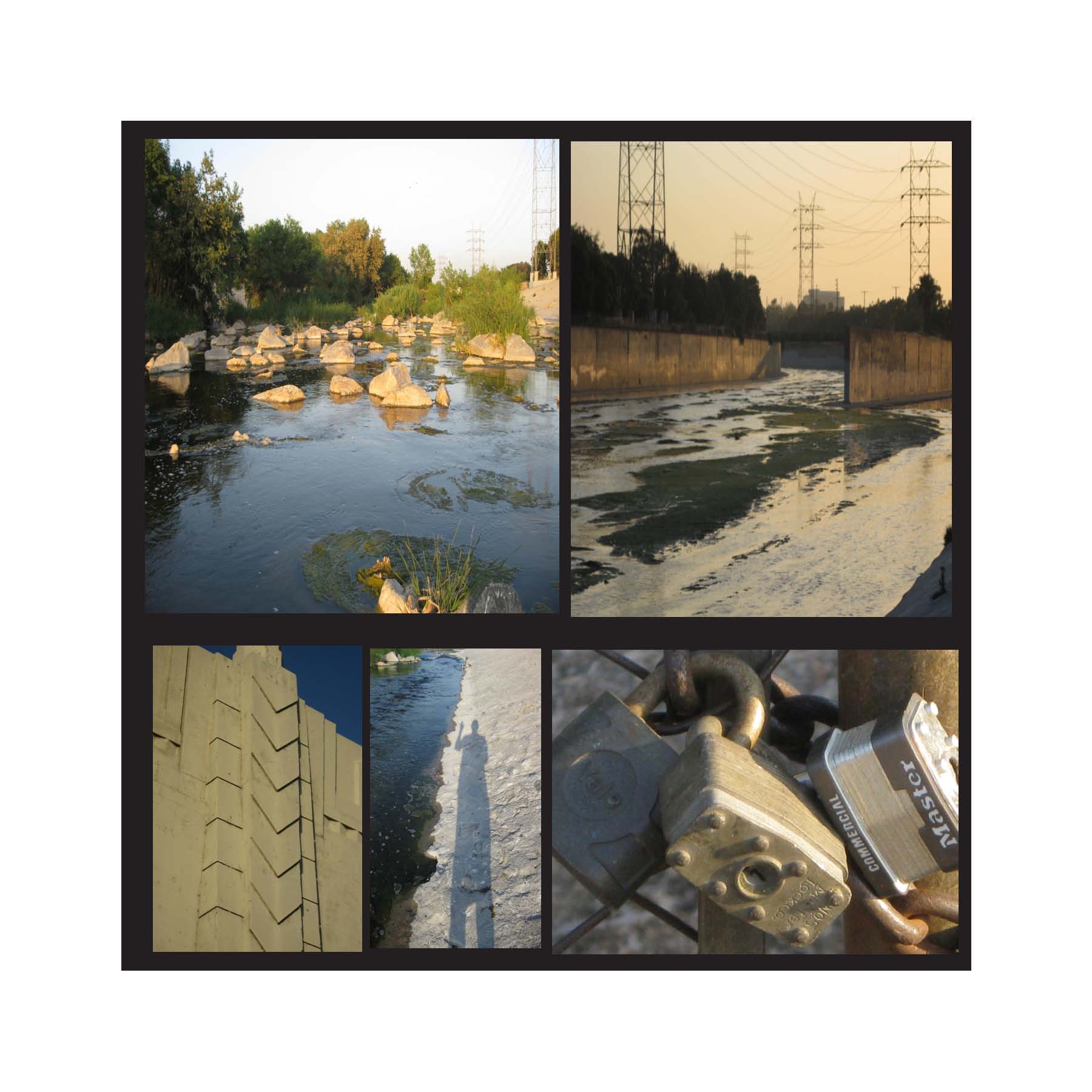
My boots scraped down the river’s rip-rap skin, close to the giant bunkerlike concrete abutments that once held electric Red Line tracks, jutting out from the old Glendale Avenue bridge. There, the wide concrete swatch of the river’s artificial bottom is entirely concrete, and as I watched the water’s constant flow, I realized this vista I’d taken for granted was vulnerable to change.
By now, if you follow “riverly” events, you know that clothier Miss Me has breathed new life into the stalled keystone environmental feasibility study with a substantial gift. As Molly Peterson reported for KPCC: “The Army Corps of Engineers study, nicknamed ARBOR (Alternative with Restoration Benefits and Opportunities for Revitalization), was $970,000 short of the $9.7 million needed to proceed.”
And the clothing company has offered almost $1 million to close that funding gap. The Corps lead planner Kathleen Bergmann recently told me that the money has to pass through some approval hoops. “We are moving forward on last year’s funds. While funds have been offered, we must receive permission to receive those funds, and sign an agreement. Congress has set up a very precise method for doing this, and must be notified as well. We are in the process of taking those steps to get approval to receive the funds.”
So green is green, and it’s great to know that the money is finally available, even given the ridiculous amount of time it’s taken to fully fund the study during the Great Recession.
“Remember that the fundamental purpose of the Study is to improve the ecosystem values in the LA River– and that means riparian habitat that is good for wildlife, including fish species,” said Carol Armstrong, director of the Los Angeles River Project office. “The Study will go public with its alternatives early next year. Once finished, it will recommend one of those as its recommended project, which will then go to Washington, DC, for approval by the federal powers-that-be. So, those alternatives are under development now. Basically we’re moving from Study to Project now that the Study is fully funded.”
I believe it’s a given that at least sections of concrete are on their way out. Since I began this post on a mystical note, look at the signs.
— The Paddle the River program, although only around for eight weeks a year, is in its second year, with a five-year contract. Now apparently, program leaders have aspirations to paddle the seven miles of Glendale Narrows as well.
— Gov. Jerry Brown signed SB1201 into law this year, which broadens the L.A. County Dept. of Public Works 100-year-old mission of flood control and storm water management to include education and recreation. Friends of the L.A. River and UCLA’s Environmental Law Clinic spearheaded the effort that was then introduced by State Senator Kevin de Leon.
— I haven’t heard of any tickets being issued to those plying the river’s bottom during the last few years.
— Also, I haven’t heard of LAPD harassment of activists since Jenny Price’s river tour was disrupted over a turf war some three years ago.
Add to all that Arroyo Seco Foundation Exec Tim Brick’s recent grant acquisition of over $3 million to improve the Hahamongna watershed above JPL in Pasadena. As he wrote me in an email, “A key goal of this project is to improve conditions for the trout and other fish in the Arroyo stream. The water intake facilities were not designed to protect the fish, but we want to change that by redesigning the facilities and improving the habitat there. This brief video shows the facilities and the area to be improved: Water Facilities in Hahamongna Canyon.”
It’s time for optimism, to see the change as very good. In other words, this puppy is going to happen, because after decades of inertia, the political will has arrived to bring in the bucks.
But am I the only one who gets a little nervous with big money?
As I trudged along in the autumn heat, marveling at this wonderful liquid behemoth, I wondered what the change would actually look like, and I felt that nagging bite of Manichaeism again. I want to be able to fly fish, enjoy the din of the I-5, ponder the eastern vistas of Griffith Park. I don’t want to buy souvenir T-shirts a la San Antonio’s River Walk stalls, although enjoying a crafted beer by water’s edge wouldn’t be all bad.
So let me ask you, what do you want?
— See you on the river, Jim Burns
The only time I’ve been up to the East Fork of the San Gabriel River, I got the last parking spot, passed by a pretty rough crew, and — most importantly — got skunked. The last part is why I haven’t been back.
In today’s Los Angeles Times, Louis Sahagun pens a remarkably scary portrait of a river that’s facing real problems, both from budget cuts that make law enforcement difficult and from the interests of competing groups.
What I found telling is that of the players Sahagun interviewed, not one was a fly fisherman. Believe me, we’re out there in the Sab Gabes, but I think word is out that the East Fork needs some serious work before it once again becomes a local fishing destination.
See you on the river, Jim Burns

Beginning of rant:
If I didn’t fish, I probably wouldn’t care about plastic bags or banning them. But, hey, I do fish, and enjoy plying our urban waters as often as I can. And that’s why I support the Pasadena single-use plastic bag ban that goes into effect July 1. Here’s some background on the decision.
You can say all you want about the evils of the nanny state, but here’s a personal review of how well our waters have fared without our Uncle Nanny:
— item, 1998, West Fork weekend overrun overwhelms me. How much trash can anyone actually leave in a river? Take a look at these recent, enlightening photos from West Fork San Gabriel Conservancy.
— item, 2007, used throwaway diaper floats by, blind-pooping me in the leg, on Bouquet Creek. Admit to gag response.
— item, 2010, Hanging out on the L.A. River with new-found, grade-school kids who want to learn to fish. No child should have to play near trees fouled by dozens, and dozens and dozens of filthy plastic bags. Drove home truly pissed off.
So, if you’re an urbanite who is equally pissed off about the bag ban, I suggest you go down to the L.A. River, or to any of our beaches, or to the mountains and pick up some of the junk that’s been left behind. For some reason, cleaning up after others when you’re supposed to be enjoying yourself brings it home.
And if you’re a libertarian fly fisher, come up with a better solution than the ban. Not theory, somehow based on the Constitution, but something that might actually decrease the junk floating around the Southland.
Meanwhile, I’ve been hoping that either the city or local business will give bags away for a day, as the Department of Public Works folks did in La Canada last year. No word as of this writing. Once you’ve got your own bags, just keep them in your car. It took me about three months to get tired of walking into the store sans bag. That’s what my wife calls “training” … She’s right!
Now, about those plastic bottles …
End of rant.
See you on the river, Jim Burns
When I first began exploring the L.A. River, problem No. 1 was finding it. My son and I encountered lots of barbed wire fences, dead-end big box parking lots, and industrial parks, all situated basically on the river, and all with no access granted. That was two years ago, and even though I now have my favs that get us to the carp, the river is basically an insider’s secret.
So, too, are the pocket parks scattered around its concrete banks. The first time I heard about the Yoga Pocket Park in Atwater Village, I thought someone was pulling my downward dog-facing legs … not so. The originators of this tiny green space — I believe the lead was Northwest Trees, but can’t swear to it — were afraid that a more traditional exercise park, based on stations for strenuous physical exercise, would bring gangs.
Today, walking north from the golf course in Atwater Village, through Steelhead Park (another hard-to-find spot, but from the golf course parking lot, head toward the freeway and you’ll see it), you’ll see North Atwater Creek Pocket Park after about 10 minutes of hoofing. Check out the waters here as well …
Open for about eight weeks, the park shows what the river will eventually become: neighborhoods connected instead of rejected; green grass instead of broken asphalt; good vibes instead of creepy. Take a look at the pics below to get a feeling for the place. And, fishermen, there’s a working water fountain, in case you’re thirsty.
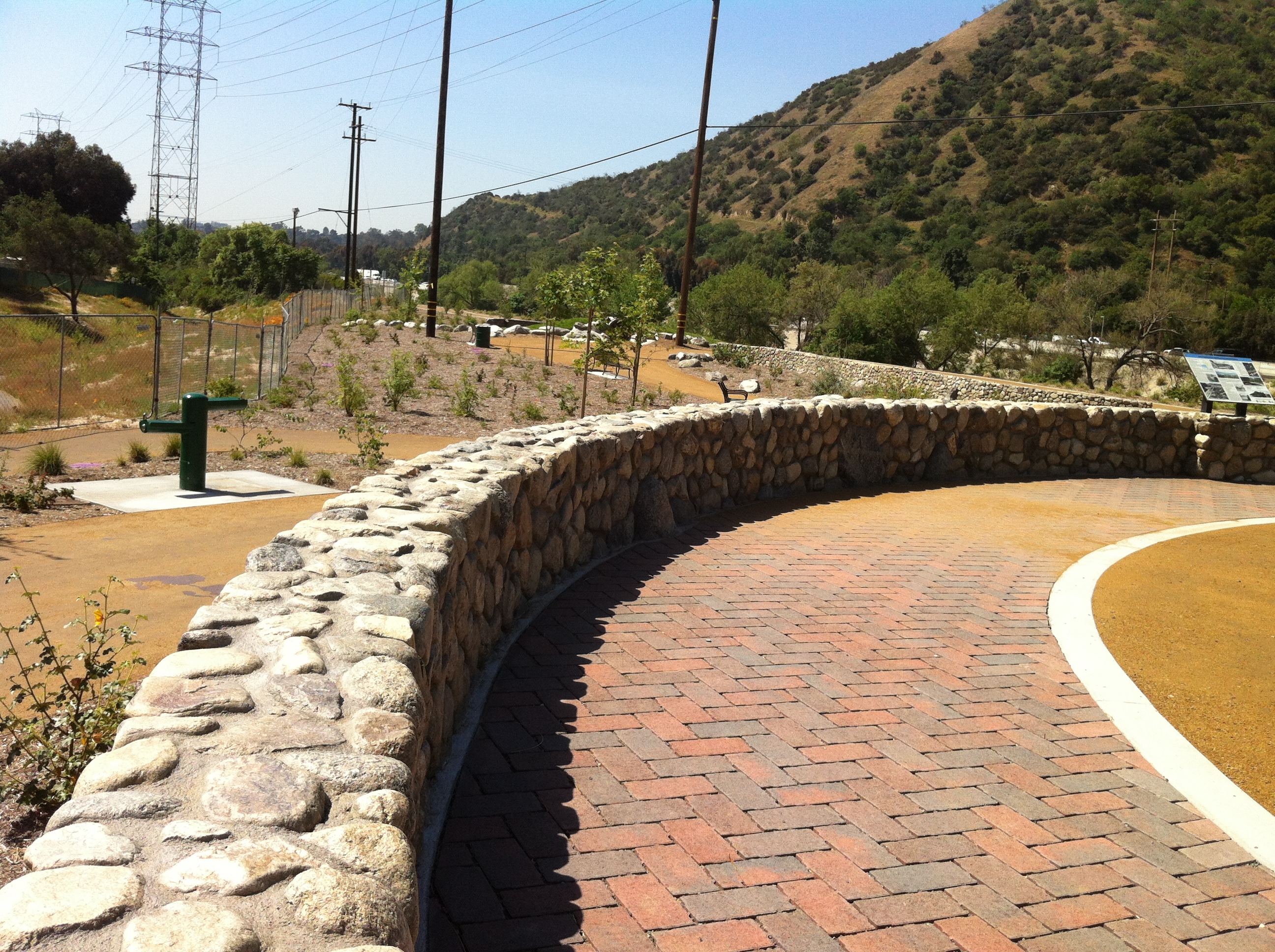
Was it worth the $4 million that came primarily, according to city info, from the settlement of two Clean Water Act enforcement actions? Yes, yes, it was. Bring your rod and check it out. And if you have kids, bring them as well.
See you on the river, Jim Burns

Springtime has definitely hit the San Gabriel Mountains. Monday (the best time to fly fish to avoid the weekend rush) walking down to and around my favorite canyon, there were critters aplenty. A 4-foot-long Striped Racer slithered just in front of my booted feet, giving me a good scare; what I think was an Eastern Fox squirrel jumped onto a thick tree trunk to inspect me (He found me lacking …); and I spotted a pair of what I believe were Yellow Warblers, mistaking their coloring and size for distant Monarch butterflies appearing and disappearing in the forest canopy.
A fellow hiker cautioned me in the tree shadows: “Look,” she said, “can you believe it?” And there on the ground were a half-dozen or more of this butterfly. But, the question is, what’s it’s name? My handy Pocket Naturalist Guide (which you can get at the Audubon Center at Debs Park) lists the distinctive orange Monarch, the Painted Lady, The Cloudless Sulphur and three others, but none has those amazing horns. If you know what it is, please post the answer.
Meanwhile, for fishing our streams, stick with dries only, and tie on some stealthy 7x tippet to your light leader. Any lighter-weight rod will do, but if you’ve got a 2, 3, or 4 in your arsenal, take it. Also 9 foot is a bit much for our water, with its tight canyons and brush. Eight foot, six inches or shorter is a better choice.
Rainbows and browns were going nuts on just about everything I threw in. Keep the sizes small, 16 or better, but I’ll tell you it’s
amazing to see a small fish latch on to a fly half its size when you toss a 10 or bigger! Ants are everywhere, so casting a parachute ant should bring good results. Unfortunately, the annoying small black flies have made a comeback, and I spotted a hatch of something tiny and gray-mosquito-colored coming off the water as well, so dark colors are a good bet. Also, pale or light green are perennial favorite colors. And you won’t catch just minnows. There are plenty of bigger fish in our mountains. Please ALWAYS release the fish you catch in areas that won’t be stocked. These are naturals and once they’re gone, so will be our opportunity to enjoy this beautiful resource.
See you on the water, Jim Burns
 With the upcoming river cleanup happening Saturday, it’s an appropriate time to check in with California State Senator Kevin De Leon SB1201, a bill that could bolster efforts to open up the Los Angeles River for lawful recreational uses, such as fishing. For context and the finer points, read this excellent summary from Legal Planet, a collaboration between UC Berkeley School of Law and UCLA School of Law. The site defines itself as “providing insight and analysis on energy and environmental law and policy.”
As a fly fisherman, here’s my beef in a nutshell: I’m tired of being in a legal access morass as soon as I cast into the water.
“We want to see legal access to the river for kayaking, fishing, and swimming. This won’t be the panacea that changes the river over night, but it will create a legal basis for people to come down to the river, FoLAR’s Lewis McAdams said to the wonky The Planning Report late last month.
“Fishermen have been ticketed. The City just uses a loitering ticket because they don’t have any L.A. River tickets. Of course it usually gets thrown out, but people have to spend the day downtown dealing with it. We want people to feel that the river is open. When I started Friends of the Los Angeles River, my first official act was cutting a big hole in the fence, declaring the river open. It’s only taken 25 years to get to this point. We’re at the point where the river is about to be opened, and we’re pushing the door gently open wider.”
See you on the river Saturday, Jim Burns
 lariverflyfishing