


I began writing this blog when God was young — November, 2010. It sprang from exploring the LA River, then grew to include our national monument. Now that I’m in Oregon, I can’t provide the fresh reporting and content that made it fun for me and hopefully enjoyable to read for you. It’s time to say goodbye.
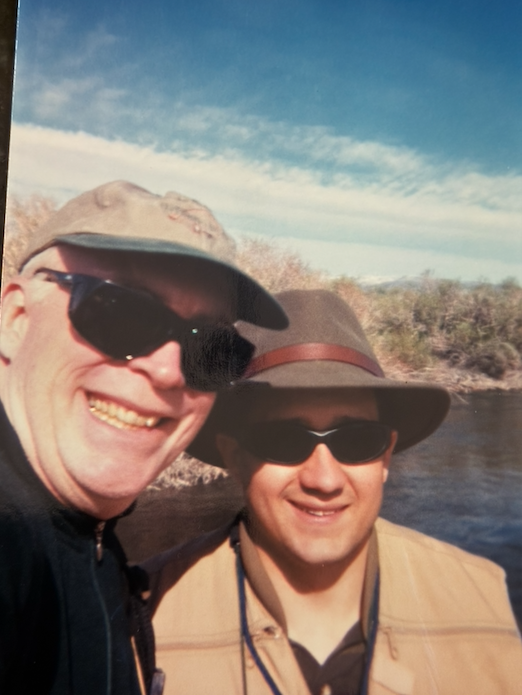
Along the way, I’ve made a bunch of friends: poets, photographers, cyclists, magazine editors, lots of fish lovers, a few dedicated biologists, one fellow dawn-patrol member, a lonesome cowboy, musicians, several tree huggers and even a few of the monarchical persuasion.
I’ve learned one thing: what you do is who you are. If you don’t do anything, but complain about a situation, you will be miserable, make your family, friends and acquaintances think you’re a total bore (or worse). And you’ll rob yourself of getting in on the greatest action of all: positive change.
I’ve met besties through the Friends of the Los Angeles River’s Off Tha Hook annual fishing throwback, inaugurated in 2014. Bob Blankenship, Karen Barnett and Bill Bowling, who together with Trout Unlimited South Coast chapter, continue to dream the impossible dream of removing some of the concrete from the lower river. It’s like the poet and activist Lewis MacAdams once said to me:
“When the steelhead return, we’ll know our job is done.”
The dude changed my life, and I barely knew him. But he was one of those people whose ideas are so potent they take on a life of their own.
Even here in the outdoor paradise of Southern Oregon, I think about the many times I spent exploring the forks of the San Gabriel, especially the West Fork. How many catastrophes has that water survived? Fires, mudslides, mountains of garbage, fishers who catch and keep above the second bridge. I knew that water like no other, knew its shade trees in summer, loved its talking winter waters, the cooling mists of its seasonal waterfalls.
So many guest contributors to thank, I don’t know where to begin: Roland Trevino, Mark Gangi, Freddie Wiedmann, Blake Karhu, Rosi Dagit, Bernard Yin, Keegan Uhl, Derek Flor, Malachi Curtis, Greg Krohn, David Del Rio, Analiza del Rosario, John Goraj, Patrick Jackson, Greg Madrigal, John Tobin, Jeff Williams, Charles Hood, Steve Kuchenski, Johnjay Crawford, B. Roderick Spilman, John Tegmeyer, Julia Spilman, Ansel Trevino, and Ken Lindsay. Some of them wrote multiple posts throughout the years. Thank you, all!

Then, there were the commenters. Of the more than 1,000 comments, some really got into deep explorations of our area, including moekhn, Jim Manoledes, TU’s Sam Davidson, Rivertoprambles, muddler5, PCC’s Scott Boller, Jessica Groenevelt, Capt. Joel Stewart. msangler, Ken Iwamasa, Larry Pirrone, Jack Train, Ken Uede, Omar Crook, Alex Brown, James Pogue, Bryan Rasmussen, paracaddis, Jane Herrmann, sublimedelights, Zino, Ryan Anglin, Trevor McTage Tanner, H. Carl Crawford, Al Q, Tim Brick, Janna Roznos, Izzac Walton, Celeste Walter, Fish Foo, Tilly, Gregg Martin, David Oh, Nicholas Blixt, paracaddis, Dianne Patrizzi, Fly Fishing God, Princess Hahamongna, and Lester Maypole.
Fifteen years and more than 330,000 views later, I can honestly say that many of the names on this page changed who I am and how I view the world. For there is no better starting place for learning to love nature than to see what gets lost in taming it. I think the point is not to doom spiral because of what we’ve lost, but rather to work like hell to try to keep what we have. In the coming years, that will be a particular challenge.
What would the world be without birdsong? Birding has become the No. 1 outdoor activity in Britain, even as we witness bird numbers crash around the globe. So what do you do? Where do you begin?
I started in my backyard with a couple of feeders, which I know my friends, the scrubjays, certainly appreciated when food gets scarce in winter snow. One will even call in my open office window to remind me, it’s time for more peanuts.
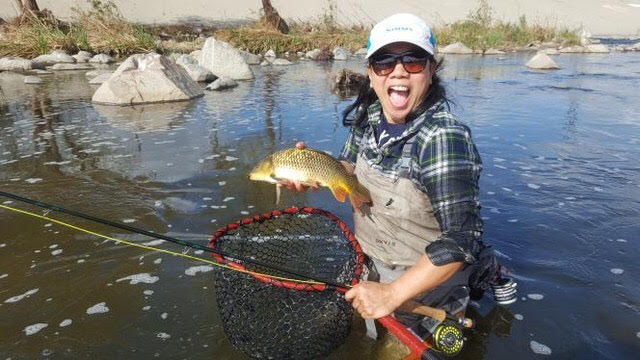
Where would the world be without fish? I’ve never worked in commercial fishing, but sport fishing so captured my heart that I’ve spend all this time documenting what it means to fish literally in the middle and on the edge of Los Angeles. And I can tell you one thing: given a chance, nature always comes back. May it be so in the future.

Finally, where would we all be without each other? That’s a scary thought, but many of our young folks don’t view society like their elders. Think about how apps have commoditized our mutual experiences. “Take me to the airport?” a big ask, has been replaced by Uber. Pay for play, instead of friendship reciprocity. What were once blind dates, set up by a friend, have become the domain of Tinder. And risking talking about your feelings with your friends, well, now that, too, is paid for with a human — and increasingly — an AI therapist. We must be careful to not let technology separate us from each other. It takes an effort to pull someone (including me) away from my cell. Make the effort. It begins with the loss of communication, but, really, it’s about the loss of trust, as young writer Clare Ashcroft, puts it so well in The New Critic.
I am convinced there is no antidote to trust loss quite like getting out of doors. Simple things, like remembering the vastness of a blue sky, the smell of recent rain, the chatter of birds that makes you wonder what to call them. Running waters hold a kind of magic, but only if you take the time to slow down, look and listen. Nature has its way of breaking down barriers. Take the time. Consider bringing a friend, especially a younger friend, on your next adventure. We really do need to learn to trust each other again, and the outdoors can teach us how to regain the bits we’ve lost.
For the last time, see you on the river, Jim Burns




 lariverflyfishing