East Fork Trail closed by FS to avoid hassles with miners

Get this. The East Fork of the San Gabriel River is closed because of zealous miners and the Forest Service trying to mitigate any hassles between them and the general public. Apparently, the rain brings out better gold mining conditions. Also note, it is illegal to mine within the National Monument!

Larry Pirrone

4h ago

I imagine that the miners blame the fishermen for putting pressure on the forest service. I think the EF may be a very dangerous place right now.

Topanga Lagoon Restoration Project could bring steelhead return a step closer in So. Cal.

The Topanga Lagoon Restoration Project Draft Environmental Impact Report (DEIR) officially dropped on Feb. 12. The public can provide comments and feedback on the DEIR until April 12 at 5 p.m. Saturday, Feb. 24 from 10 a.m. to noon at the Annenberg Community Beach House, 415 Pacific Coast Hwy, Santa Monica, is the public meeting, which will also be live-streamed on YouTube. Click the pic for more info and to comment.

Heritage and Wild Trout Challenge just got easier to enter

By Bernard Yin

Guest Contributor

There is a certain subset of the fly-fishing community, hopefully a sizable one, who pay extra attention to the fascinating heritage of California’s native fishes. The California Heritage Trout Challenge, recognizes those who have sought out six of the 11 cutty and rainbow qualifiers within the state’s borders.

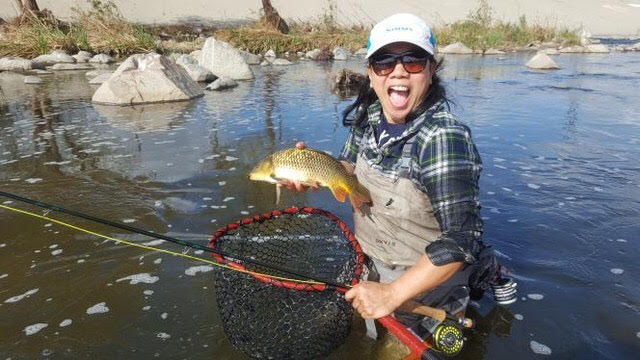
Analiza del Rosario on the East Fork San Gabriel River

You have to log your catch diligently with the Department of Fish and Wildlife to receive a well-earned acknowledgment in the form of a colorful, personalized certificate featuring the art of renowned fish illustrator, Joseph Tomelleri. Your certificate will show six full-color images representing the trout you caught, along with the dates and locations. It is sized to fit in a standard 16×20-inch matted frame. Ah, trout geekery at its finest.

Up until now, the submission process has been antiquated and required some effort. Recognizing this, the department recently updated its website to include an interface that allows for online submissions. What makes this all the more exciting is that here in So. Cal., there are actually waters that qualify. And rejoice, the challenge’s founder, Roger Bloom, spent years cutting his teeth in our trout waters, seeking out native fish and studying them for the CDFW. In other words, the challenge’s founder truly has local stream cred.

Here’s a hot-off-of-the-press statement from a Department of Fish and Wildlife representative per my inquiry:

“For Coastal Rainbow Trout any watershed that flows, or used to flow, into the ocean will count. All the rivers you mentioned and their tributaries (East Fork San Gabriel, West Fork San Gabriel, North Fork San Gabriel, Arroyo Seco) will count. Piru is another good spot. The next closest species for someone in Southern California would be the Kern Watershed. They can get Ca Golden Trout out of the South Fork Kern or Golden Trout Creek, Little Kern Golden Trout out of the Little Kern River, and the Kern River Rainbow Trout out of the mainstem Kern River.”

The idea of a road trip is also echoed by So. Cal.-based author James Pogue, who has completed the challenge four times.

“There is no way for a SoCal angler to get six (legal) species without making at least one trip up to the top of the state,” Pogue wrote in an email, “so combining the HTC with a trip to explore the North Coast or the high reaches of 395 is a necessity.”

But, he also noted, once up in the Jefferson area you can easily get a new species per day, every day, if it’s the right time of year and you plan well. 

What more encouragement does one need? All this lies a shopping cart’s throw from, well, the LA River – nudge nudge wink wink.

Should any of you reading this already have accomplished the challenge, please leave a comment. It would be great to know of which species was the most challenging or interesting to find; whatever you feel like sharing.

Tight lines and safe travels!


Editor’s Note: The CDFW reports the Paiute region and the entire area, including the Paiute’s native range, is closed to fishing at this time into the foreseeable future.

Resources

An Overview: https://bit.ly/heritagetroutchallenge

The current list of waters statewide: https://bit.ly/wildandheritagetroutwaters

The Angler’s Guide (Truly informative): https://bit.ly/troutchallengeanglersguide

The new web-based form: https://bit.ly/heritagetroutchallengeapplicationandverificationform

Great interview with Roger Bloom by Guy Jeans: https://bit.ly/rogerbloominterview

Guest contributor – Bernard’s passion for fly fishing goes back over 40 years having started as a junior member of the Diablo Valley Fly Fishing Club and working in the legendary Creative Sports Fly Shop in Northern California. He has since guided in the Sierra Nevada, worked at the Fishermens Spot in Van Nuys, and managed social media for the Southwest Council Fly Fishers International. His “blue lining” exploits in the So Cal mountains are renown. Currently, Bernard and his wife Rebecca also serve as CalTrout’s “eyes on the ground” in Southern California. Both also serve as conservation co-chairs for the Southern Sierra Fly Fishers Club and a Patagonia Fly Fish Ambassador.  – and this is the short version folks.

@bernardyingram

___________________________

Joel Stewart

A Fly Rod in My Sea Bag

This is great! I was hoping to do a HTC trip before I retire and move out of CA. This is definitely moving that plan towards reality.

____________________________

Randy Skidgel

President, Southern Sierra Fly Fishers

Carole and I did this two years ago. The planning and research were epic as the

adventure. Dismal Creek will always remain one of our favorite spots. Amazing

adventure, everyone who fishes in California should do this. We are currently

getting prepared for Nevada Heritage Trout Challenge.

‘Show me da money!’

The Los Angeles River is again raking in grant money for its makeover, a boon to us Angelenos, as well as to the species who depend on the river for survival.

First off, Trout Unlimited South Coast chapter received $4.6 million late last year from the California Wildlife Conservation Board for the planning, design, education and outreach for the Lower L.A. River project over the next three years. It includes creating riparian habitat, slower currents and shady rest areas for steelhead migrating back home to the San Gabriel Mountains. That is the largest grant ever received by any TU chapter in the country. Emphasis on the Lower River and Dills Park, as well as the city of Paramount, is a hopeful sign that communities long neglected by LA’s power players will begin to get their due. 

Meanwhile, the Bowtie, the former headquarters of Southern Pacific Railroad, was recently awarded $5,896,000 in funding for remediation and construction. In 2003, California State Parks bought the property called G-1, which is now referred to as “the Bowtie” (due to its shape), with the intent of transforming the currently undeveloped industrial land into a safe and clean, vibrant public green space, according to California State Parks. The makeover will focus on nature conservation and restoration, education and providing opportunities for passive recreation.

In all these two projects join:

LA River & Caballero Creek Confluence Park (MRCA) – Construction

LARiverWay Bike Path Segment 1&2 project (City of LA) – Design, partially-funded

LARiverWay Bike Path Segment 8 (City of LA) – just became funded

LA River East Bank RiverWay (City of LA, along Atwater Village) – Design, funded

LA River Bike Path Improvements (City of LA, along Elysian Valley) – Design, funded

Paseo del Rio project at Taylor Yard (City of LA, MRCA, State Parks) – Early design, partially-funded

LA River Ecosystem Restoration and Recreation project Reach 1 (US Army Corps of Engineers, north side of Griffith Park) – Design, funded

LA River Path Project (Metro, through Downtown LA and Vernon) – Design, funded (mega-project)

Fish passage in the Downtown LA area, which is also in design but needs to find implementation funding.

The list totals nearly $500 million in project investments.

So, here’s a question for you: How much money does South Dakota have for conservation project in a year?

According to Ballotpedia, $23,650,008, which was the most recent available figure was for 2015. Now that sounds like a truckload of cash until you look at the figure for California, $9,108,000,000, you read that right.

On the high end, three states spent more than $1 billion on environmental and natural resources departments in fiscal year 2015 — Cali, Florida and New York. And just for the record, California spent more — way more — than both Florida and New York combined.

While on the low end, four states spent less than $30 million on environmental and natural resources departments in fiscal year 2015— Oklahoma, Nebraska, South Dakota and Connecticut.

Since passage of the Endangered Species Act 50 years ago, more than 1,700 plants, mammals, fish, insects and other species in the U.S. have been listed as threatened or endangered with extinction, according to the Los Angeles Times. And just like the big the states, there are winners and losers. Guess which species are the biggest winners of federal environmental bucks.

Of the roughly $1.2 billion a year spent on endangered and threatened species, about half goes toward recovery of just two types of fish: salmon and steelhead trout along the West Coast. Meanwhile, the tiny Virginia fringed mountain snail had $100 spent on its behalf in 2020 after only being seen once in more than three decades. There are also species — more than 200 imperiled plants, animals, fish and other creatures, according to the article — that had nothing spent on their behalf.

See you on the river, Jim Burns

West Fork weekday fishers — enjoy it while it lasts

This sign near the Pasadena Bait Club House, didn’t survive the Bobcat Fire, but it still say it all. Next sign, let’s scratch “fishermen” in favor of “fisher folk.” (Credit: Jim Burns)

Just when the SoCali fly fishing community thought it could relax and put the wet boots up, turns out that’s not the case. Word on the stream-street is that the weekday closures will begin again in March for more silt removal that could last another two to three years! Yup, that means all the heavy equipment comes back, the guy at the gate will most likely be shooing folks away and — you will be trying to fish your weekend way through the inevitable growing spring and summer crowds.

So, enjoy this wonderful winter quietude while you can. It ain’t gonna last.

See you on the river, Jim Burns

The eagle has landed?

As first reported in 2016, then again in 2019, bald eagle sightings are the celebrities in 2024, bringing muscular telephoto lenses to bear on Highway 39. The last time I saw this many outdoor photographers was in Rocky Mountain National Park during the fall Elk bugle. (Credit: Jim Burns)

Just remember the happy hours

Well, seems like another year has slipped through our collective fingers, and now we are almost on to the new. Lots of drama, political and otherwise; lots of things to ponder (in 2004, Facebook seemed like harmless fun and Google was a search engine where maybe you could win a prize); lots of wonderment, if you know where to look, and, of course, that mostly always begins with nature. Friends come in second, followed by family. (Don’t ask …)

I’d like to thank everyone who is reading this for supporting my blog these many years. The stats are in, and, like I say, I so appreciate your support. And in the spirit of all the emails we get saying, “there’s still time …” to support whatever your favorite cause is, how about this? Support a fly-fishing print magazine in 2024. The ones that come to mind are three I’m currently writing for: Fallon’s Angler, Fly Culture and American Fly Fishing. The first two are based in the UK and full of thoughtful stories about fishing, as well as how-do-I-get-there photos. Actually, both of those mags are more about people fishing than the fishing, itself. No how to cast farther, construct a better dry fly, etc. They also are strictly print-only, embracing the ethos of the new Romantics, who want to get away from all-online, all-the-time living.

Meanwhile, American Fly Fishing covers lots of destinations throughout the US in detail, with a meaty conservation section to boot. It’s available in print as well as online.

So here’s to the new year. Let’s celebrate this new beginning.

See you on the river, Jim Burns

A cold November day steelheading on the Klamath, with friends Bob and Karen. (Credit: Jim Burns)

——————————–

Ken Iwamasa

Jim Burns, Keep up the good work. I would have loved to see a publication like this when I was growing up in Gardena. But many years later I am doing research on the Genus: Baetis in Colorado But I am writing to see if you would help me do research on the mayflies in the LA River or the West Brach of the San Gabriel. In particular, I am interested in the Baetis or commonly known as BWO. Let me know if you or someone else can help with knowing more about the mayflies in your immediate area.

Stories keep me coming back

What do you make of it when you see an insect in your man cave? Not much. I spy all kinds of wiggling legs there, spiders (OK, arachnids) maybe a beetle or three, the odd brown ant.

But last night as I looked closer at that speck on the wall, it was … a mayfly! I mean a mayfly in late December when Santa is on his way, how crazy is that? I immediately texted a fishing buddy, who responded “L.A. City of Trout.” I fingered the “haha emoji,” to which he replied, “I’m serious! Spring creeks galore, back in the day.”

His typed words hit me. Back in the day, sure, Octogenarian Robert Richardson who has volunteered in the now-monument since the ’50s — you read that right — regaled me this fall with eyebrow-raising stories about pulling 18-inch trout from the West Fork, when there was a game warden up there who would catch poachers as they emerged from the shore, pitch black of night, waiting for them in his jalopy, necking with his girlfriend. When there was a size limit on keeping trout from Cogswell Dam, bigger than 36 inches (now, no fishing allowed)! His stories are jewels of a time we’ve lost, but then again …

Stories from Bernard Yin, rock-n-roller activist, mountains archivist and fly fisher extraordinaire, will keep you coming back to our steep slopes and deep canyons above the City of Angels, just to get a glimpse of what he sees, what he knows. Another deep source of knowledge, but gleaned from a different time than Robert’s tales. He and Rebecca Ramirez, his co-rocker and wife, put in so many miles scouting trout in our most beautiful wild places, as well as our dumpster dives.

Then, there are the miracles, themselves the making of possibly timeless stories, like the one in my man cave last night. Keep those especially close, for we need the optimism and strength drawn from experiences that skirt the boundaries of mere intellect. These are stories visited upon us, instead of told to us by another.

For I need the energy of miracle when I pick up what seems to be unending amounts of trash on the way to my fav off-the-track spot; I need that unexpected freshness to keep me in a good spot when I contemplate the graffiti spray-painted across rocks raised up more than 6 million years ago. I need it to not despise those who threw out the trash, the ones who defaced the forest, as well as those charged with protecting it, yet do little.

Nature is the key to what we are missing. It’s that simple. Go into it, breath it, embrace it, feel your own soul, calm and serene, as the miracle of peace settles upon you.

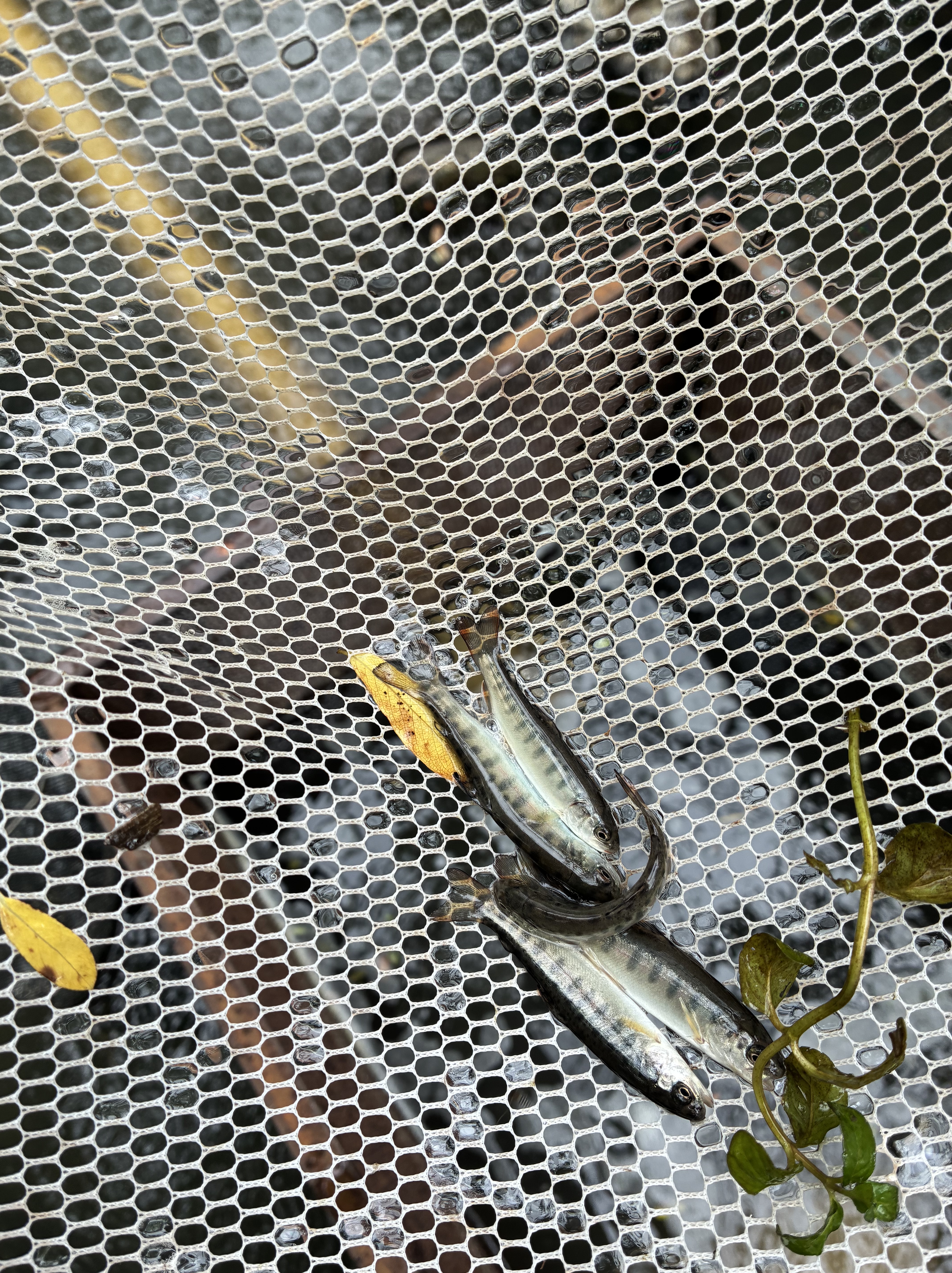
Oh, and don’t forget to fish! At the top, the left shot is from the West Fork and the right, from the East Fork.

See you on the river, Jim Burns


Larry Pirrone

When I first started fishing the West Fork I was returning from a long layoff from fishing local waters. I was just starting a new business and up the street was Alex Seimers fly fishing shop and Ray Bianco who got me back into fly fishing. Life was good. Then it started. A huge flush of mud released from Cogswell. Years later the stream was back and so was I. The Stream Born Fly Fishing club was still alive. I was catching fish on the WF again. I was catching two trout at a time on a two fly rig. Then it happened. The Center for Biological Diversity who could care less about human family fishing recreation helped kill off a load of trout. Who knows how we let this happen or why it happens. I am hoping that the fishing will get and stay healthy for me to recapture some of the good times. At 78 I don’t have a lot of time. How can we protect this great resource?


Jim Burns

Thanks for these great comments, Larry! What was the Stream Born Fly Fishing Club? As for protecting the WF, I think a lot of people have that same idea, but it is the “how” that hasn’t yet come into focus. John Tobin, Pasadena Casting Club’s former Conservation Chair, had this to say: “My big concern is the poor invertebrate recovery so far.  What are these fish eating, besides our flies?  I’ve turned over a few rocks and don’t see much yet.  We need an invertebrate survey.”

Scott Boller

Well said, Jim! Happy Holidays!


lariverboy

Jim,
What an honor to be mentioned. Having Rebecca by my side (and very much enthusiastic about the quest) and the added prod of CalTrout asking me to seek maximum clarity on these SoCal hills and their ever-persistent trout has kept me banging my shins and removing ticks for what seems to be forever and it is far from over. All in the name of locating even a tiny fish in a tiny trickle that has been “smote by God” as someone once said 😉 The Cogswell conversation is always entertaining. It is constantly manipulated and the entire region has these crazy moments of boom and bust. There’s little rhyme or reason except for the obvious one: if there’s some water then there’s some chance. I will bite my tongue with respect to the Bobcat Fire and the following winter’s muddy runoff. Simply mind-blowing how happy the WFSG was before that terrible volley of events. Gosh I could go on. 

As for age, time, etc. you know, a game I very often play is to challenge myself with the humor or irony of finding fish virtually roadside. This includes the access on the WFSG but there are a surprising collection of non-stocked trout populations; legal to fish for; within 500 feet of one’s parked car in So Cal. 

Scott,
I think the concern about invertebrate life as a food source is totally valid however it is not unheard of for a trout to make terrestrial’s a substantial percentage of their diet. Just throwing that out there for the sake of the discussion. Now, in the case of an area that is also denuded by fire then, sigh, yeah, we have very hungry fish and an ecosystem that needs some time to recover.

Larry,
Ray continues to appear from time to time at fly fishing events. His casting skills dazzle me and last time I saw him (less than a year ago) he sported some boots that even the Beatles would envy (with Cuban heel too by the way).

I am not intimately familiar with the center of biological diversity is actions of what you speak. There are a handful of moments in Southern California where they have influence the course of an ecosystem. I would be surprised if a deluge of silt or mud was intentional given how they are so fond of amphibians. Speaking of which, protections initiated by them for a particular So Cal endemic toad has actually done wonderful things to protect a few pockets of wild trout including some with primarily native genetics. * And not always resulting in an angling closure.

In closing …This last wet year has helped several local populations of trout get a breath of fresh water and if we have what amounts to an even “normal” winter, I think next year is going to be glorious in the “locals” and give us all some joy.

– Bernard

Dance of the rainbows on the East Fork

By Malachi Curtis, Guest Contributor

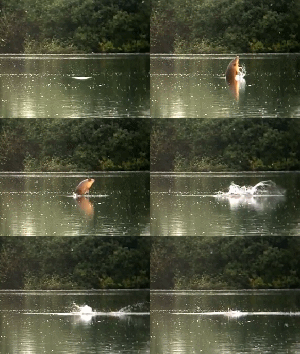
it was a pretty normal day on the East Fork for me. A few fish here and there, but not seeing any fish until they took my flies. When I came up on a spot that I had caught a nice one the weekend before, I saw these two fish swimming right in front of me, seemingly in their own world. I wasn’t moving particularly stealthily, but they didn’t seem to mind and came with three or four feet of me.

After a few minutes, they moved upstream and I continued on with the day. I was looking for other fish displaying similar behavior but those were the only fish I saw in the open that day.

I’m not too familiar with trout spawning, but as far as I could tell by some quick Google searches the earliest you normally see trout spawn is January, whereas this video was taken on Nov. 12. I know steelhead generally spawn a bit earlier so maybe this is their genetics kicking in here.

Either way super cool sight to see, and a good sign for the future of the population.

riverboy

Malachi – what great footage. 2023 has defied many rules. I have a report of RBT trying to jump a barrier in effort to “migrate” in early fall – prompted by an artificial dam release. I am always pondering this balancing act between seasonal behaviour and opportunistic behavior. You got to witness a curious moment – whatever they were up to. Stoked for you and a teeny bit envious 🙂