At today’s special meeting of the Ad Hoc River Committee, its chair, Councilperson Ed Reyes, offered these choice words:
“Whole habitats are just dying. It’s no longer just the coral reefs. There are whole classes of wildlife, of fish. You know what’s amazing — depressing — but you can just see the veins of this pollution going into the ocean. They showed the East Coast and the West Coast, and L.A. was a major artery — our trash.
Councilperson Ed Reyes chairs the Ad Hoc River Committee (courtesy photo).
So I think the key here is to oscillate from these bigger picture issues to the core role of our departments of our city, and how we spend our monies. There’s connectivity there, dialogue…
OK, maybe the city’s not here to save the ocean, but if we take care of our own backyard and deal with these issues incrementally, it does have a positive effect. I want to keep pulling that back into the discussion, and to the core values of the city.”
This quote from Ken Whitman, publisher of Organic Connections Magazine, reveals our particular moment in history:
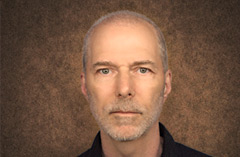
Ken Whitman, publisher of Organic Connections Magazine (courtesy photo).
“Human Thinking 1.0 (Western Edition) was overall a pretty nifty mental operating system. Testament to this is the fact that we’re still here after all these years. But of course there are bugs that we can’t continue to ignore. We seem to inevitably end up periodically in armed conflict and have made rather a mess of our economy, our environment and our health.
The biggest problem with the system is that, while we are all interconnected in a myriad of ways, Human Thinking 1.0 is not a networked system. It functions on the basis of what’s good for me or us and largely ignores the resultant effects created in other areas.
This brings us to the next evolution in cognition and reasoning: Human Thinking 2.0, which is currently in beta testing.”
You can read the entire editorial in the latest edition.
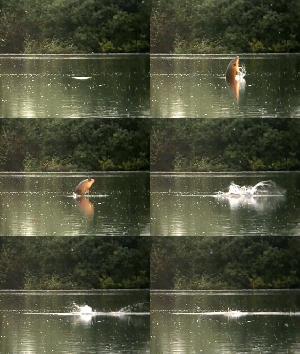
He’s a natural, even though rainbows are considered a non-native species to Deep Creek. (Jim Burns).
UPDATE: Take Deep Creek off your fishing radar until the drought ends. You’ll find little water and few fish. Also, because this is a protected area, if the native fish die out, that will also be the end of this once beautiful water because it won’t be stocked. Don’t add to their stress by catching them.
With free time in hand, most fly fishers from Pasadena head for the West Fork of the San Gabriel, or roll the dice above the Jet Propulsion Lab in La Canada. Why we ignore Deep Creek in the San Bernardino Mountains is a mystery. After all, it is a state-designated wild trout stream, meaning no farmed fish, only naturals. According to literature, it hasn’t been stocked by the Dept. of Fish and Game in over 30 years. Rainbows are the game; browns, the hope.
The ‘bows on Deep Creek keep on fighting (Jim Burns).
Will and I drove the quick hour and twenty minutes to Lake Arrowhead, getting into town in time for lunch. With an Adventure Pass in hand ($5 for a one-day; $30 for a year, available at Orvis on Lake; Sports Chalet or Big 5), we drove the additional 10 minutes around the lake until Hook Creek Road, which turns ugly for autos when it becomes 2N2GY, forest speak for dirt. If you’re not four-wheelin’, watch your oil pan. His FIT made it back to Pasadena, unscathed.
Following the road down a gentle canyon, if you turn right, you’ll hit a concrete bridge with plenty of fishing opportunities, or turn left and you can walk to the confluence of Deep Creek and Holcomb Creek. The creek runs about 22 miles from its beginnings in the San Bernardinos north into the Mojave.
Hikers can spend a fun day walking the Pacific Crest Trail, and, if energy permits, enjoy a dip in the Deep Creek Hot Springs (clothing optional).
Last Saturday, the water temp was 57 degrees, while the sun warmed the air to 80 degrees. Dries weren’t happening, but the nymph action was ridiculous; hungry (wary) fish kept us guessing throughout the several hours we spent coaxing them out of the many holes and riffles on the creek.
Question: exactly how much time have you wasted this week (it’s not over yet …) “browsing” the Web?
I’d have to answer “lots.” Always on the snoop for info about our river, I came across the new (to me, and copyrighted this year) The LA River. According to a press release, “The Los Angeles River Revitalization Corporation (LARRC), set up by the City of Los Angeles and funded through the Community Redevelopment Agency, has launched a comprehensive, state-of-the-art website at http://www.thelariver.com. It contains hundreds of maps, user guides, photos, development activities, information about the Corporation, a store, and more.”
There apparently is no limit on the number of carp you can take from the L.A. River. But ... who determined this? Certainly not the California Dept. of Fish and Game. (Courtesy http://www.thelariver.com)
Fair enough. Take a look and you’ll see that the site breaks the river into three fishing spots: Lake Balboa, Glendale Narrow and the Long Beach Estuary. Earlier this year, fisher-friend David Wratchford and I wondered about the estuary, and what might lurk to be caught there. Then, we wondered about the legality of fly fishing those waters.
Now we read on this new site:
“Today, although fishing in the river is not an officially-sanctioned activity, since it is currently illegal to walk in the river channel below the bike paths, officials rarely cite the many anglers regularly seen along the soft-bottom sections where fish are to be found.”
True, it’s a far cry from the infamous days when the Duckman had the Griffith Park rangers on speed dial, and would not hesitate to contact them when he saw folks with poles angling the perfumed waters.
Yet, you have to wonder how any elected official can have his cake and eat it, too. How can fishing not be officially sanctioned (in fact, illegal, according to a release given out to the press earlier this year from Councilperson Ed Reyes office), yet turn up on a publicly funded Web site under “Fishing the L.A. River?”
Access to the river means just that. It’s time to officially saction fishing in designated areas of the river. No more double speak!
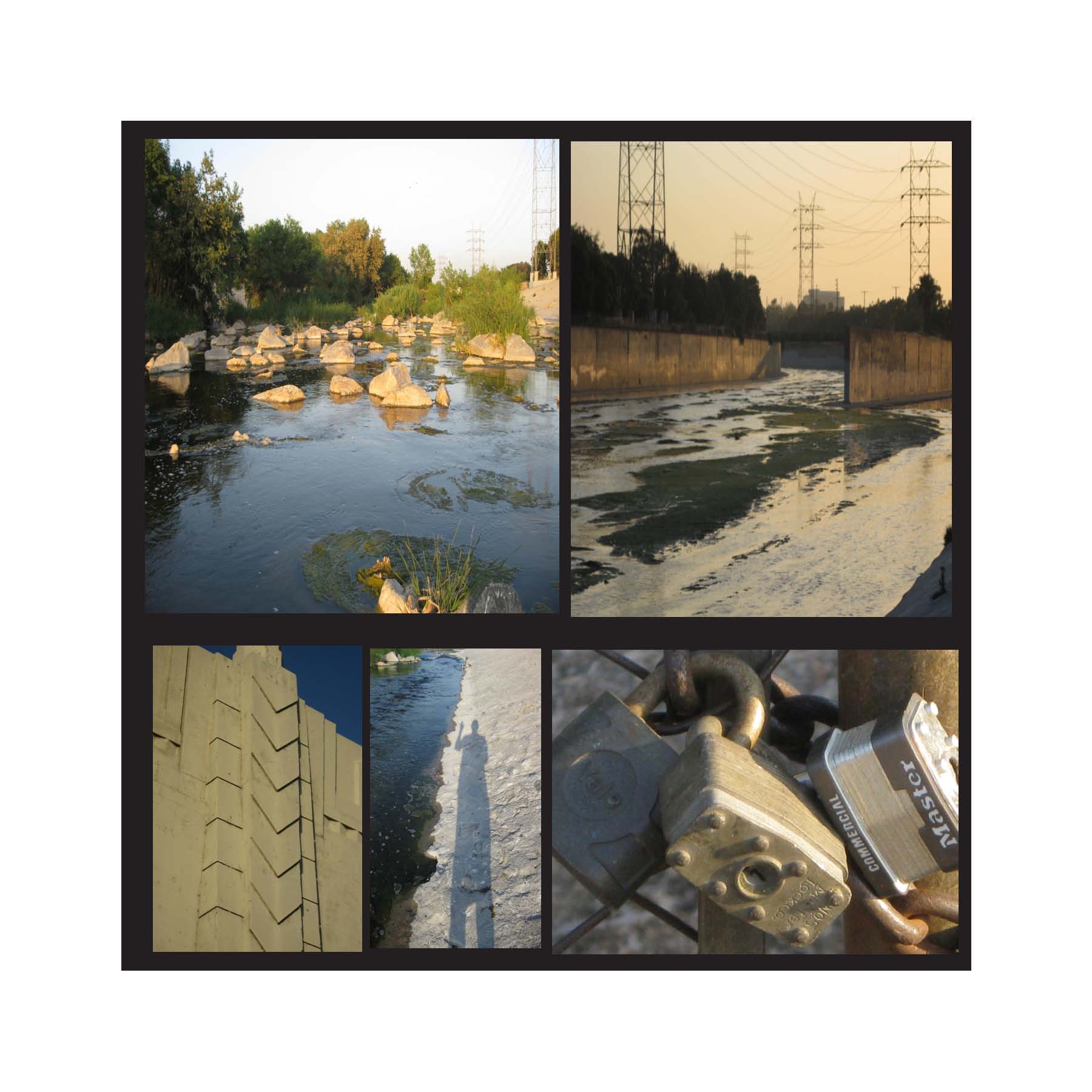
From top left, clockwise, the tranquility of carp-filled pools, at the beginning of Glendale Narrows. Once you get past the city locks, you can see self-shadows and nifty bridge architecture. (Jim Burns)
Yucking it up in 1938: Herald-Express photographer Coy Watson Jr. (left) and reporter Fred Eldridge (Courtesy KCET).
The Los Angeles Regional Water Quality Control Board is conducting an evaluation of the recreational uses of the channelized rivers and streams in the Los Angeles River Watershed.
As part of this effort they are soliciting information from stakeholders (through a survey) regarding what rivers or streams are visited in the watershed and which recreational activities are enjoyed in and around these bodies of water.
They are conducting this survey in conjunction with KCET and Council District #1 (City of Los Angeles).
First off, congratulations to everyone who attended yesterday’s big river cleanup! Pictures will be posted in this space tomorrow from the event.
Next, now that you’re fired up, take a look at these two links that make it easy to find out who your elected officials are and, equally important, what they’ve been doing.
Fletcher Bridge is definitely in the 31st district (Courtesy Rep. Xavier Becerra Web site).
Govtrack.us features a handy mash-up map of each state that includes districts. True, some of the district numbers can be hard to read, but if you continue to zoom in, visibility increases. For example, Griffith Park is located within congressional district No. 31, the purview of Rep. Xavier Becerra, a democrat.
Armed with that information, you can then plug the name into the aptly titled Legistalker to find news about the politico, including old school, YouTube and Twitter. There are also links to the rep’s Web site, blog and social media. It’s a powerful way to humanize legislators.
It’s a long time until 2040, the date Pasadena, Calif., has set to achieve zero waste. The city sits atop current green kudos of which it can be proud, including Pasadena Water & Power customers using 15 percent less water in 2010 than the previous year, according to the Green City Report.
"Pack it in, pack it out," applies to daily urban living as well as to outdoor sojourns (Barbara Burns).
And it’s about to wade into the plastic shopping bag ban. With bordering unincorporated area Altadena enforcing a ban on them in some markets in July, and all by 2012, the city’s environmental advisory committee meets tomorrow in special session to consider the topic.
After the 2012 deadline, Altadenans visiting the supermarket will have to stash their groceries in reusable bags or pay a dime for a paper one. (Plastic bags used for meat, poultry and fish will be exempt).
According to Jake Armstrong in the Pasadena Weekly, the committee seeks public comment on how best to craft the language of the ban, which would be based on L.A. County’s latest environmental impact report.
Trying to ban the bag without an environmental impact statement can lead a new ordinance to be overturned in the court system. That’s exactly what happened to Manhattan Beach’s ban in the California Court of Appeals in 2010.
“County officials estimate households use 1,600 bags a year and expected that figure to fall by half by 2013 and shave $4 million from cleanup costs,” according to Armstrong.
So far, single-use plastic bag bans have been approved in California in:
– Los Angeles County (unincorporated areas, of which Altadena is one)
— Long Beach
— Malibu
— Calabasas
– Marin County
– San Jose
The plastic bag has become a polarizing cry, with industry and libertarians crying “foul,” and the green movement pushing for an eventual blanket ban. Interesting trivia: they are called “witches britches” in England, apparently because of the way they unattractively flutter in the breeze.
Oh boy, not really the kind of thing you want to read on a Sunday, especially this Sunday, yet there it is: Tony Barboza penned an excellent piece in today’s Los Angeles Timesoutlining species joining the unlucky White croaker on the “do not eat” list.
The familiar "no dumping" warning, featured on sewers around the city (Courtesy ESLPod.com).
From the article: “In the so-called red zone that reaches from Santa Monica to Seal Beach, four fish besides white croaker … are now considered so contaminated with the long-banned pesticide DDT, PCBs and mercury that they too are unsafe to eat.”
Added to the list:
— Barred sand bass
— Black croaker
— Topsmelt
— Barracuda
This revelation, which comes from increased scientific scrutiny, not more dumping, led me to wonder about the Los Angeles River and its carp and other fish populations. The FOLAR fish study from several years ago found surprisingly low levels of toxins in the resident fish population.
Is the L.A. River, butt of many a poo-poo joke, actually cleaner than our slice of the Pacific Ocean?








 lariverflyfishing