Quick mends: Network of cameras capture LA River’s wildlife

Screen Shot 2018-08-01 at 1.01.25 PM
A coyote stands on its hind legs, captured by a new wildlife camera installed by the National Park Service near Silver Lake. | National Park Service/Public Domain

According to KCET, National Park Service researchers have installed a series wildlife cameras across 30 miles of the river’s course to try and get answers on how foxes, bobcats, opossums, coyotes, skunks, raccoons and other mammals use the area.

Around 30 cameras have been installed this year, from relatively wild areas in Griffith Park to little strips of property right outside of downtown L.A. that could be as small as 10×20 feet. The program will hopefully help determine whether the LA River acts as a wildlife corridor between the more than 150,000-acre Santa Monica Mountains National Recreation Area and spaces in the city.

Eventually, the public can help tag photos by going on a citizen science website.

See you on the river, Jim Burns

Oh, snap: CalTrout opens annual photo contest

Screen Shot 2018-07-26 at 10.19.32 AM

The 2018 California Trout Photo Contest is now accepting submissions July 15 through Aug. 31! Share your best photos of California’s rivers, streams and creeks and your angling experiences. Photos can include fish, anglers or others enjoying California waters or be more scenic in nature. Enter today for a chance to win some great gear and be featured on the CalTrout website, social media channels and in issues of The Current.

Eleven winners total will be selected. One Grand Prize Winner, one People’s Choice Award and nine Best Photo winners.

Need some inspiration? Check out last year’s winning photos here.

Prizes awarded:

GRAND PRIZE – 1 Winner
Photo featured on home page of CalTrout website, one-year CalTrout membership, Sage Foundation rod and 2200 Series reel with 20 lb. Rio line ($575 value).
PEOPLE’S CHOICE AWARD – 1 Winner
Photo featured on home page of CalTrout website, one-year CalTrout membership, CalTrout embroidered Patagonia Refugio backpack, CalTrout neck gaitor, and Echo Carbon XL rod ($300 value).
BEST PHOTOS – Nine Winners
Photo included on Caltrout.org photo contest page, one-year CalTrout membership, Set of CalTrout native fish pint glasses and playing cards, and CalTrout trucker hat ($115 value).
Contest Rules and Guidelines:

Once the submission period has ended, CalTrout will select 25 finalists. From those finalists, our members and social media followers will vote to determine the People’s Choice Award winner and 9 Best Photo winners. CalTrout judges will select the Grand Prize winner.

Judging Criteria: Photos will be judged on how well they depict the spirit of California waters and/or the sport of fly-fishing as well as overall artistic merit (lighting, color, composition, etc).

All photos must in some way be related to California rivers, creeks or streams and the activities around them. Ideally, photos should have a horizontal format.

Maximum number of entries: Ten per individual.

All submissions must be submitted using the contest online entry form. (This will be available when the submission period begins on July 17.)

Photographs must be in digital format.

Only online entries will be eligible. No print or film submissions will be accepted.

The photograph need not be taken with a digital camera; scans of negatives, transparencies, or photographic prints are acceptable.

Digital files must be high resolution, 300ppi, file size 3MB or larger (at close to actual size) and must be in .jpg format.

All entries must be received by midnight PST, Aug. 31, 2018.

If a person is in the photo, you must submit a signed model release for each person depicted in the image.

Please read our Full Contest Rules before entering. If you have further questions please email photos@caltrout.org. Photos must be submitted using our online form. Photos emailed to photos@caltrout.org will not be considered.

SUBMIT PHOTOS

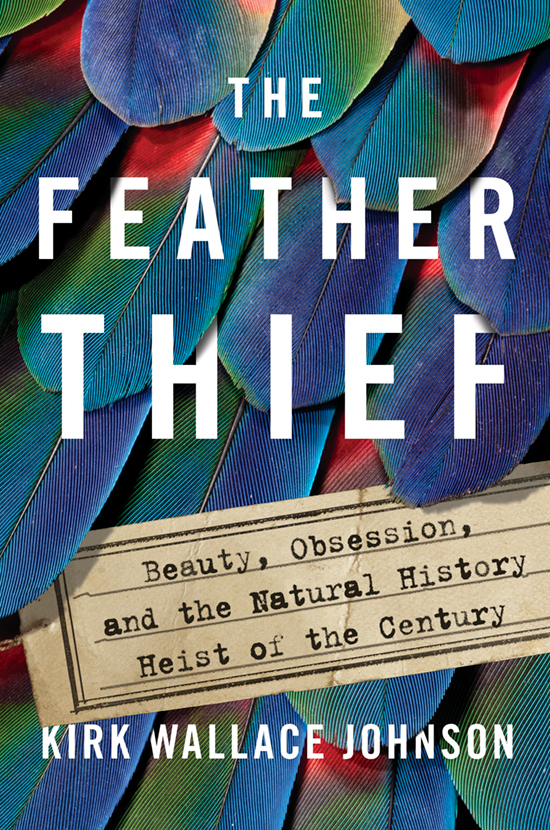
Book review: True bizarre crime story sizzles in ‘The Feather Thief’

FeatherThief_7-12-3

Just in time for summer reading, this engaging true-crime thriller is actually three books in one. As the title implies, this is one bizarre crime: on a June evening in 2009, 20-year-old American music student and accomplished fly tyer Edwin Rist smashed an alley window and hoisted himself into the renowned British Museum of Natural History in Tring with a singular purpose, to steal some of the world’s rarest old birds to finance buying a gold flute. This may seem an odd way to finance a $10,000 instrument, yet individual skins can sell for $2,500 or more in an underground fly-tying market bordering on the fanatical. After his arrest, Rist estimated he’d made northwards of $165,000 selling feathers to private collectors as well as through niche fly-tying forums and on EBay.

According to its website, the museum’s avian skin collection is the second largest of its kind in the world, with almost 750,000 specimens representing 95 percent of the world’s bird species. Included are nearly 700 skins collected by Charles Darwin and Capt. Robert FitzRoy during the six-year voyage of the HMS Beagle, and, more importantly for Rist, the extensive collection of Alfred Russel Wallace, that included rare originals needed to complete authentic Victorian flies. At one point in the book when Rist is in his late teens, his mentor gives him a bag of Indian Crow and Blue Chatterer feathers worth $250, enough to tie about two flies.

Like any of the world’s most precious substances the feathers for classic fly recipes are expensive — and usually illegal to purchase. About the only legal sources are great grandmother’s Victorian bonnet, complete with a Flame Bowerbird’s carcass, or the zoo, where perhaps a Resplendent Quetzal died of natural causes.

To understand the arcane world of showy feathers from rare or endangered birds, such as these, Johnson first introduces readers to a broad historical stage, one in which “the sun never sets on the British Empire,” and the greed for the exotic went unquenched, much like the sport hunting to near-extinction of the buffalo in our West. Women’s fashion fueled the slaughter of tens of thousands of exotic birds from the Malay Peninsula and South America for their intensely colored and sometimes iridescent feathers.Those same feathers were also thought to be best for catching fasting Scottish salmon as they came back from the ocean to spawn. Books such as George Kelson’s “The Salmon Fly” included the most precious materials — think orange and black seal’s fur — to build an engaging watery fusilade ensuring a hungerless salmon to strike.

The second section goes into detail about the heist, itself, how it was planned and what was taken. Science lovers will be particularly bereft when they realize Rist destroyed the tags on the 299 skins he stole that told where the specimen was collected, as well as when and other critical data, some in the hand of Wallace himself. As ornithologist Jessie Williamson wrote in her review of the book, “It’s hard to overstate the tragedy of destroying irreplaceable scientific objects. Natural-history collections are vital to our understanding of biodiversity, evolution, and environmental change, and they only grow more valuable with time. In the late 1960s, museums were critical to discovering the link between the pesticide DDT and eggshell thinning.”Kelson

Yet for what a British judge deemed “a natural history disaster of world proportions,” Rist did no jail time after pleading an Asberger’s defense, which leads to the last section, and most incredible, in which the author literally goes on a quest for justice worldwide to find and return all of the stolen skins to the Tring. After tracking Rist to Dusseldorf, the author sets up an interview with the thief, complete with a non-English speaking clandestine bodyguard outside his hotel room. Besides this dazzling piece of journalistic bravado — at this point, the cops had closed to case — Johnson also interviews a South African who is sure the rapture is forthcoming, a Norwegian, code name Goku, who may have been an accomplice and a tough American ex-cop, who now hosts a salmon fly-tying forum.

Engaging, infuriating and horizon expanding, this is one for your nightstand, one that will become a classic of fly-fishing literature.

See you on the river, Jim Burns

The Feather Thief

By Kirk Wallace Johnson

Hard Cover $16.20

Kindle $13.99

320 pages


More than one record set at latest Vamos a Pescar

IMG_2823
PHOTO OPP: Co-event organizer Ban Luu, left, helps Patricia Perez release her carp fry back into the LA River, as Luis Rincon, community engagement coordinator for the Los Angeles State Historic Park, returns a rod to another participant. Trout Unlimited gave away fishing lessons, mini-tackle boxes and rods to 120 L.A. residents. (Jim Burns)

On a day when temperature records were getting broken all over the Southland, Patricia Perez broke a record of her own: six fish caught on the lukewarm LA River.

“I’d never caught one fish until today,” Perez said.

IMG_9925She was one of the 120 Angelinos who took advantage of Trout Unlimited’s Vamos a Pescar program to learn how to fish our urban water.

“She was the first one on the water with me this morning, “co-event organizer Ban Luu said.

Before 9 a.m., both Luu and Perez had hooked green catfish on his secret masa recipe. And before the event officially ended early at 11:30 because of the intense heat, she’d caught five small carp as well.

All fish were released successfully back into the river.

See you on the river, Jim Burns

Quick Mends: High Country News weighs in on LA River revitalization

In a gem of a piece, photographer Roberto (Bear) Guerra chronicles the species loss the LA River has suffered since being encased in concrete with photographs of specimens from the Western Foundation for Vertebrate Zoology and the LA County Natural History Museum.

An important photo essay as our city weighs the future of the river in terms of development and habitat restoration. A sample:

toad
Western Toad (Courtesy High Country News)

Western Toad (Bufo boreas) —  Perhaps no animal is as emblematic of the decline of native species in the decades following channelization as the western toad. One of the neighborhoods adjacent to the soft-bottom Glendale Narrows section of the river is still known as “Frogtown,” for the swarms of young toads and Pacific treefrogs that hopped through the streets each year until the 1970s. Today, toads and frogs are rarely to be found.

See you on the river, Jim Burns

Volunteer Opportunity: Lower Dark Canyon

Volunteers
Just over a year ago, 48 FedEx Cares volunteers did their part for the Native Trout Restoration Project in the San Gabriel Mountains. (Courtesy Arroyo Seco Foundation)

Greetings Trout Scouts!

We will to be scouting Lower Dark Canyon Trail next Tuesday morning and welcome you to join us. The trail follows one of the Arroyo’s tributaries that we suspect may provide rainbow trout habitat. It will be our first visit to this site, and at the very least we want to record barriers to fish passage and take photos of the creek. We may use other methods covered in the workshop depending on what we find.
 
Meeting Time and Location
Tuesday, June 26, at 8 a.m.
Dark Canyon Trail entrance on Angeles Crest Hwy
What to Bring
Water / snack
Sun protection (hat, sunblock, sunglasses)
Hiking shoes
Note-taking materials
Camera (optional)
Please let me know if you can make it.
Thank you!
Scott David Cher
Scott@arroyoseco.org

Rainbow Trout Restoration Project

 Arroyo Seco Foundation
570 W. Avenue 26, Suite 450
Los Angeles, California 90065-1011
(323) 405-7326

Earth Quotes: Edward Abbey

Screen Shot 2018-06-06 at 3.40.15 PM
Edward Abbey (Courtesy of Milkweed Editions)

“One final paragraph of advice: do not burn yourselves out. Be as I am — a reluctant enthusiast … a part-time crusader, a half-hearted fanatic. Save the other half of yourselves and your lives for pleasure and adventure. It is not enough to fight for the land; it is even more important to enjoy it. While you can. While it’s still here. So get out there and hunt and fish and mess around with your friends, ramble out yonder and explore the forests, climb the mountains, bag the peaks, run the rivers, breathe deep of that yet sweet and lucid air, sit quietly for a while and contemplate the precious stillness, the lovely, mysterious, and awesome space. Enjoy yourselves, keep your brain in your head and your head firmly attached to the body, the body active and alive, and I promise you this much; I promise you this one sweet victory over our enemies, over those desk-bound men and women with their hearts in a safe deposit box, and their eyes hypnotized by desk calculators. I promise you this; You will outlive the bastards.”

Kids, parents catch lots of fish, fun at second VAP weekend

This slideshow requires JavaScript.

Innovative Vamos a Pescar program teaches locals to fish


(Click on the photos above to read the captions.)

They came, they saw and, boy, did they conquer.

The first day of the first weekend of Vamos a Pescar brought kids, parents, young adults and volunteers to Marsh Park on a May Gray morning to learn the beginnings of becoming an urban fisher for life: tidbits about our river; safety; rigging a spin outfit; casting a bobber inside a Hulu hoop ring, sort of like the pros, only with more smiles (and tangled line).

“We gave out 120 spots, an overflow from our original number,” said Bob Blankenship, Trout Unlimited South Coast Chapter and co-organizer of the event.

What does this mean for readers of this blog who know how to fish and want to pass that skill along to others? There are volunteer spots open next weekend  (Saturday and/or Sunday, 9 a.m.-noon) when all these new fishers will try out their nascent skills at the Bowtie Parcel. Please sign up by contacting Blankenship at southcoasttu@gmail.com.

See you on the river, Jim Burns


Arroyo Seco hosts free trout workshop

image
With proper care, this little guy will grow up to make us all proud. (Courtesy Steve Kuchenski)

Greetings Trout Scouts!

As a reminder, the Arroyo Seco Foundation will be hosting a free trout habitat survey workshop this Sunday.

The workshop will feature Ken Jarrett, a fisheries biologist with Stillwater Sciences, and cover key methods for professional stream assessment. This is a great opportunity for anyone interested in river restoration and native fish!

There are still spots left. Please RSVP to me (scott@arroyoseco.org) if you can make it.
Date & Time
Sunday, May 20, 9AM – 2PM (includes a lunch break)

Location
Hahamongna Native Plant Nursery in Hahamongna Watershed Park (The nursery can be hard to find. Click here for directions.)

Parking and restrooms are available at the nursery. From there we will take a short walk over to the stream channel and learn stream surveying methods for the assessment of native trout habitat. Be prepared for insects and uneven/slippery terrain. Some activities (such are measuring the stream gradient) will be done in the water, and closed toe shoes are required.
What to Bring
• Water
• Sun protection
• Sack lunch
• Note-taking materials
• Closed toe shoes (ideally water shoes or rubber boots if you have them)
Please let me know if you have any questions.
Thank you!
Scott David Cher

Rainbow Trout Restoration Project
 
Arroyo Seco Foundation
(323) 405-7326