Thanks to friends Mark Yanni and John Loo for spotting this fascinating story from Smithsonian Magazine.
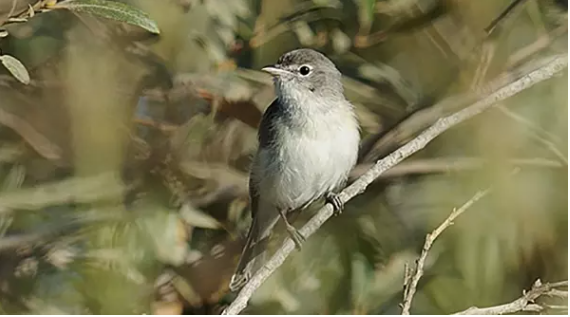
Least Bell’s Vireo (Courtesy U.S. Dept. of Fish and Wildlife)
“Along a gentle bend of the Los Angeles River, in a stretch of land called Taylor Yard, a sound like a high-pitched record scratch can just be heard above the cacophony of city life. This is the call of the least Bell’s vireo, an olive-gray songbird that is only five inches from tip to tail. The riparian species native to Southern California has lived an endangered existence for more than 40 years. Now, the small bird’s return here symbolizes a new future for one of the country’s most maligned waterways. “
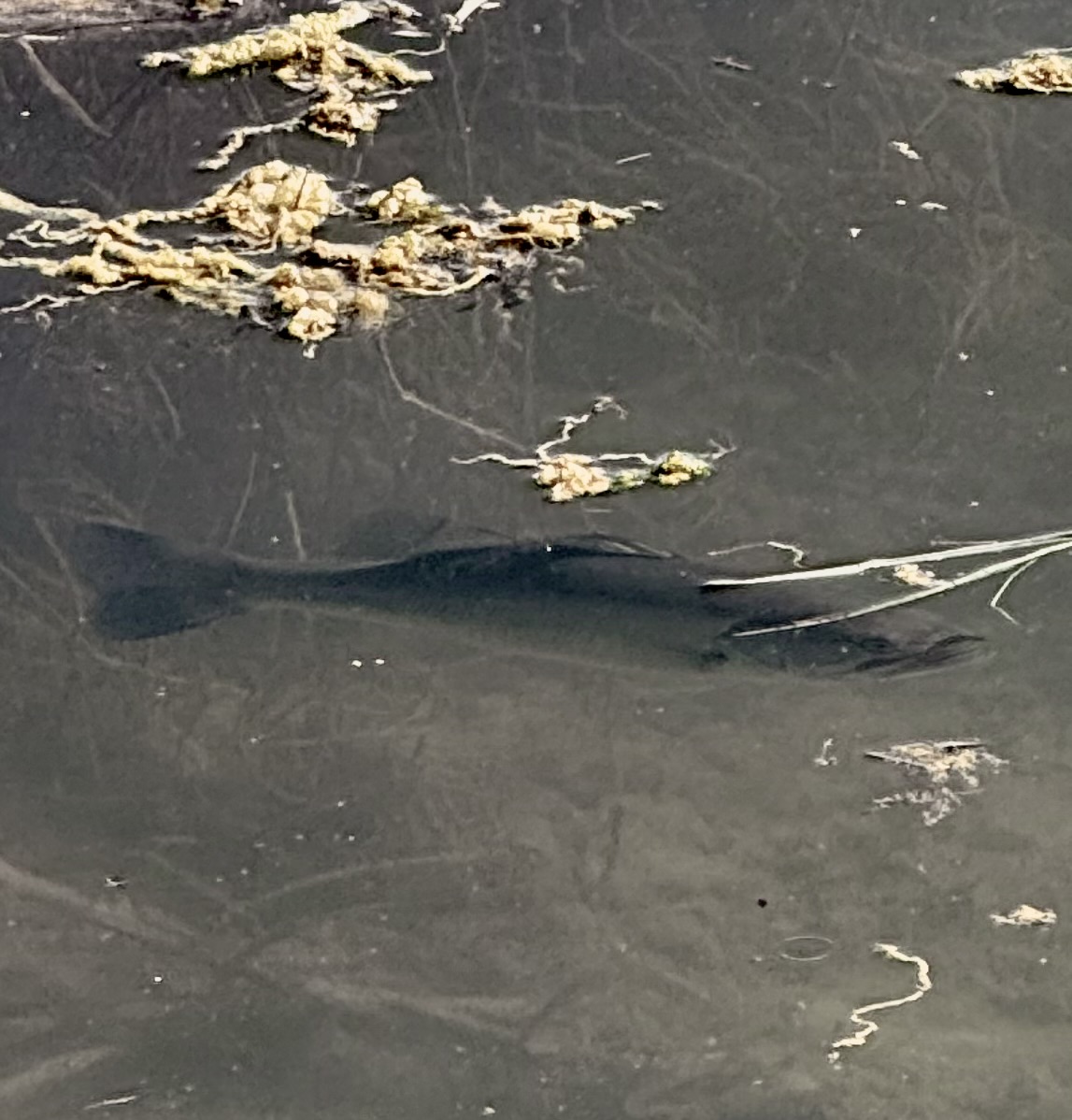
Well … lots of you chimed in about what the heck are the blurry pics in the last post. Could they be what we were all hoping they were–steelhead? There were lots of votes for bass of some sort–I coined the name “torpedo bass,” hoping to be wrong. One noted biologist thought possibly striped mullet, while asking for some better snaps.
Those came from TU South Coast board member Terry Italia.
Based on these better shots, Camm Swift, one of the leading authorities on biology, management and conservation of fresh and brackish water fishes of coastal Southern California, wrote in an email:
“They are bass, probably largemouth, with the jpegs 3117 and 3118 the most distinct. The two dorsal fins are a tip off and a subtle black stripe down the sides on some, often more prominent. Very common and widespread in Southern California. High flows wash them out of local ponds and reservoirs, and these are probably YOY (young-of-the-year) having been hatched in March or so upstream or even locally if the lagoon was large enough and stable. Can prey extensively on natives.”
Great to know the score, but it hurts at least a bit to not see what we hoped for. Kinda like the election.
A HERO’S RETURN for this fall-run Chinook Salmon spotted on Oct. 16, in a tributary of the Klamath River after removal of four dams marking the first fish to return since 1916. (Photo by Mark Hereford, Oregon Department of Fish Wildlife, Courtesy: ODFW)MEANWHILE, ARE THESE fish endangered Southern California Steelhead in Orange County? (Courtesy William Preston Bowling)
Were they steelhead? That was the question a group of environmentalists and scientists asked themselves as they watched a group of large fish navigate the urban waters close to Orange County’s San Juan Creek Estuary.
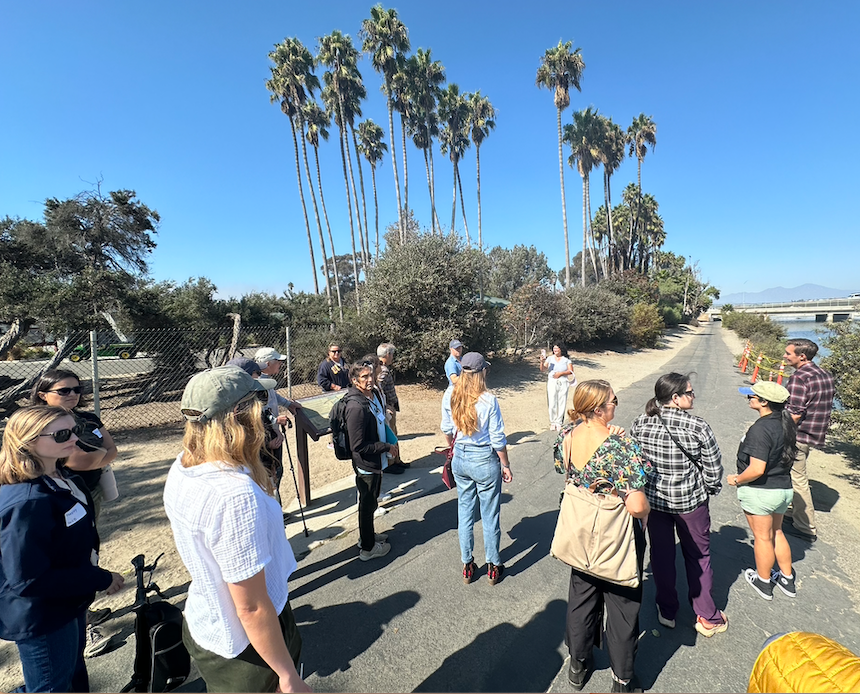
Ironically, the group was there on a site visit for Trout Unlimited’s San Juan Creek Estuary Restoration Project, led by longtime advocate George Sutherland, who with help from the California Department of Fish and Wildlife wrangled a 30-plus inch steelhead from estuary waters back into the Pacific Ocean. He’d been tipped of the fish’s inability to reach the ocean by a local shopkeeper. That was in the early 2000s.
Fast forward to 2024 and TU is pursuing grants to improve the area’s habitat for native fish, wildlife and plants, restoring the health of this important water.
Even though Sutherland spearheaded signage about steelhead in this area, the group was amazed to sight what could be the almost mythical Southern California Steelhead, an endangered species, once caught in the thousands in local rivers.
“It was a sign, as we walked past our sign–The Trout Unlimited Steelhead lifecycle–that a hard look is needed in the San Juan Creek Estuary as a place that needs to be restored for the animals that use this area,” ” said William Preston Bowling, President of Trout Unlimited South Coast Chapter. “Evidence of Steelhead Trout and other fish species with an osprey in a palm tree to balance out the circle of life.”
But, the biologists weren’t completely convinced that these fish were steelies, focusing on the shape of the dorsal fins, as well as what they characterized as larger mouths.
Ironically, at least according to one participant, these biologists admitted they’d never actually seen a steelhead in the wild.
The mystery continues until a positive ID is confirmed.
Big Santa Anita Creek at Chantry Flat–I had heard the tales of rainbows and browns from “back in the day,” but I had never seen this idyllic stretch of incredible trout water for myself. I only took up local fly fishing a year ago, during the four-year fire closure of the area. I was eager to see it for myself last week when they reopened the area.
So, a friend and I spent a day scouting for Chantry Trout. I assume the weirs, across the stream at regular intervals, stamped with the date 1959, were built to control flooding around the 80 or so cabins in the canyon. I also know that these probably very quickly filled up with sediment, rendering them useless, much like the Brown Mountain Dam on the Arroyo Seco above JPL.
I also guessed that these dams would act as fish barriers. So while scouting, we made sure to walk as much of the stream as we could, thinking fish could be localized in one of these runs. We covered a lot of ground, from a half-mile above Sturtevant Falls all the way down to within a half-mile of the reservoir. We hiked seven miles. I am deeply sad to report: we found no fish in the stream.
I put my waterproof video camera in pool after pool, hoping and praying to see a little movement under a rock, a fry tucked up into a crevice. Nope. Nada. Zip. Zilch. We also tried flies, of course. And with ample experience fishing the streams of the Angeles and San Bernardino mountains, I can say with certainty–if there were fish there, we would have caught ’em, or seen ’em.
We did find hundreds, thousands perhaps, of frogs (and tadpoles visible underwater)–another observation that points to the absence of a healthy population of trout.
This was a total bummer, as the stream itself looks “incredible.” There is a surprising amount of water flow for this time of year–pool after pool of deep, cool, aerated water. Just perfect for our native rainbows. The flow was many times what we see this time of year in other creeks that manage to support fish, like the Arroyo Seco.
I had high hopes that with the recent high-water years, maybe some fish had survived the fire and repopulated, perhaps from the reservoir below, but it seems that’s not the case. Now, could there be some survivor fish in the reservoir and perhaps immediately upstream of it? Yes, it is possible, we did not make it all the way to the reservoir. But there are certainly no trout in most of the accessible water.
Perhaps we can convince the CDFW to repopulate the stream, stocking it with wild rainbows from nearby drainages (perhaps a rescue of East Fork San Gabriel fish is in order, before the rains come and destroy that stream?). Our mountain rainbows have their genetic roots in the Southern Steelhead runs of a hundred years ago, and keeping good stocks of those populations may help repopulate the endangered Steelhead if and when we are able to reconnect them to the ocean.
I was on San Antonio Creek this morning after a podiatry appointment for a sore heel, and this is what I hauled out of the creek from the washed out bridge down to the Fire Station interpretive area.
I take a little bat bag for carrying an extra flyrod and for carrying trash out. Water temps were 57.2 degrees when I got there; air temp was 65 degrees and the water was flowing very well. Sure, it’s all “dammed up” by the weekend crowd, but actually it was cleaner than I expected. I did not haul out a big cardboard box, nor the 15 empty Modelo’s. I just didn’t have room for them in the bat bag.
I carried my Rocky Mountain Tenkara “Chico” rod and fished a wet fly upstream with no results for the area most heavily trafficked and affected by the weekenders, and had no results fishing, even in the fishiest of spots.
Up above the bridge, there is a spot I have caught fish before, but in much skinnier water when we were still drought affected, and when I caught the little 5-inch trout there. I wasn’t surprised. Once I caught a trout, I stopped. It told me as much as I needed to know.
Trout are still in there. I saw no evidence of dead trout in any of the areas you’d expect them, trapped by debris. The water was clear, and there was no fire debris in this lower area.
I decided to stay down from the Baldy Village area given the earlier concerns about fire. Everything goes downstream and I thought I’d learn all I needed down where I was. I was on the water for just shy of two hours and covered about a third of a mile of water. as the crow flies, maybe a little bit more. Lots of raspberries, but I left them for the birds and other wildlife, meaning perhaps, the weekenders.
I neglected to take my phone with me so the little guy didn’t get to pose for photos. I don’t like to keep them out of the water much anyway.
Volunteers from Friends of the LA River, Trout Unlimited, CalTrout and many others have rocked this event for the last 34 years, collecting more than 1.6 million pounds of debris from harming local habitat or flowing out into the Pacific Ocean. This Saturday, Oct. 5, it’s time to put the gloves back on, grab some trash bags, and get back to work at one of four sites, listed on the map. Check the link below for all the info, including shift times and locations, and register to volunteer.
Learn more about The Great LA River CleanUp and sign up>> HERE.
This was generated by an AI, which I guess is why this folks are so inquisitive about the garbage! Around 20 student volunteers from Santee School in Los Angeles posed after rounding up the muck during the 23rd Annual L.A. River Cleanup Saturday in 2013. (Jim Burns)
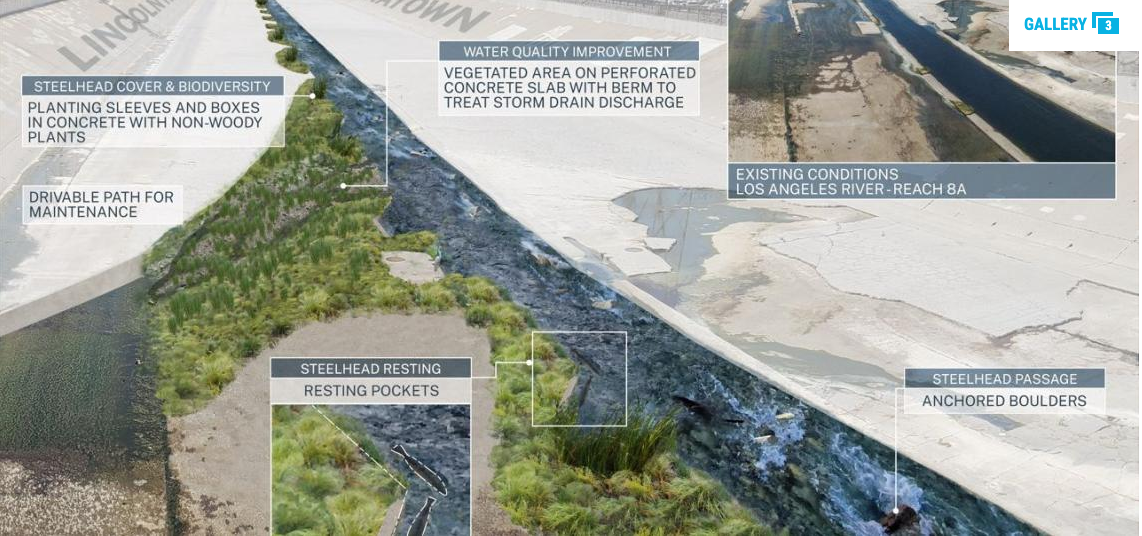
Typically, council meetings for the City of Paramount focus on decreasing street takeovers, ap- proving zoning ordinance changes, or funding the small city’s annual health care fair. But during the most recent meeting of 2023, Mayor Isabel Aguayo personally awarded three certificates of recognition to former students of the city’s Odyssey STEM Academy, explaining, “They provided testimony on behalf of Trout Unlimited to the California Wildlife Conservation Board in Sacramento on a plan to naturalize and revitalize a portion of the L.A. River adjacent to Dills Park.” The plan would remake part of the river into a steelhead oasis, pro- viding these imperiled fish a respite and watershed connectivity on their long journey from the Pacific Ocean to their ancestral home waters in the San Gabriel Mountains some 50 miles away. Indeed, the board funded $4.6 million to the Trout Unlimited South Coast (TUSC) chapter for the plan- ning, design, education, and outreach for the Lower L.A. River project during the next three years, making it the largest grant ever received by any TU chapter in the country.
During the past dozen years, the Los Angeles River has moved from object of dumpster humor to a symbol of urban rewilding. According to the city’s LARiverWorks, there are nine projects worth $500 million in the pipeline, from funded design stage to construction.
Although two fish passages are envisioned, one in downtown Los Angeles, the Lower L.A. River Channel Restoration and Access stands out for conservationists. “The L.A. River restoration effort is not about fishing, and it’s not really about trout,” says Bob Blankenship, of TU’s South Coast Chapter; he, along with another TU board member, Karen Barnett, spear-headed the effort. “It’s about helping local people reimagine their local river, with global exposure that will jump start other restoration efforts.”
Read the rest of the story in this month’s American Fly Fishing. I’ll post a link to it once it’s available.
When you think about it, most of the conservation buzz for us anglers who deeply care about such things is farther away.
What I mean by that is for Angelenos, catching steelhead means climbing into the car to drive to the airport (because your good buddy wouldn’t think of taking you to LAX), then an airplane, flying to Sacramento or Redding, renting an automobile, hitting the Trinity, or the Klamath or the Rogue. It’s a simple fact of the fishing world. Big river fish are in wilder places.
For many years now, I’ve advocated that while hoisting a chrome is certainly a sign that God loves us, fishing locally isn’t to be forgotten. Stalking the San Gabes in search of wild trout is such a thrill. And if you want to fish locally, you need to have a place in which to do it. All you trash pickers in the San Gabriel Mountains National Monument, all you stubborn advocates of the LA, I love you for all the volunteer hours you’ve put in!
Which brings us to the “taking care of what ya got” part of this story. The clever title of this book, “Rewilding the Urban Frontier: River Conservation in the Anthropocene,” uses two current catchphrases in turn. “Rewilding” is defined as “a conservation approach that involves restoring large areas of nature to their natural state.”
How would that truly apply to the Los Angeles River? I doubt the city, nor its homeowners, renters and visitors, would like to wake up one morning to find the LA was once again slipping its course. Flooding, after all, is how our river became encased in concrete and what gave the Flood Control folks an iron grip over conservation efforts.
Back in the day the river’s course could meander over several miles within its alluvial flood plane. So actually “rewilding” the LA? Not gonna happen.
Still, we’ve all waited patiently (and not so much so) for the Army Corps to make good on its promise to at least naturalizing a section of the river near downtown sculpting it to a more natural state, to bring back cooler water temps, shade and more fish-friendly environs. And watch this space for an upcoming article in American Fly Fishing about Trout Unlimited South Coast Chapter’s efforts in the lower river.
For all the money spent, actual “rewilding” is a misnomer. Many scientists, activists, politicians, and good hearts have tried to make things better for years, and maybe that’s enough. To my mind, a wildlife corridor, though essential, is not rewilding.
Of the word “anthropocene,” there can be no doubt that we live in an age in which the human hand has touched just about everything on Earth. The thing I find tricky about this definition, “the proposed name for a geological epoch following the Holocene, dating from the commencement of significant human impact on Earth up to the present day,” is precisely that it advocates for a geological epoch. Isn’t it a bit fanciful to include human activity as creating a geological epoch? Climate change, yes, leading to increased heat and wildfires, certainly, but to me geologic means something more.
Pegging efforts to the 1972 Clean Water Act, which acted as a catalyst for water clean ups during an era of both budding environmental awareness and explosive urban growth, the book tackles two separate tracks: ideas about preventing further loss of biodiversity; and conversations about environmental and social inequities.
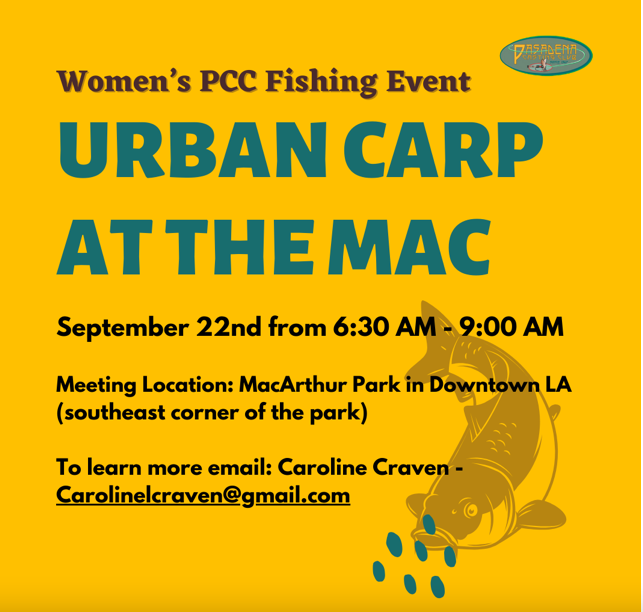
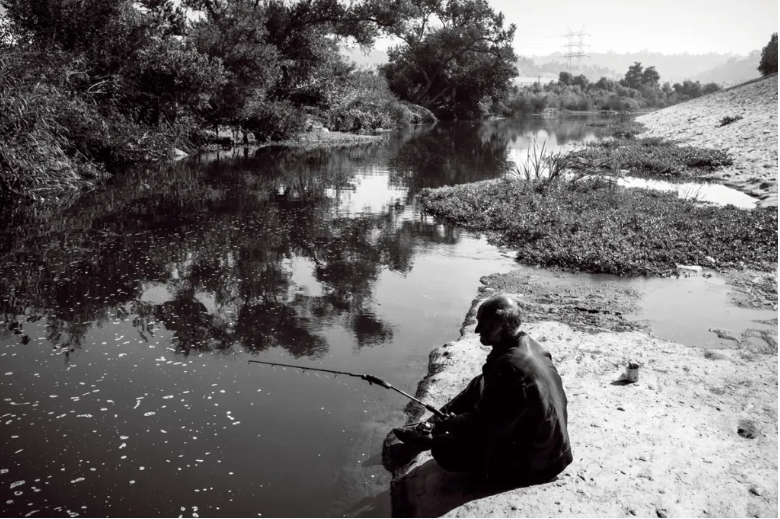
Brian B. Rasmussen, a professor at Cal Lutheran, wrote the Los Angeles chapter. He contacted me a few years ago and we had a nice chat about all things “riverly” as we used to say. My thoughts are included in his chapter, which dwells mainly on the inequities of the “white river” and the “minoritized river,” in other words “fishing for fun, not food.” The lens through which he views the LA is certainly worth a read, especially for its history of carp and how they got here. The name of his chapter, after all, is “Angling in the Anthropocene: Carp and the Making of Race on the Los Angeles River.” A feature on the homeless fishing for food came out a couple of years ago in High Country News.
Finally, if you’re interested in this topic, Gonzaga Climate Institute will host a YouTube conversation with the book’s editor and some of the contributors on Tuesday, Oct. 22.










 lariverflyfishing