Category: Events

Events that you might enjoy attending.

Third annual Off Tha’ Hook is ‘bass in action’

maryjane
MARY JANE GARCIA gets little help from her brother as she poses with her trophy and bling. (Jim Burns)

On a cloudy Saturday, the third annual Off Tha’ Hook fishing throwback got off to a solid start as 20 adult anglers descended the riprap to the river. What happened to the additional 17 fishers who signed up is anyone’s guess, but some speculated that the change of location, from North Atwater Park to the Bowtie Parcel could have contributed.

morris
WINNER KEN MORRIS contemplates which  Trout Unlimited flies he received as gifts for joining the organization will match river aquatics. (Jim Burns)

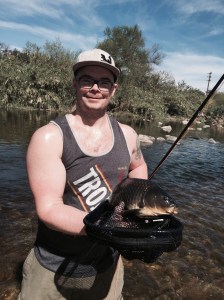
Whatever the reason, action started early when Chris Manno of Los Feliz hooked a beautiful largemouth bass with his spinning rod and lure. He looked to have it going on into the home stretch until Ken Morris, also of Los Feliz, also hooked a bass, which, when inspected by the biologist Rosi Dagit, turned out to be 2 centimeters longer as well as heftier in the midsection. Morris also landed another bass and two green sunfish.

If we were horse racing, it would have been a win “by a nose.”

bass
A BASS gets measured before being returned to the river. (Jim Burns)

This was a first, in that carp have won the grand prize the last two years.

Meanwhile, the kids event really took off this year, perhaps doubling in size from 2015. A hundred children and teenagers had to go through four checkpoints with their parents before getting a rod and heading down to the water.

In the kids’ division, Mary Jane Garcia, 9, of Koreatown, caught not one, but two small carp.

When asked what her spinning rod bait was, her father gave a knowing look. After all, he’d nearly landed a carp earlier in the adult division.

“Tortillas,” he said, “just plain tortillas.”

Yes, the tried and true LA River carp elixir.

Meanwhile, Elijah Rodriguez, 16, of Los Angeles also won in the kids division for a beautiful, large tilapia.

img_1180
IT’S NEVER TOO EARLY to get in some casting practice, especially in matching blue T-shirts. (Jim Burns)

Also, this year, besides being at a new site, three fly fishing clubs supported the tournament, Pasadena Casting Club, Downey Fly Fishers and the Southwestern Council, which is actually composed of more than 20 area fly fishing clubs. PCC again donated a box of flies; and Downey was busy tying flies for the kids to use on the river. Patagonia donated more than $700 in gear, and Harley Davidson also contributed prizes this year as well.

Trout Unlimited provided lots of fly casting instruction, in which the object was to get the unhooked fly to set off a mouse trap. TU’s Bob Blankenship and Drew Irby are men of infinite patience, setting and resetting the traps, as well as untangling more than a fair share of birds’ nests.

Finally, Ken Jarrett, of Morro Bay, netted a minuscule Mississippi Silver Sides, winning the “rarest species” award.

“That’s the first time we’ve found one of those in the LA River,” Dagit said.

Below is video proof that there’s really nothing like catching your first fish. This video, taken by Bradley Martin, shows his son Wyatt hooking a fish for the first time.

https://youtu.be/jWMnImQfR6A

See you on the river, Jim Burns

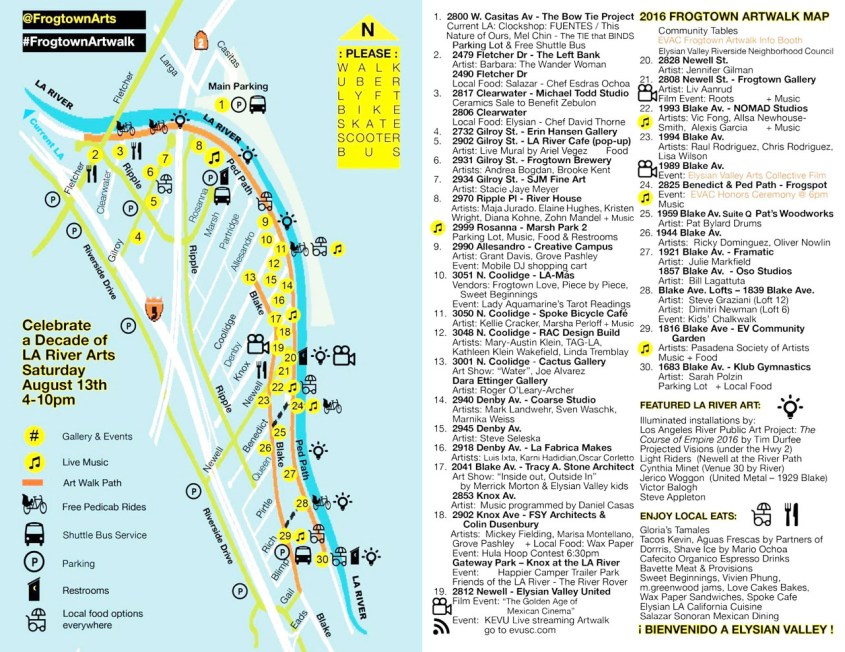
Calendar Item: Tenth Annual Frogtown Artwalk slated for Saturday, Aug. 13

image1 This year, Frogtown Artwalk, 4 p.m.-10 p.m., is dedicated to the vision of Lewis MacAdams of the Friends of the Los Angeles River (FoLAR), now in its 30th year of protecting and restoring the natural and historic heritage of the LA River. At the Artwalk hub, the Frogspot, an award ceremony at 6 p.m. will honor MacAdams for his work; CD13 councilman Mitch O’Farrell will also be thanked for his involvement in the Artwalk. See you on the river, Jim Burns
FoLAR announces release of third river study

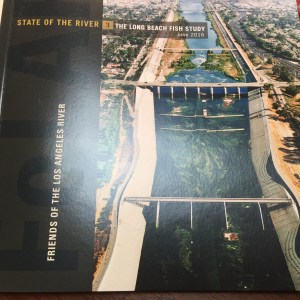
Hey, now, let’s get happy. Friends of the Los Angeles River just released “State of the River 3: The Long Beach Fish Study.IMG_1130

As the organization’s founder writes in the introduction: “The first time I came to Willow Street in Long Beach was to announce our first LA River cleanup in the 1980s. We called for 10,000 people to join us in trash collection and only about 10 showed up. “ He goes on to say that most would have seen this as abject failure, but, as an organization that thrived on failure, it was surely a win, instead.

Lewis MacAdams recounts how that failure lead to its first grant, one that chronicled the 200 some odd bird species living in and around the river.

Later, in 2008, came the mid-river fish study, revealing that nature is just damned hard to kill, even with our best efforts. Participants found hundreds and hundreds of non-native fish living in the Glendale Narrows section of the river, by Atwater Village.

Today, you can read about the efforts of more than 130 professional scientists and amateur anglers, all coming together to support both FoLAR and the Aquarium of the Pacific in this latest release. Five fishing events, coordinated by the Resource Conservation District of the Santa Monica Mountains and FoLAR, plied the brackish waters from May, 2014 to August, 2015. The story of what was – and wasn’t – found unfolds herein like a good mystery. Rich field notes catalog water quality (surprisingly good), days and times of the study, numbers of participants and anglers, gear used and fish caught.

And, as with many things, it could be an odd experience. For example, one day, trash collected in seine nets lists:

— condom                               — surgical glove

— tea kettle                            — Doritos bags

— ketchup                              — trash bags

— men’s brown sock

As Robert Blankenship, president of the South Coast Chapter of Trout Unlimited, who lives in the area, writes, “I visit and fish this area regularly. I’ve caught a bunch of carp, with a few big catfish and some smallish largemouth bass thrown in” and goes on to lament that on the very hot survey days the anglers “demonstrated why it’s called fishing, not catching.”

The big prize of the survey was a tiny, native fish that literally swam into the hands of one volunteer. Dabin Lee, a California State University Los Angeles student, caught a Killifish.

Dr. Sabrina Drill, natural resources advisor, UC Cooperative Extension, notes in the book that “For some, the measure of ‘functioning’ ecosystem is whether it supports native biodiversity,” and goes on to write that by that measure the in-stream community is failing. But, given the robustness with which Angelinos now fish and kayak its waters, “the meaning of the suite of fishes in the river now is open to interpretation and depends a bit on your starting point.”

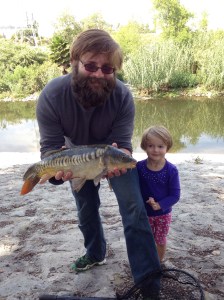
WHOA! Check out the lateral line on this beautiful, rare mirror carp Jihn Tegmeyer and friend caught. (John Tegmeyer)
WHOA! Check out the lateral line on this beautiful, rare mirror carp John Tegmeyer and friend caught. (John Tegmeyer)

Still Drill regrets the absence of native species, and there is no denying that the king we all wish to return to our area, the endangered Southern California Steelhead, is missing from this and the Glendale Narrows survey.

Although there are several photographs of two steelhead in Ballona Creek in 2008, as Rosi Dagit, RCDSMM senior conservation biologist, writes “Most years, fewer than 10 adult steelhead were seen throughout the whole area, concentrated in just a few rivers and creeks.” That is down from runs of literally thousands of fish in the 1940s, which has been well-documented in the Los Angeles Times.

“We thought for sure there were steelhead trout lurking in the river at Long Beach, waiting for concrete removal so they can make their way back upstream as they did for the last time in 1940, but no such luck,” writes William Preston Bowling, FoLAR’s special projects manager. “The California Killifish was discovered in this study and could be an indicator for water temperatures that a steelhead could survive in.”

To this end, it’s imperative that the billion-dollar re-imagining of the Glendale Narrows area go beyond architecture and new housing. What’s important for the steelhead is also supremely important to us: better water quality, reducing river water temperatures and restoring riparian function, as Dagit notes elsewhere in the text.

So, if you missed volunteering for Willow Street, don’t despair, the work continues, moving to the upper river and a chance to sign up for Wednesday’s field excursion.

See you on the river, Jim Burns

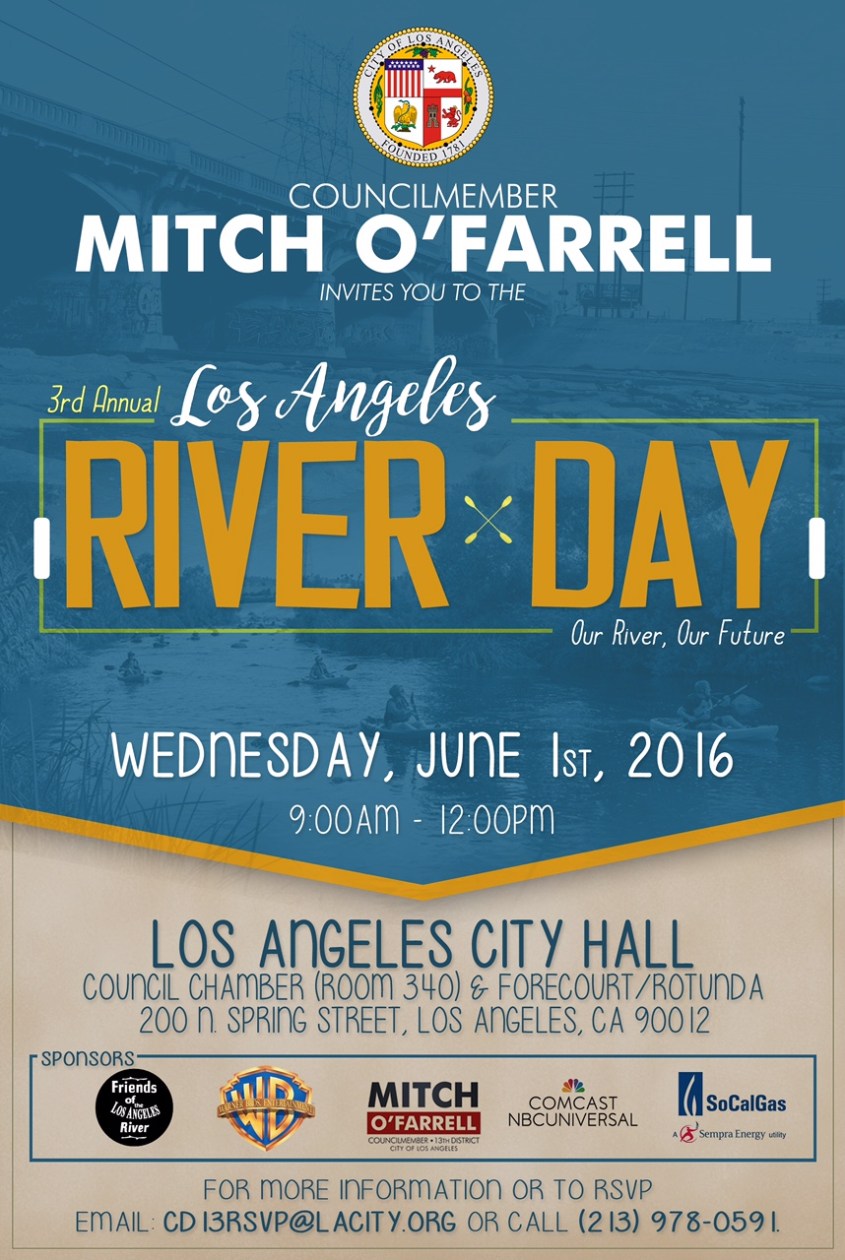
River Day returns to City Hall

image1

Memorial Day marks 4th opening day on the LA River

image3
This could be your summer to pull a carp, bass or tilapia out of the LA River — and then put it back. (Jim Burns)

Tomorrow is opening day on the LA River — for the fourth year in a row. Even though there’s actually sneak-fishing year around in its Tide-scented waters, from Memorial Day throughout the summer until Labor Day, anglers can legally fishing in two designated recreational areas, Elysian Park and Sepulveda Basin.

You may have your license checked by an MRCA ranger on patrol, so be sure to buy one. Hopefully, you buy one every year to help out the conservation and stocking efforts of the California Dept. of Fish and Wildlife. A one-day license is $15.12; resident, annual weighs in at $47.01 (What’s with the penny?)


Check out these maps to get your bearings (Credit MRCA):

Remember that you can also put in your kayak, or go with any of the following companies: L.A. River Expeditions, L.A. River Kayak Safari. Minimum age is between 10 and 12, depending on the locale, and the price runs between $50 to $75, depending on the company and the trip.Also, to celebrate its 30th anniversary, L.A. Conversation Corps is offering $30 tickets for the Sepulveda Basin excursion though Paddle the L.A. River.

And, if you’re chillin’ in Elysian Park near Benedict Street, the Frog Spot’s always a good place to take a break, swap river stories and get some food. Lots of music happens throughout the summer, as well as educational programs. The FS serves beer and wine after 2 p.m. Saturdays, and there’s always free water and wi-fi as well.

Take some time to wander the neighborhood, one which is quickly reinventing itself. There’s a new brewery in the works, as well as new, open-air Salazar, close to the Fletcher Bridge.

So, before it gets real hot, catch and release a carp, raise a paddle, get dunked, try downward-facing dog in a pocket park, spot a frog, make friends with a duck, pretend the roar of the 5 Freeway is actually a gurgling mountain creek (believe me, it happens), whatever, but get out there!

See you on the river, Jim Burns


Bowtie Parcel: Playing hooky to listen

This slideshow requires JavaScript.

During this weekend’s middle river section cleanup, I decided to walk off the beaten path in search of a fishing line recycler at Bowtie Parcel. I’d never spent any time at the oddly named area, but the sky was clear, the wind, light, as I walked across an inauspicious patch of land.

Conservation corps. members unloaded the latest haul of garbage from a flatbed into a large debris container. As I walked, the desert sand underfoot felt ugly and crunchy, threatening, not anything like the beautiful Marsh Park that lies almost directly across the river.

Squinting into unrelenting sunshine, I zeroed in on a distant sign, and as I approached remembered exactly where I was — the beginning of the Bowtie Interpretive Walk. At last, I’d made it.

Last year, during one of FoLAR’s fish study outings to Long Beach, I’d met a fisher who was obviously new to the game. He held his tenkara rod in the way we all did at some point earlier in our fishing avocations: pridefully, tentatively, respectfully, as if he didn’t quite know yet what it was capable of, nor what it might coax from his spirit. I envied him in that moment, because, for me, discovering fly fishing was the beginning of true love. As with all true loves, it still is.

Rosten Woo, the artist, had invited me to tour his interpretive walk months ago, but because of work schedules and the vagaries of a Los Angeles life, I’d not met his invitation, yet here I was, finding it, while playing a bit of cleanup hooky.

I’d been intrigued by his description: numbered signs set up along an urban path with the innovative use of SoundCloud for the audio tour. Bring headphones, he’d said, so that you could really hear what’s going on.

Sans headphones, yet enjoying the 30-minute urban audio tour today, I learned that California State Parks purchased this section — shaped like a bowtie — from Union Pacific Railroad for almost $11 million in 2003. The plan is to weave its 10-plus acres into an 100-acre park.

As the tour unfolded over more than 40 minutes and a mile of walking, I learned many things:

— Pine trees hate palm trees. Odd as that sounds, there’s a reason why.

— Eventually L.A. will be “palm less” again.

— Monarch butterflies need native milkweed to survive.

Vapors from train cleanings long ago may or may not seep up through the soil

— NEIS means “North East Interceptor Sewer” and may hold the key to the park’s future.

— The first and most vocal proponents of native horticulture — the Nazis.

And that wasn’t even halfway through the walk.

Eventually, the audio tour ended and I found that fishing line container, scarred by graffiti, but there, all the same, a lonely sentinel and reminder not to ruin what we are gifted. And as I gazed at the river’s fluttering water down the riprap, it was like looking into the future.

Don’t ever believe we can’t have what we want from our politicians, our urban planners, our dedicated dreamers. We very ordinary folk want this river to be returned to our city. And anyone who can squint, as Rosten did, easily sees why.

See you on the river, Jim Burns
image
A freight train roars by a graffiti-covered container in the currently desolate river section know as the Bowtie Parcel. (Jim Burns)


Spring spawn: what lies beneath

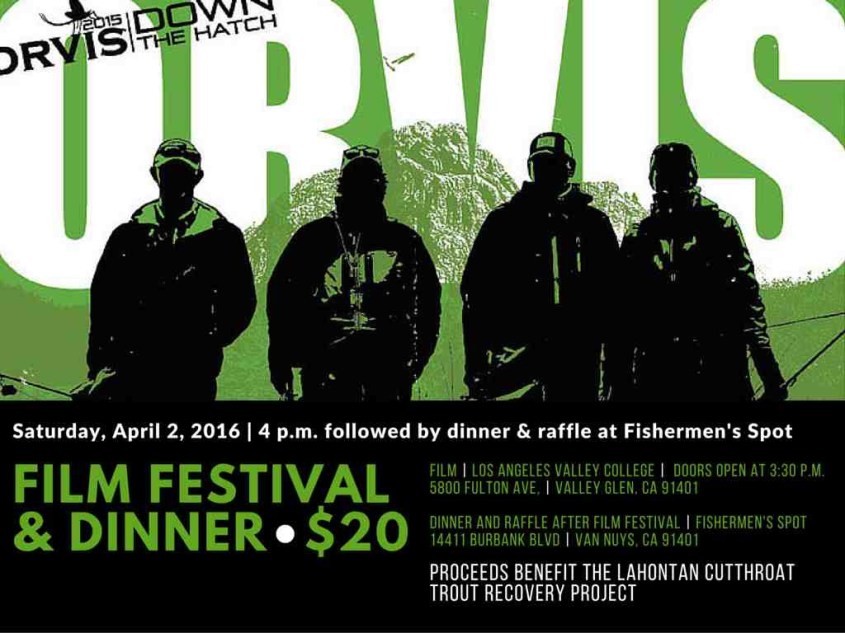
Film festival to benefit trout recovery

TU

Chance to cast top fly rods Dec. 6 — for free!

Castaway 2015

Measured optimism unites steelhead event

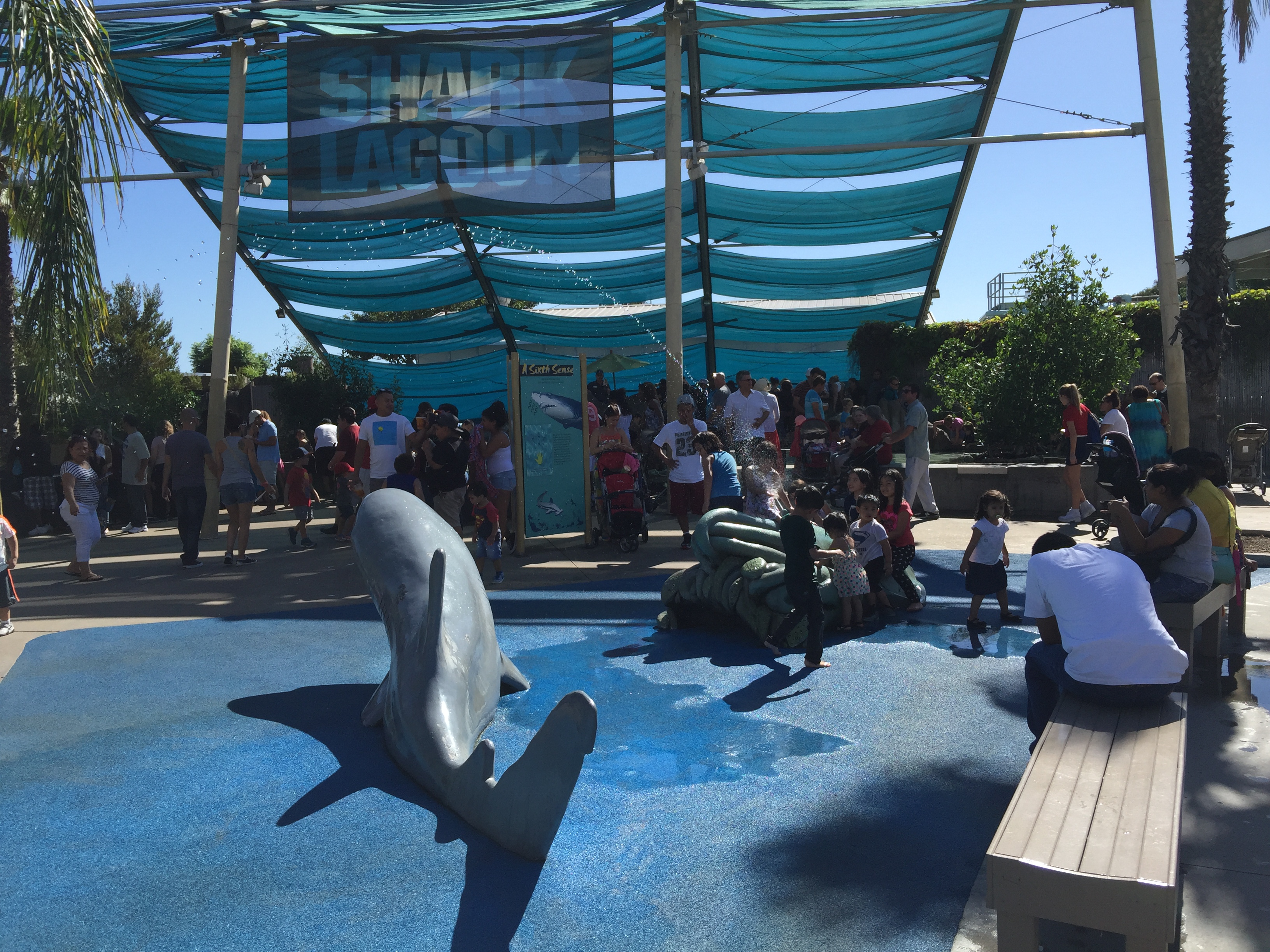
KIDS and their parents take a break in the shade at the aquarium's Shark Lagoon. (Jim Burns)
KIDS and their parents take a break in the shade at the aquarium’s Shark Lagoon. (Jim Burns)

You have to ask yourself eventually, after catching only nonnative warm-water fish in the Los Angeles River, if all the talk about the return of native Southern California Steelhead lies somewhere between academic debate and actual pipe dream. After all, after decades of decline, this ocean-going rainbow trout is now on the endangered species list. Looking down mile after long concrete mile of river bed, it seem nearly impossible to return one steelhead to the river, let alone a healthy population.

And you would be correct in your skepticism, yet very short on your optimism, for we live in an area that once robustly supported this unique member of the Oncorhynchus mykiss family.

And optimism — measured, reasoned, for sure, but optimism none the less — was on full display at the Steelhead Science for Anglers event Saturday at the Aquarium of the Pacific in Long Beach.Trout Unlimited, California Trout and Wild Steelheaders United created this must-attend free event, which would have seemed more likely in Seattle, or at least Northern California, than in Long Beach. Yet, here it was, and passing by the aquarium’s steelhead exhibit, full of young O. mykiss, to enter the large classroom for the four-hour event, there was an optimism evident. Biologists, researchers and fisherfolk varied and mixed their presentations, making it engaging to scientist and angler alike.

Both Trout Unlimited’s Drew Irby, and well-known local angler Kesley Gallagher weighed in on how to release big fish, as steelhead can weigh more than 25 pounds and grow to 45 inches in length.

“Keep the fish in the water, gills wet,” said Gallagher, which may seem like simple advice, but a quick perusal of this blog alone shows that most anglers get carried away by their “grip ‘n’ grin” photos. Anglers should avoid “tailing,” as well as grabbing the fish with grip gloves, or injuring its slime covering with a mesh net.

TU’s John McMillan cited steelhead research linking time out of water to reduced spawning capacity in Atlantic salmon. “Two minutes out of the water kills them,” he said.

Mark Capelli, National Oceanic and Atmospheric Administration (NOAA) South Central California Recovery Coordinator, reminded an audience of about 50, that before World War II catching steelhead was a winter industry. During the winter months these hearty fish return from the ocean to spawn, no easy feat. The fish literally have to surf on storm surges to gain access to their ancestral rivers and creeks, only to have to swim through a inch or two of water as conditions dry out moving upstream. His slides, remarkable for those of us used to an entirely different era, one  of depletion, underscored the vibrancy in this unique fish to our area.

“Unfortunately, the area memory of steelhead disappeared,” he said.

From 1948 through 1953, the needs of a rapidly increasing population decimated area runs that, according to newspaper accounts in the Los Angeles Times and other publications, ran into the thousands during rainy years. Dams, a prime example being the Devil’s Gate Dam in Pasadena that cuts off the Los Angeles River from its upper headwaters, spelled a near-death knell that would have probably killed off many species — but not this one.

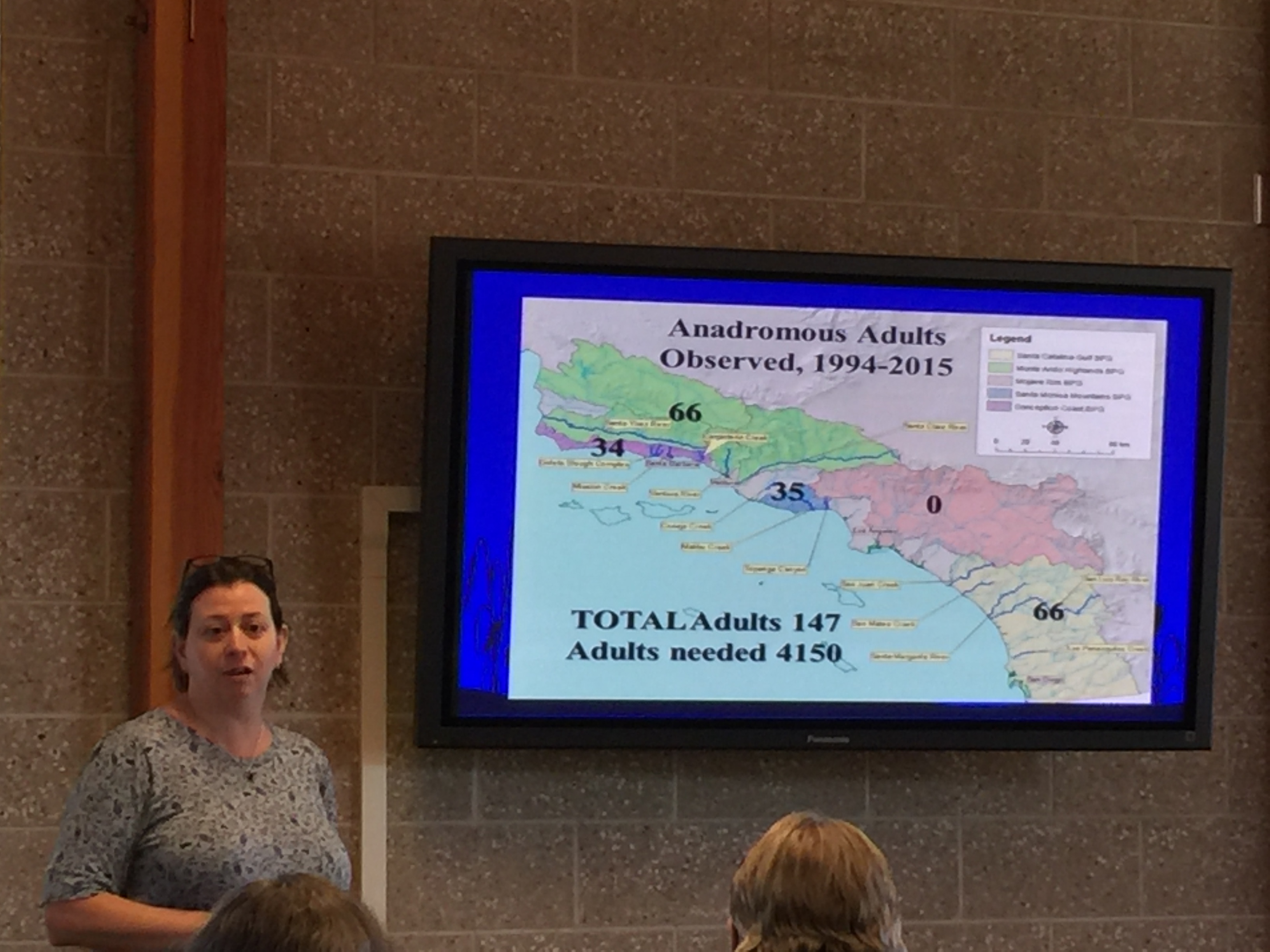
BIOLOGIST Sabrina Drill speaks to the urgency of So. Cal. Steelhead recovery at the Aquarium of the Pacific on Saturday. (Jim Burns
BIOLOGIST Sabrina Drill speaks to the urgency of So. Cal. Steelhead recovery at the Aquarium of the Pacific on Saturday. (Jim Burns)

Viewed as an “indicator species” by the Environmental Protection Agency because its health is linked to its surrounding environment, steelhead thrive in both clean, colder fresh and salt water, and require unfettered access to return from its ocean sojourns to its spawning grounds inland.

As Sabrina Drill, the Natural Resources Advisor for UC Cooperative Extension in Los Angeles and Ventura counties, reminded the audience, between 1994 and today 147 adults steelhead were observed and recorded. Yet only a year after the clean up and restoration of the Malibu Lagoon, a steelhead was spotted in May.

“If you open the door, fish will come,” said Dana McCanne, part of whose job with the California Dept. of Fish and Wildlife is convincing landowners to give steelhead unfettered passage across private property. He recounted how Santa Barbara has successfully removed barriers to fish passage on Mission Creek. And by the end of summer, all of the barriers on Carpinteria Creek will have been removed, opening passage to headwater habitat.

Indeed the NOAA recover plan focuses on “more pristine watersheds” in its five regions in Southern California, home to some 22 million souls. Although its timeline — 75-100 years — is steep according to human standards, in geologic time, it’s barely a heartbeat. Armed with $30 million in restoration money, and piggybacking on the national debate over the right architect for the L.A. River, a lot could happen.

See you on the river, Jim Burns