Tag: West Fork San Gabriel River

And so it ends …

I began writing this blog when God was young — November, 2010. It sprang from exploring the LA River, then grew to include our national monument. Now that I’m in Oregon, I can’t provide the fresh reporting and content that made it fun for me and hopefully enjoyable to read for you. It’s time to say goodbye.
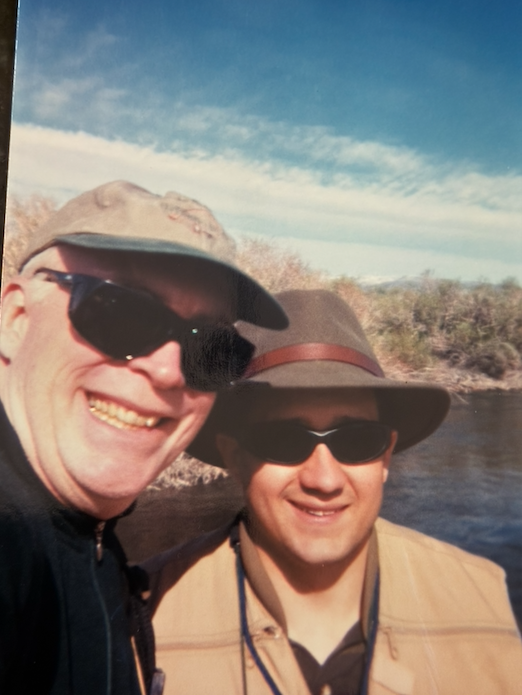
Oh, man, Dave and I had fish fever in the ’90s!

Along the way, I’ve made a bunch of friends: poets, photographers, cyclists, magazine editors, lots of fish lovers, a few dedicated biologists, one fellow dawn-patrol member, a lonesome cowboy, musicians, several tree huggers and even a few of the monarchical persuasion.

I’ve learned one thing: what you do is who you are. If you don’t do anything, but complain about a situation, you will be miserable, make your family, friends and acquaintances think you’re a total bore (or worse). And you’ll rob yourself of getting in on the greatest action of all: positive change.

I’ve met besties through the Friends of the Los Angeles River’s Off Tha Hook annual fishing throwback, inaugurated in 2014. Bob Blankenship, Karen Barnett and Bill Bowling, who together with Trout Unlimited South Coast chapter, continue to dream the impossible dream of removing some of the concrete from the lower river. It’s like the poet and activist Lewis MacAdams once said to me:
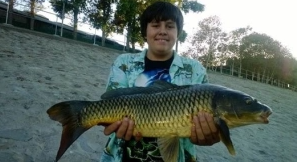
“When the steelhead return, we’ll know our job is done.”

The dude changed my life, and I barely knew him. But he was one of those people whose ideas are so potent they take on a life of their own.

Even here in the outdoor paradise of Southern Oregon, I think about the many times I spent exploring the forks of the San Gabriel, especially the West Fork. How many catastrophes has that water survived? Fires, mudslides, mountains of garbage, fishers who catch and keep above the second bridge. I knew that water like no other, knew its shade trees in summer, loved its talking winter waters, the cooling mists of its seasonal waterfalls.
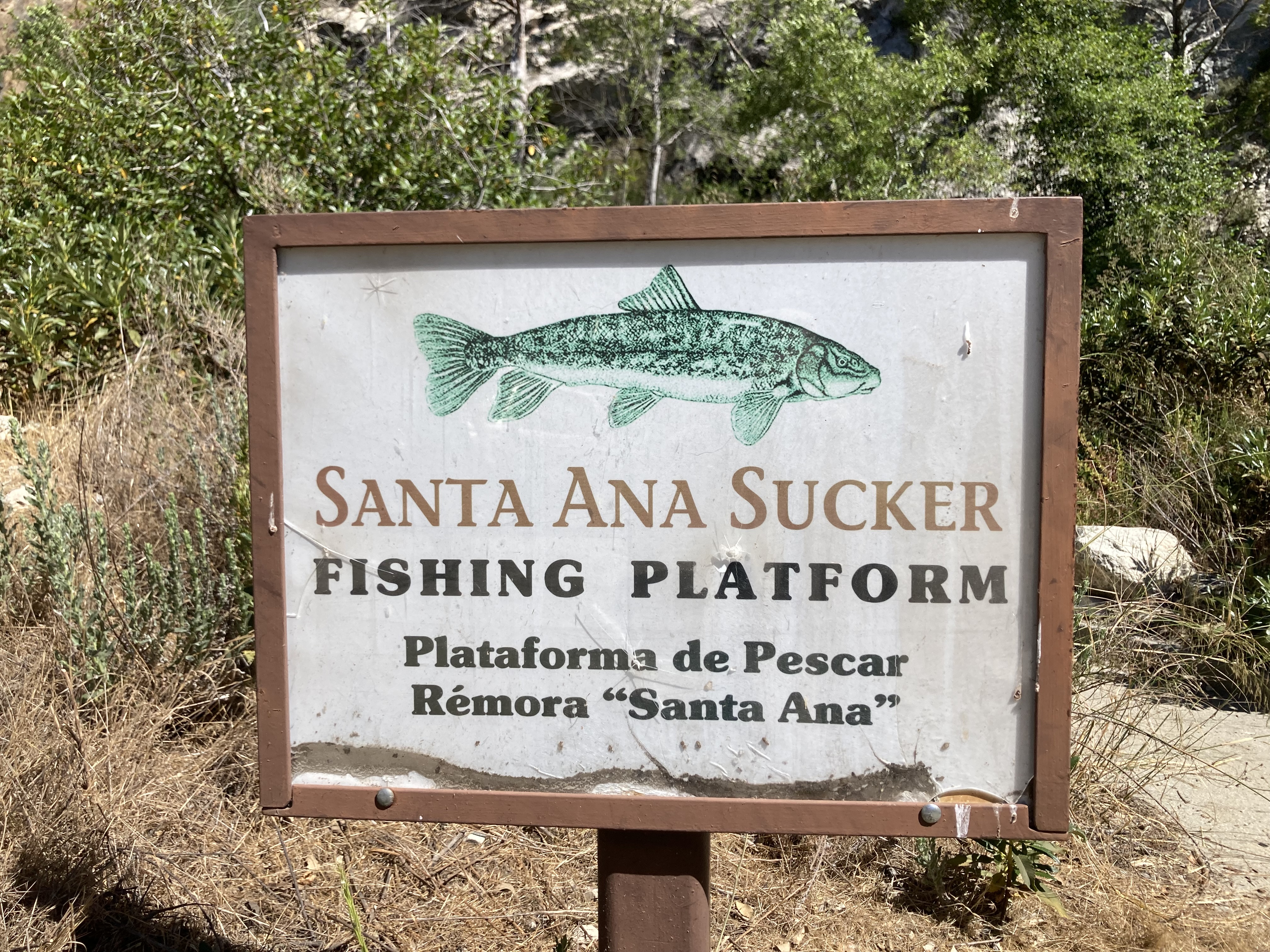
So many guest contributors to thank, I don’t know where to begin: Roland Trevino, Mark Gangi, Freddie Wiedmann, Blake Karhu, Rosi Dagit, Bernard Yin, Keegan Uhl, Derek Flor, Malachi Curtis, Greg Krohn, David Del Rio, Analiza del Rosario, John Goraj, Patrick Jackson, Greg Madrigal, John Tobin, Jeff Williams, Charles Hood, Steve Kuchenski, Johnjay Crawford, B. Roderick Spilman, John Tegmeyer, Julia Spilman, Ansel Trevino, and Ken Lindsay. Some of them wrote multiple posts throughout the years. Thank you, all!

Then, there were the commenters. Of the more than 1,000 comments, some really got into deep explorations of our area, including moekhn, Jim Manoledes, TU’s Sam Davidson, Rivertoprambles, muddler5, PCC’s Scott Boller, Jessica Groenevelt, Capt. Joel Stewart. msangler, Ken Iwamasa, Larry Pirrone, Jack Train, Ken Uede, Omar Crook, Alex Brown, James Pogue, Bryan Rasmussen, paracaddis, Jane Herrmann, sublimedelights, Zino, Ryan Anglin, Trevor McTage Tanner, H. Carl Crawford, Al Q, Tim Brick, Janna Roznos, Izzac Walton, Celeste Walter, Fish Foo, Tilly, Gregg Martin, David Oh, Nicholas Blixt, paracaddis, Dianne Patrizzi, Fly Fishing God, Princess Hahamongna, and Lester Maypole.

Fifteen years and more than 330,000 views later, I can honestly say that many of the names on this page changed who I am and how I view the world. For there is no better starting place for learning to love nature than to see what gets lost in taming it. I think the point is not to doom spiral because of what we’ve lost, but rather to work like hell to try to keep what we have. In the coming years, that will be a particular challenge.
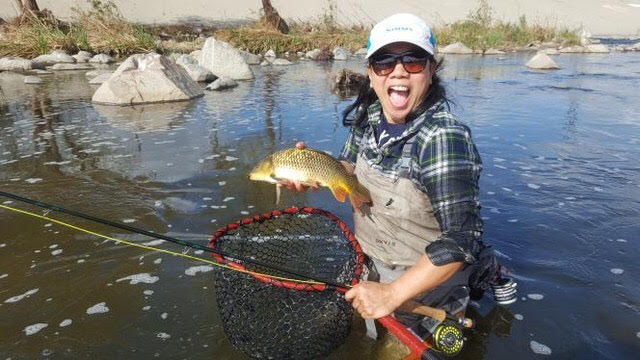
What would the world be without birdsong? Birding has become the No. 1 outdoor activity in Britain, even as we witness bird numbers crash around the globe. So what do you do? Where do you begin?

I started in my backyard with a couple of feeders, which I know my friends, the scrubjays, certainly appreciated when food gets scarce in winter snow. One will even call in my open office window to remind me, it’s time for more peanuts.

Where would the world be without fish? I’ve never worked in commercial fishing, but sport fishing so captured my heart that I’ve spend all this time documenting what it means to fish literally in the middle and on the edge of Los Angeles. And I can tell you one thing: given a chance, nature always comes back. May it be so in the future.

Finally, where would we all be without each other? That’s a scary thought, but many of our young folks don’t view society like their elders. Think about how apps have commoditized our mutual experiences. “Take me to the airport?” a big ask, has been replaced by Uber. Pay for play, instead of friendship reciprocity. What were once blind dates, set up by a friend, have become the domain of Tinder. And risking talking about your feelings with your friends, well, now that, too, is paid for with a human — and increasingly — an AI therapist. We must be careful to not let technology separate us from each other. It takes an effort to pull someone (including me) away from my cell. Make the effort. It begins with the loss of communication, but, really, it’s about the loss of trust, as young writer Clare Ashcroft, puts it so well in The New Critic.

I am convinced there is no antidote to trust loss quite like getting out of doors. Simple things, like remembering the vastness of a blue sky, the smell of recent rain, the chatter of birds that makes you wonder what to call them. Running waters hold a kind of magic, but only if you take the time to slow down, look and listen. Nature has its way of breaking down barriers. Take the time. Consider bringing a friend, especially a younger friend, on your next adventure. We really do need to learn to trust each other again, and the outdoors can teach us how to regain the bits we’ve lost.

For the last time, see you on the river, Jim Burns

RIP, a true visionary and friend, Dave Baumgartner.

Bike ‘n’ fish on the West Fork!

Hey, get out there!

A better-than-average SoCal rainbow. It’s a great time to be on the water.  Good flows, lots of bugs, snakes are still “chilling” and fish are hungry. Remember  the West Fork is closed during the week again this year and open weekends. — Blake Karhu


An actual Santa Ana Sucker!

The source makes a difference

This is where the forks flow into the main San Gabriel River, behind the earthen San Gabriel Dam, which is currently dry. Note the difference in color between the East Fork, on the left, that flows from Mount Baldy, at 10 ,000 feet, and the West Fork that flows from Cogswell Dam. (Credit: Jim Burns)

Back-to-back wet years = wow

THE WEST FORK was rolling today! I even went for an unintentional swim, so, dang, be careful out there! (Credit: Jim Burns)
THE EAST FORK in early May, 2023. The rains gave us fishing fanatics a whole year of wonder. (Credit: Jim Burns)

At long last, West Fork reopens

IF THIS GRAFFITI bugs you, why not make a quick phone call to our friends at the Forest Service, (626) 574-1613? (Credit Jim Burns)

We Southern California steam fly fishers are a unique lot. If you’re reading this, you must love overcoming obstacles. After all, for a modest investment in an 8 weight, a decent waterproof reel, working on a longer cast and a sinking line, there’s the Pacific Ocean right in front of you, with its siren call of corbina runs, maybe a halibut and, for sure, a perch. (Just don’t bonk any beach joggers on the head when they absentmindedly walk into your back cast. That can lead to therapy — for both of you!)

Yet, here you are wandering the San Gabriel National Monument, doing the Curtis Creek sneak behind JPL, pondering a long drive to Deep Creek or scouting Piru Creek to the west. I mean, what’s with you?

Your friends up north, think you must be a bit daffy to get excited by a hand-size catch that takes a full-size outing to snag, or stiffle a chuckle when you tell them about the three (count them, three) fish passages in various stages of planning on the LA River.

They want to chase steelhead, dammit, on the Klamath or the Trinity; or bow a spey rod lifting a massive Lahontan Cutty at Pyramid Lake, or shiver through a UFO encounter and a fighting ‘bo on the Nature Conservancy water of the McCloud.

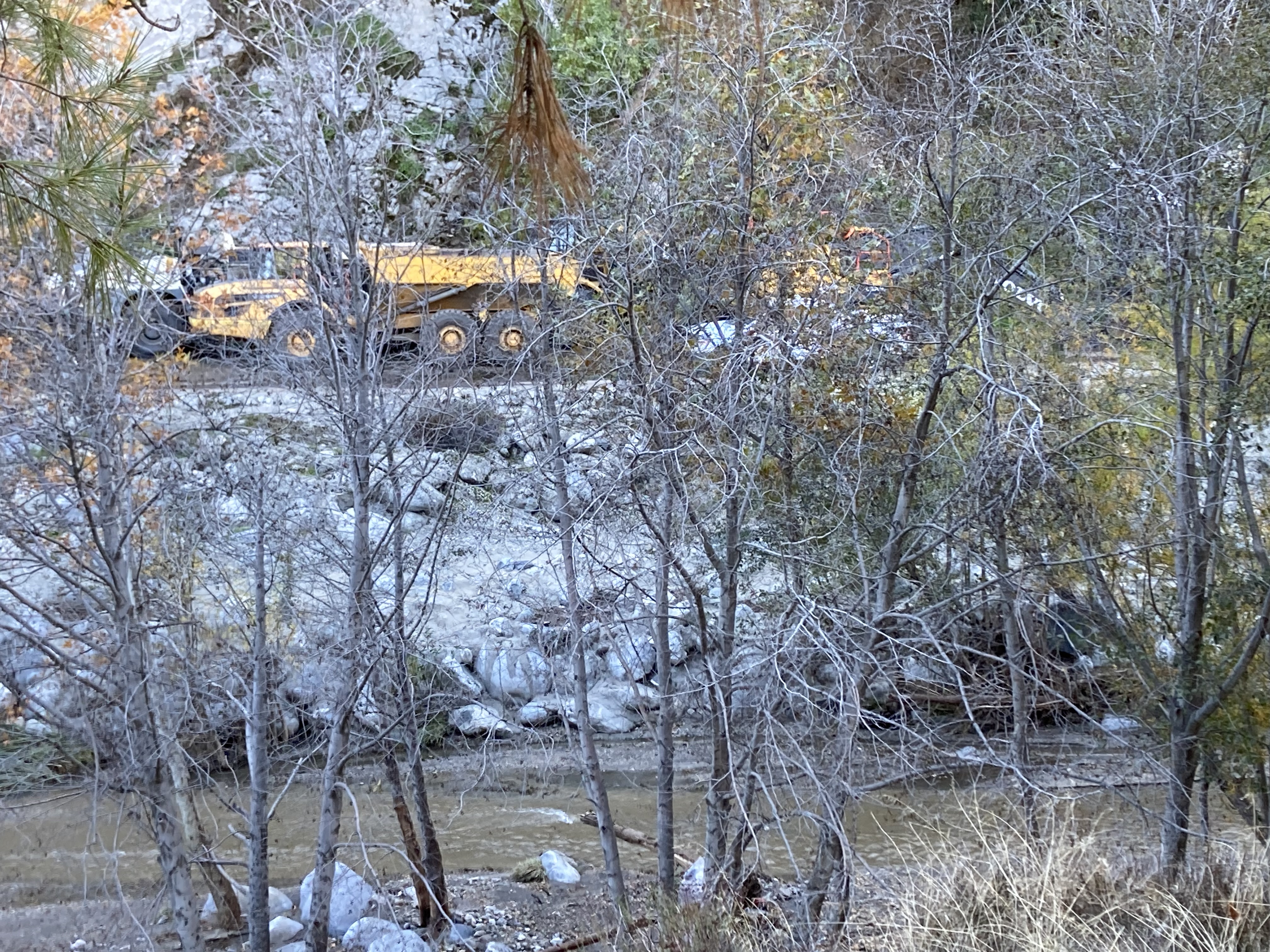
The heavy equipment that removed thousands of tons of debris are gone, but the scarring remains. (Credit Jim Burns)

The very fact we have a lot of water that can or might hold wild trout right here in dry, hot Southern California thrills you. You wonder if your ancient Orvis 2 wt. might work well as a Euro rod? Contemplate getting up at dark thirty, just to explore another skinny water and see if it holds trout. Wonder if that was actually a Trico on your windshield and then dream about how the stubborn finny friends who have survived, dams, drought, fire and trash, trash, trash might react to one on 7x tippet? Good lord, those little fellas could hold the genetic makeup of the endangered Southern California Steelhead!

Well, what can I say, I’m right there with you. We are both giddy optimists! I love exploring what we have here in So Cali. And, finally, at long last, tomorrow is opening day on the West Fork of the San Gabriel River. After so, so long being closed during weekdays for a Public Works rehab of the water and riparian habitat conflagrated by the Bobcat Fire, it’s back.

Oh, just don’t mention that part about the UFOs in Dunsmuir. It’s secret.

See you on the river, Jim Burns

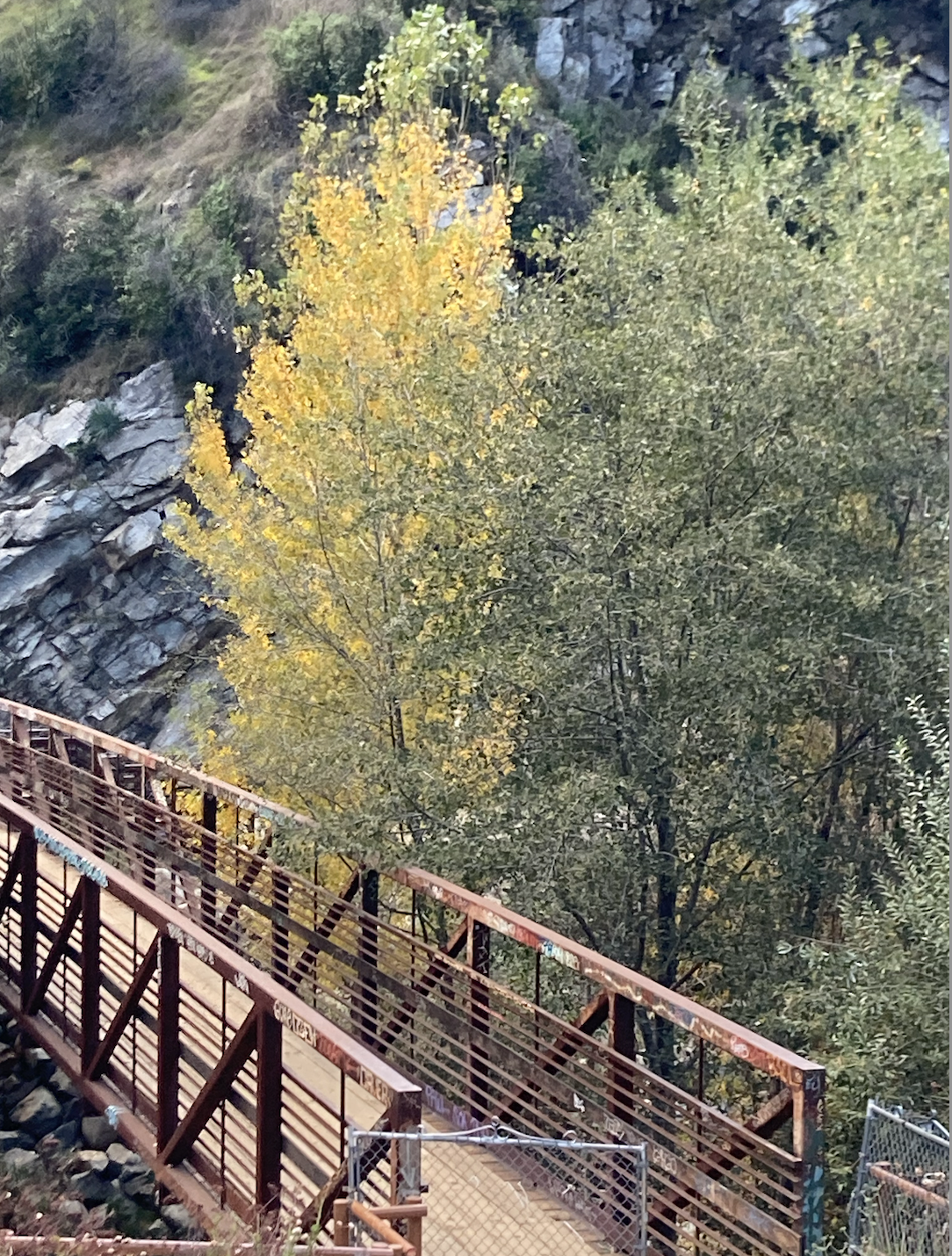
Only the truly optimistic So Cal stream fly fisher dreams of crossing a graffiti scarred footbridge to find paradise. (Credit Jim Burns)


Derek Paul Flor just commented
Tiring of the long and expensive trek up 395, I have decided fishing the local opportunities has it’s own charm. Catching fish then returning them to fight again, has it’s own charm, and in our pressured local waters, it just seems so right.

Trout relocation a boon for fishers

This quote from a 2003 Los Angeles Times article says a lot about fishing the West Fork of the San Gabriel, at least downstream.

” ‘The trash needs to be cleaned up,’ said Jason Conway, 27, who traveled from San Bernardino for the trout. He had just reeled in a six-incher.”

Or maybe this, also from the LAT, but from 1988:

” Since 1981, the West Fork, one of the most heavily fished streams in the state, has endured a man-made flood, fire, drought and a destructive release of mud from Cogswell Dam that reduced the fish population.

“’It has been hit with every disaster possible,” Edmondson said. “It has been so beaten down. This stream is a real underdog.’ “

This forest fire on the West Fork was captured by a photographer on Sept. 29, 1924. (Huntington Library)

Edmondson is Jim Edmondson, who at the time was  the Southern California manager for California Trout, the non-profit dedicated to the preservation of wild trout in our state. He was looking for bug life, one of the keys to a healthy river, and he found it.

Flash forward more than 30 years and the West Fork seems periodically bound to be smote by God, or at least the weather, and just as surely to come back to life.

In 1979, the Department of Fish and Wildlife (Then called Department of Fish and Game … times change) estimated around 20,000 trout enjoyed life in the water of the West Fork. But two years later, while repairing Cogswell Dam, the county Flood Control District released an estimated 200,000 cubic yards of silt into the stream, killing thousands of fish and burying their spawning ground, according to the LAT. That caused CDFW to sue the Department of Public Works for $2 million.

Five years after that, a fire around the river burned close to 4,000 acres of bush that held soil in place. Without it, winter rains pushed mud by the tons downstream, again burying trout spawning gravel. And, according to the article, “Just a year after that, the Public Works Department released tons of water while testing valves at the dam during the spawning season, flushing away much of a generation of trout in 70 minutes, Edmondson said.”

But the good news from all of these fish-tragic events –that Public Works, the Forest Service and Fish and Wildlife would meet regularly, study water flow and release water more slowly from the dam to avoid damage — echoes today.

I had quite a round robin with these three agencies over the last several weeks trying to track down a tip from a guy who told me he spoke with a biologist who was releasing trout at the bridge before the East Fork parking lot. By the time I got there, he was nowhere to be found. Emails to both the Forest Service and CDFG at first floated along without any definitive answers.

Then, several Saturdays later, while fishing with two TU buddies on the West Fork, we struck up a conversation with three guys in a red pickup truck, headed down from Cogswell Dam. The driver wore a brown CDFW shirt. He confirmed that during ongoing work on the far side of Cogswell, the department had, indeed, been saving trout, relocating them to both the West and East forks. If only I’d not been under the influence of trout fever, I would have gotten his name.

At any rate, here’s what I’ve found out, officially. No, say the agencies, there are no fish being relocated from Cogswell, but, yes, Los Angeles County Public Works is moving fish out of the San Gabriel Reservoir construction area, which includes portions of the West Fork and East Fork San Gabriel River.  In general, fish captured in the West Fork are relocated farther upstream in the West Fork. Fish captured in the East Fork are relocated farther upstream in the East Fork. This is all part of the San Gabriel Reservoir Post-fire Emergency Restoration Act that began in June, 2021, and will run through 2026, according to Lisette Guzman of Los Angeles County Public Works.

The number of fish relocated varies week to week, depending on the areas fished and site conditions. The fish species that are relocated include the Santa Ana sucker, Santa Ana speckled dace, arroyo chub, and our favorite rainbow trout.

“On a typical day, fisheries biologists begin their day by coordinating with other project activities that could affect aquatic resources,” Guzman said via email. “Captured fish are placed in aerated coolers and monitored regularly while fishing activities continue.”

Once the fish arrive at their new homes, they are inventoried, released and monitored. These ongoing efforts are split between the East Fork, the West Fork and the North Fork. When is the last time anyone caught a fish on the North Fork?

Any of us who fish these waters regularly and over time have seen a jump in numbers and size of rainbows this season.

Joseph Stanovich, an environmental scientist who monitors the trout population in the upper San Gabriel River for the CDFW put these efforts into perspective.

“Spawning grounds are influenced by water availability and water quality for our native resident rainbow trout. Water temperature, forage and size of habitat availability are big players in how fast they develop,” Stanovich said. “It can take a half-year to a year to get to hand size, but based on environmental variables it’s hard to estimate.”

This season, a hand-size trout, once all I caught in this watershed, has given way to bigger fish.

See you on the river, Jim Burns

.

One of the tool used by biologist to relocate fish is electroshock. (Credit L.A. County Public Works)

Earth Day hope: The sweet, sweet West Fork runs clear

If there’s one waterway that encompasses the struggles of nature in this post-modern age, it’s the West Fork of the San Gabriel. While it provides a respite from our metropolis, as a place to learn and practice fly fishing, ride a bike as far up the canyon as you can, or just hang out wondering what the hatch is, you can feel the magic, a renewal that goes deeper than natural beauty, radiating from the land itself.

I used to take my now-grown son here, pulling him along on his inlines behind my old bike. I’ve had my heart soar with uplift current-riding red tail hawks, had it broken by endless amounts of trash left by the careless, had it lifted again by volunteers who worked tirelessly to save the remaining fish after the devastating Bobcat Fire. This is the place I come to mend my broken heart, a place to gather strength and hope for the future.

So on this Earth Day, I offer a video from the intrepid Steve Kuchensky shot on April 15. Steve reports water temperature was 56 degrees. The silt is gone; the mud is gone and that beautiful water flows like no other! Meanwhile, CJ Vapenik, talked with an angler who caught a trout on a dry. We love to stretch the truth on the water, but this truth is gold. A guy caught a fish on a dry while he was wading on the West Fork in 2023!

Now that makes my Earth Day complete.

See you on the water, Jim Burns

November’s thankfulness

Ever since the Bobcat Fire razed our beloved West Fork of the San Gabriel, I’ve dreaded going back to take a look and cast a line. I remember taking my son roller blading here when he was around 8 years old. Now 38, that’s been a long time. The place for me was one of contradictions: like the Wild & Scenic designation, while tons of weekend trash overwhelmed the streams’ skeleton staff; or the designation as endangered for the Yellow-Legged frog that ended stocking of the West Fork, which continued to wow fishers such as myself in years to come — without stocking. Of the picture of a supposed steelhead caught above the dam that set off a stir among biologists and enthusiasts alike, only to later be categorized as another rainbow.

SEDIMENT REMOVAL at the reservoir now takes place Monday through Saturday. West Fork Road is closed to all vehicles. Pedestrian and cyclist use is OK on Saturdays, Sunday and holidays, according to LA Public Works. (Credit: Jim Burns)

Through it all, I loved the West Fork and all the good times it brought into my life.

So, it was with some trepidation that I inflated the tires on the used Schwinn my wife bought me pre-pandemic specifically to visit the WF, oil its rusty chain, brush off its leaves and cobwebs and load it into my go-to adventure car, the 2005 Prius. My heart felt unsettled as I drove to get my $3 cup at Starbucks (actually a mere $2.80 if you bring your own mug …), and followed my familiar route, exiting the 210 at what was once the Miller Brewery exit, heading up the canyon.

I nodded my head as I passed my friend Analiza’s house, thought about the time I had dinner with a woman who I actually think was possessed at El Encanto, heard the words of another friend, Bernard, as he told me about pulling a giant from the lower river. It was like that driving all the way up — the blissful insistency of one’s own memories from a long life.

I almost turned off at the East Fork to avoid having to see what I didn’t want to see. Earlier pictures from braver souls showed a moonscape, where once thick, native trees had shaded much of the seven-plus miles of bike path to the Cogswell Dam. But, I persevered and pulled into the oddly quiet parking lot. Also, odd was the fact that I passed some three Highway Patrol cruisers at the bike lane’s entrance, and a fourth at the top end of the parking lot. Never in all the years of my visits had I seen cops there, nor received a ticket for forgetting to put my ancient Adventure Pass on my dash board. This was new.

As I looked closer, I saw why — several pieces of heavy equipment working hard, making noise, lumbering their way, foot by foot, up the canyon road.

But I thought “what the hell?” as I unloaded the bike and put on my sling, full of lunch, water, and a mix of dries and nymphs. “Maybe I can just stay casual and glide on by them.”

I was reminded on the clipboard scene in Michael Keaton’s journalist thriller, “The Paper,” in which he declares “Henry: A clipboard and a confident wave will get you into any building in the world!”

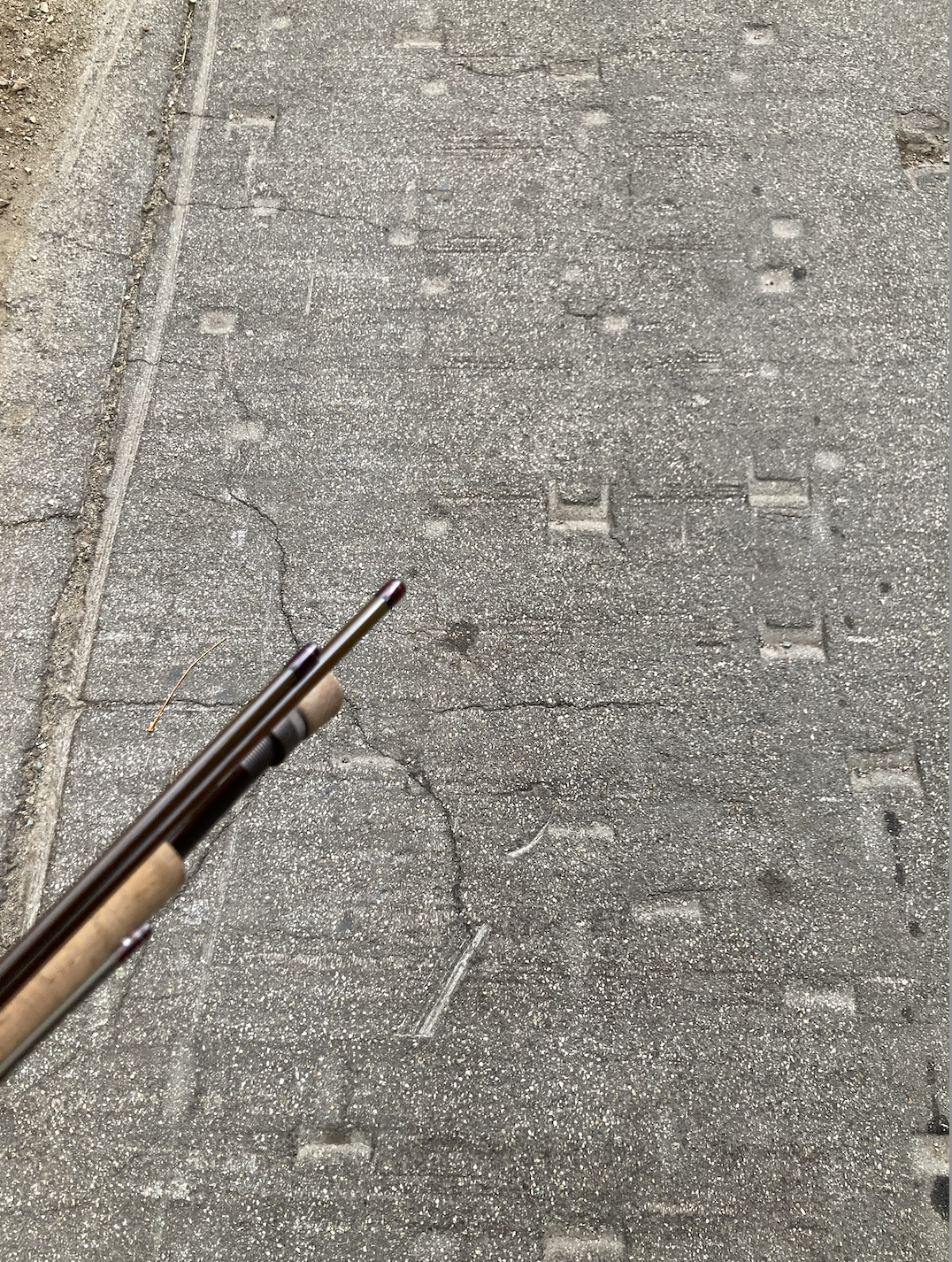
Of course, as I approached the gate and the oddly dressed big fella in the old car by the gate, I didn’t have a clip board, only a 4 weight Winston Ibis.

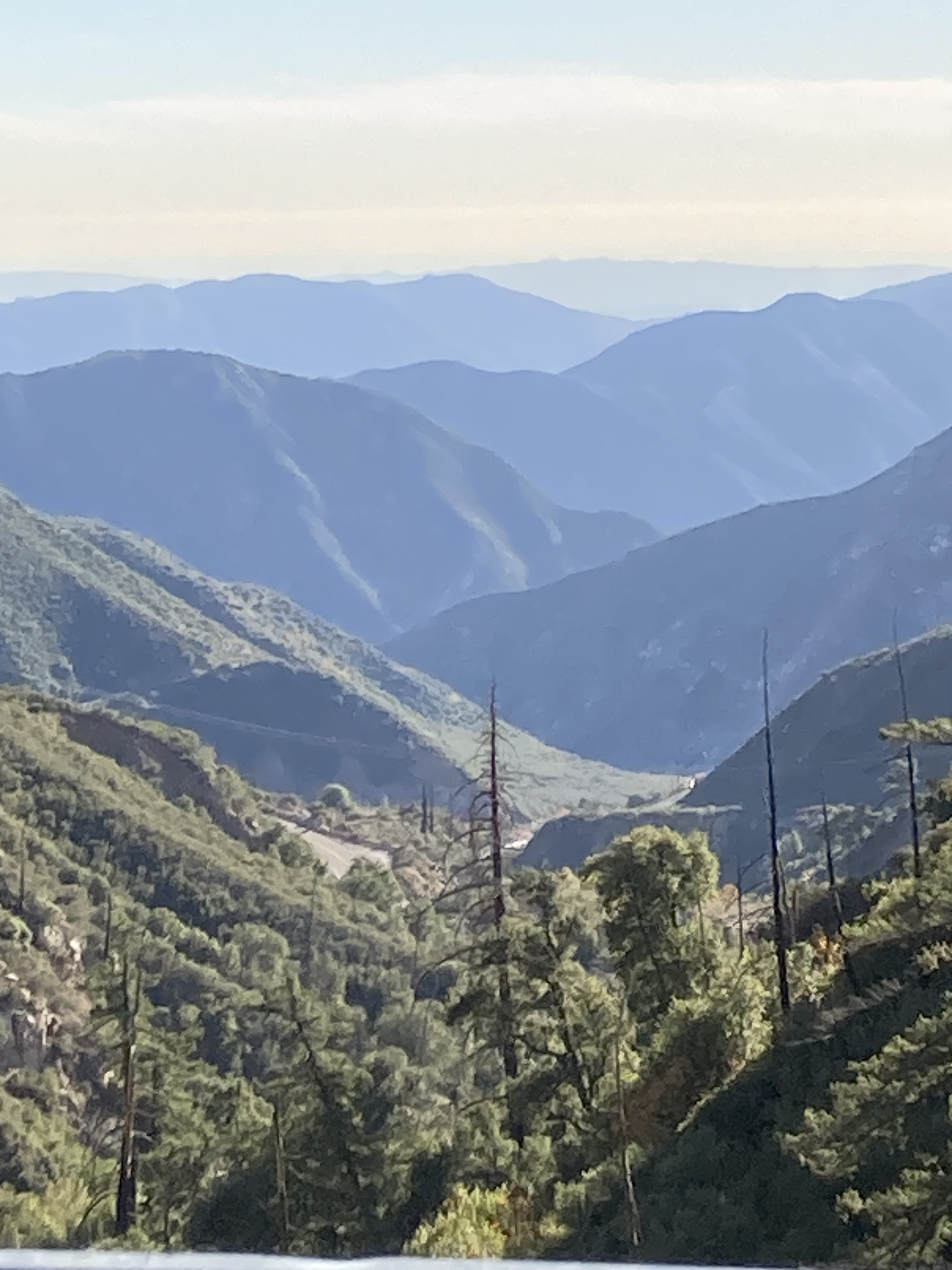
THE VIEW close to Crystal Lake will stop you, with its collection of sharp mountain peaks and deep valleys. (Credit: Jim Burns)

As he lumbered out of his car staring at me, I finally asked, “Can I help you?”

To which he replied, “No, I can help you.”

And he dropped the bomb, the one that let me off the hook of actually seeing what had become of my — our — beloved West Fork.

“It is closed for repairs to the dam.”

“How long?”

“Probably three to four months.”

He still eyed me with suspicion, and I returned the favor. After all the pats, I didn’t expect a guy dressed in old clothes, exiting a beater to be the security guard. But …

Then, I remember: when this closure began I’d run an incorrect headline a thoughtful reader caught. I’d written the WF would be closed on weekends and open on weekdays. It was the other way around. And … this was Tuesday.

Glumly I rode back to the car, stopping to watch all the grunting machinery do whatever they were all doing. But unlike watching big dump trucks and towering cranes gleefully as a kid, instead I felt the weight of loss once again on my shoulders.

To cheer myself up, I decided to drive north to Crystal Lake. In all those years, I’d never driven past the West Fork parking lot! I drove past the North Fork, and, as the elevation steadily climbed from 2,000 to 3,000 feet and beyond, tight valleys filled with the fall colors of yellow, auburn and burnished brown. And the chill was on, beautiful, just the right amount of cool on this cloudless afternoon.

Next time.

See you on the river, Jim Burns

WAY DOWN there is Tad from Orvis Pasadena, who was about to try catching a bass or two. He said the water was crystal clear (no pun intended) in June, but on that day it was murky at best. (Credit: Jim Burns)