Heal the Bay report finds poor water quality within LA River rec zones

image
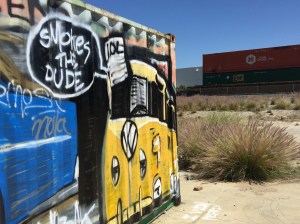
A freight train roars by a graffiti-covered container in the currently desolate river section know as the Bowtie Parcel. (Jim Burns)

The nonprofit Heal the Bay, which publishes the yearly Beach Report Card, Wednesday released a 37-page water study of the Los Angeles River. Weekly water samples from Rattlesnake and Steelhead parks in the Elysian Valley and one in the Sepulveda Basin revealed a fecal indicator bacteria that exceeded federal standards.

“The study shows that popular recreation spots along the Los Angeles River suffer from very poor water quality, which poses health risks to the growing number of people who fish, swim and kayak in its waters,” according to a Heal the Bay press release.

More than six years ago, kayakers proved that the river was indeed a “traditional navigable waterway,” a legal term, and the Environmental Protection Agency invoked the Clean Water Act and triggered its protections.

“EPA is committed to a healthy L.A. River, and we will continue to work with our partners at the state, and other stakeholders like Heal the Bay, to improve water quality, habitat and recreational opportunities,” wrote EPA Public Affairs Specialist Soledad Calvino, in an email. “Water quality is an ongoing challenge in urban rivers, which require monitoring, assessment and measures to address pollutants from stormwater runoff and other sources.”

The EPA was reviewing the Heal the Bay findings at the time of this writing.

Closer to home, Mayor Eric Garcetti’s office lauded the fact that L.A. has made progress “by significantly reducing trashing in our stormwater and reducing spills by 85 percent of the last 10 years.

Kayaking activist George Wolfe was instrumental last year in establishing the Los Angeles River as a "navigable waterway," which invoked the Clean Water Act. (courtesy George Wolfe)
Kayaking activist George Wolfe was instrumental in establishing the Los Angeles River as a “navigable waterway,” which invoked the Clean Water Act. (Courtesy George Wolfe)

“However, bacterial levels tend to exceed federal standards, which is not a surprise for an urban river that receives runoff from more than 800 square miles of heavily populated areas,” according to Liz Crosson, the mayor’s water policy advisor.

Earlier this month, an old sewer pipe, built in 1929,  ruptured in Boyle Heights, causing some 2.4 million gallons of effluent to spill into the river. Health officials closed both Seal Beach and Long Beach for a time. The largest spill in L.A. history comprised some 30 million gallons in 1998, blamed on El Nino storms.

The spill occurred miles from both recreation zones, which are both upriver.

Based on its findings, Heal the Bay recommends:

  • Kayaking and Angling: People should limit water contact, especially avoiding hand-to-face water contact. Users should not enter the water with an open wound, if immunocompromised, or after a rainfall. If there is water contact, rinse off with soap and water afterward.
  • Swimming: While many families recreate in the water, particularly on hot days, adults and children should avoid swimming in the L.A. River, particularly submersing their heads under water. We envision a swimmable L.A. River one day but current water quality is not yet at a healthful level. If there is any water contact, rinse off with soap and water afterward.
  • Public notification: All groups promoting recreation in the L.A. River should provide water quality information and best practices to all participants, using consistent, accurate and prominent information on all outreach materials, and in multiple languages, consistent with the demographics of visitors.
  • Increased monitoring: The City of Los Angeles or responsible municipal agency should institute, at a minimum, weekly water quality testing for fecal indicator bacteria in the recreation zones during the open season (Memorial Day to the end of September), and at other known swimming spots along the Los Angeles River.

See you on the river, Jim Burns

‘Carping’ about your summer reading list

image
THE BIG FOUR, for those who hunt the mighty carp, include an oldie and three relative newcomers. (Jim Burns)

If you’re like me, you probably spend more time reading about fishing than actually tossing in a line. But when the prey is carp, the more time spent in front of a page or a screen, the better prepared you’ll be when you do actually have time to get on the water.

Four books can really ease the learning curve when it comes to catching this temperamental, magnificent fish. I’ve reviewed all of them separately, so follow the link if you want more.

Way back in 1997, three fly fishers spotted what would become one of the biggest fly-fishing trends of this century. Barry Reynolds, Brad Befus and John Berryman actually extolled catching this “trash fish,” when nearly everyone else was laughing them off the water. Well, he who laughs last, laughs best, as the adage goes. “Carp on the Fly” is the keeper classic I turn to, over and over again.

The chapter heads alone tell you there’s a full education within these pages, everything you need before you pull on those waders: Locating feeding carp (italics mine); what carp eat; presentation. And, interesting for you historians out there, the first chapter is entitled, “Why Not?” “Yes,” the first sentence begins, “this really is a book about fly fishing for carp.” Part of the fun of reading this book is its underdog approach.

In 2013, Kirk Deeter wrote “The Orvis Guide to Fly Fishing for Carp,” showing carp had arrived, now being ballyhooed by both a famous outdoor author and a famous company. The book is much slicker than its predecessor, and Deeter put in lots of water time to present the valuable tips contained within its pages. Four-color throughout, publisher Stonefly Press didn’t spare expenses or design talent: After all, So. Cal’s own Al Q. designed the front cover.

Orvis then followed up the next year with “The Orvis Beginner’s Guide to Carp Flies,” which I find a perplexing title. Penned by the admired Colorado carper Dan Frasier, and filled with flies from the sports most trusted tie-meisters, it, nonetheless, seems odd to me that the company puts the word “beginner” in the title, yet only provides recipes for the flies. If a beginner can look at, for example, Jay Zimmerman’s Backstabber, check out the recipe, and reproduce the fly, please let me know.

What makes the book a fun read is all of Frasier’s field work that tells the reader where and when to use the 101 patterns listed in the book.

Two years later , in 2015, Headwater Books published Zimmerman’s own magnum opus, “The Best Carp Flies.” I have purchased many dozen of dollars’ worth of very cool stuff to tie some of these flies, and can tell you I don’t (yet) have the tying skill to do them justice. Zimmerman gives you a deep, long dive into the art of tying. He sources the flies, telling us, for example, that the Carp Carrot first appeared in 1950! He talks creative process, development and “tank tinkering.” I mean, wow, this book is the real deal.

So, if the last time you put a boot into the water, the carp disappeared like you were a fox in the hen house, step back and do some summer reading. I’ll bet things improve thereafter.

See you on the river, Jim Burns


Calendar Item: Learn to fish the LA River with Trout Unlimited (for free!)

13723916_10154002768757851_1104021719672119221_o
Here’s the definition of “cool, chillin’.” And check out the length of that rod! (Courtesy Michelene Cherie/Friends of the Los Angeles River)

Each summer, more anglers discover our home water — and more Angelinos want to check out the sport. We’ve got the warm-water species: carp, bass, tilapia, aquarium dweller … All you have to do is learn how to suit up and catch ’em.

This free event should be a blast, so I hope you’ll come and listen to Bob Blankenship, So Cal TU president, Michael Miller, who leads LA River trips for the Pasadena Casting Club, and me. If you’re new, come on down. You’ll learn all you need to get started. (Yes, buy a fishing license …). If you’re experienced, come and tell us your fishing tales, maybe reveal why a tortilla fly is your fav instead of a Glo-Bug. Or tell us about the day dad caught that insanely famous bass on a popper.

Of course, we won’t be revealing the fishiest spots to throw in, but with the info you garner — and practice — soon you’ll have your own secret spot.

Here’s the official blurb and a link to the FB posting. Hope to see you Sunday.

“If you’ve ever wanted to fish the LA River, here’s your chance to find out how. Members of the local chapter of Trout Unlimited will be on hand to talk about the various ways to fish, and chat about the essentials: equipment; reading water; spotting fish; tactics. The talk includes both fly and spin.

Where: The Frog Spot, 2825 Benedict St., Los Angeles 90039

When: Sunday, July 24, 3-4 p.m.”

See you on the river, Jim Burns

Owens River Water Trail: $500,000 closer to reality, but obstacles remain

Tule
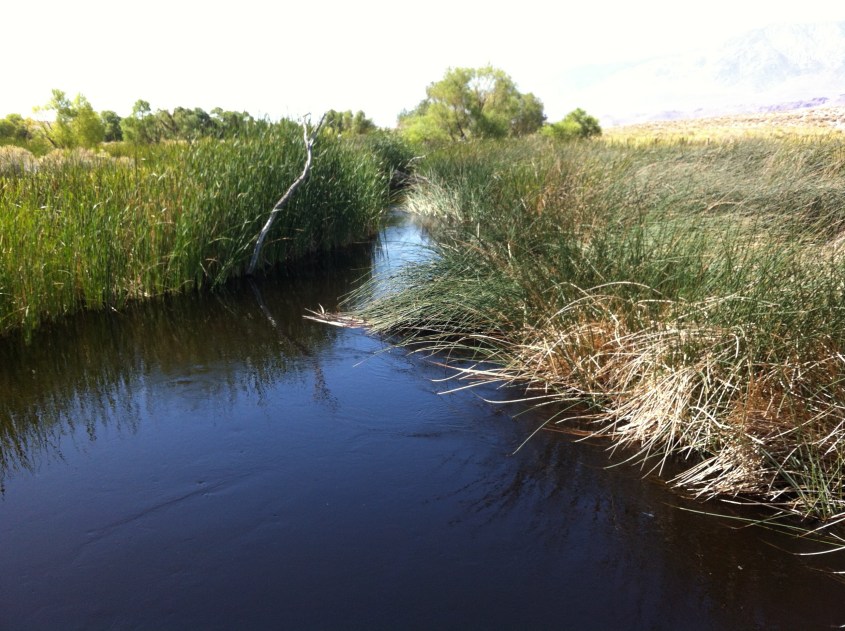
Kind of gives a new meaning to “out in the tules,” doesn’t it? (Jim Burns)

Volunteers who worked on the nascent Owens River Water Trail in June woke up to some good news this week: The California Natural Resources Agency selected the site in Lone Pine for funding.

“Your fine contribution of labor and/or equipment and/or publicity was instrumental at helping secure the grant. All four of the Resources staff were able to personally experience the river and see your work—and they were impressed, ” wrote Larry Freilich, Mitigation Manager for the Inyo County Water Department, in an email.”The $500,000 award will be to open up the first designated river trail in California.”

But while supporters of the project are gratified to see funding slated to become a reality, there is still work to be completed,  namely negotiate site and construction agreements with the Los Angeles Department of Water and Power, which has maintained a mostly antagonistic relationship with valley residents for more than 100 years. The Los Angeles Aqueduct opened in 1913, taking water from the valley some 230 miles to Los Angeles. That action drained the historic Owens Lake, and created “the largest single source of particulate matter air pollution in the country,” according to the Los Angeles Times.

The Lower Owens River Project, a joint project between Inyo Water and LADWP begun in 2006, began reinvigorating a 62-mile stretch of the Owens River, raising hopes of bringing kayaks, fishers and birders to the area. Although wildlife did return, the unintended consequence of more water was more tules, the thick, tall weeds that blossomed along many stretches of the Owens River. And, in effect, the tules strangled efforts to bring fresh outdoor tourism to the area.

The current river trail is an effort to revive those hopes.

In April, the Owens Valley Committee wrote on its Facebook page that “On page 8 of the 119 page Grant Application, one of the most important aspects of the proposed River Trail is articulated: ‘Creating an experience where the disabled can enjoy nature in a unique way is one of the primary goals of the project. Kayaking is one of the few sports that offer independent recreational opportunities for the handicapped.’

The post, based on this article in LARFF, continues “Almost a million Iraq and Afghanistan war veterans have an officially recognized disability as the result of those conflicts. Millions more suffer with emotional scars. What an incredible opportunity this River Trail would be for our disabled veterans to enjoy nature. How dare DWP hold back its full support of this project!”

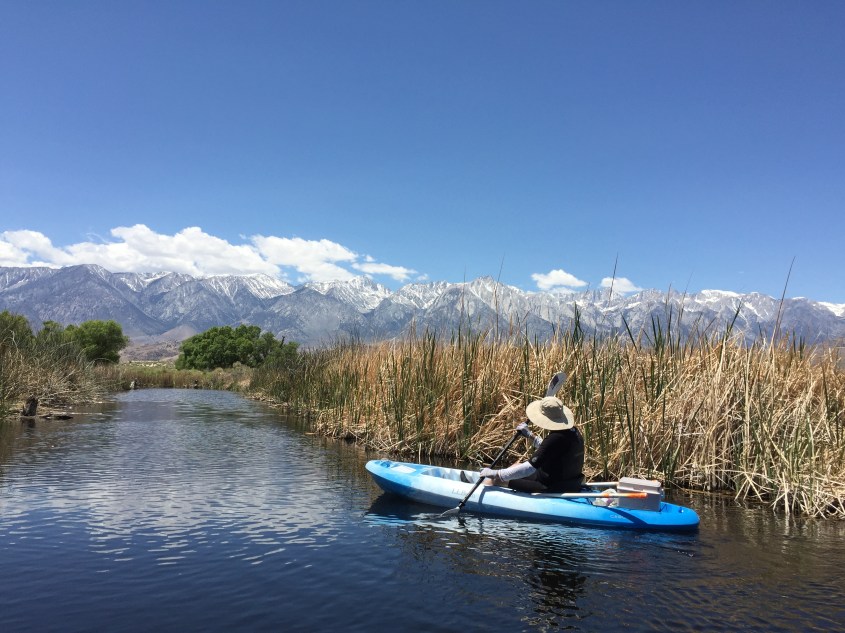
Freilich garnered support for his grant proposal not only locally, but also in Los Angeles. At least two separate kayaking groups donned wetsuits over two separate weekends in June to hack and slash away at the tules, creating a mini-kayak passage on the river.

Yet, if ecosystem can be reshaped fairly easily by volunteers efforts, the same cannot be said of the competing interests for Sierra water. Restoring water to the lower Owens River took 10 years, two environmental lawsuits and a court order fining LADWP $5,000 a day for missing deadlines. In all, penalties came to more than $3 million, according to the Sacramento Bee.

Exactly how long it will be before kayaking enthusiasts paddle down this water trail outside Lone Pine remains to be seen. A timeline for creating a water trail, presented at the California Trails and Greenways Conference in Lake Tahoe in 2013, shows:

  •  Division of Boating and Waterways (DBW) grant application process (8 months)
  •   DBW budgeting process (12 months)
  •   DBW grant contracting process (3 months)
  •   Grantee consultant selection and hiring process (4 months)
  •  Project California Environmental Quality Act permits and design process (18 months)
  •   Grantee bidding and awarding process (2 months)
  •   Project construction (6 months – more if confined to construction windows due to migratory or nesting concerns)
  • Total = 53 months

But the next step for Inyo County is to convince the LADWP of the feasibility of the project, and its ability to successfully shepherd the river trail from drawing board to reality.

“Inyo County has proposed a project on City of Los Angeles lands that provides paddle access to the Lower Owens River, “said James Annatto, manager for the L.A. Aqueduct, via email.” As the land owner of the project area, we have concerns as to the potential impacts related to the project.  The Los Angeles Department of Water and Power is meeting with Inyo County to work through the land use and other issues.”

See you on the river, Jim Burns

FoLAR announces release of third river study

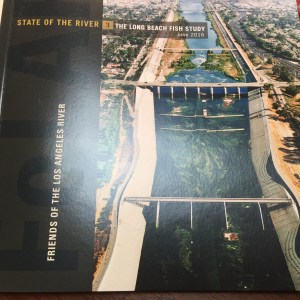
Hey, now, let’s get happy. Friends of the Los Angeles River just released “State of the River 3: The Long Beach Fish Study.IMG_1130

As the organization’s founder writes in the introduction: “The first time I came to Willow Street in Long Beach was to announce our first LA River cleanup in the 1980s. We called for 10,000 people to join us in trash collection and only about 10 showed up. “ He goes on to say that most would have seen this as abject failure, but, as an organization that thrived on failure, it was surely a win, instead.

Lewis MacAdams recounts how that failure lead to its first grant, one that chronicled the 200 some odd bird species living in and around the river.

Later, in 2008, came the mid-river fish study, revealing that nature is just damned hard to kill, even with our best efforts. Participants found hundreds and hundreds of non-native fish living in the Glendale Narrows section of the river, by Atwater Village.

Today, you can read about the efforts of more than 130 professional scientists and amateur anglers, all coming together to support both FoLAR and the Aquarium of the Pacific in this latest release. Five fishing events, coordinated by the Resource Conservation District of the Santa Monica Mountains and FoLAR, plied the brackish waters from May, 2014 to August, 2015. The story of what was – and wasn’t – found unfolds herein like a good mystery. Rich field notes catalog water quality (surprisingly good), days and times of the study, numbers of participants and anglers, gear used and fish caught.

And, as with many things, it could be an odd experience. For example, one day, trash collected in seine nets lists:

— condom                               — surgical glove

— tea kettle                            — Doritos bags

— ketchup                              — trash bags

— men’s brown sock

As Robert Blankenship, president of the South Coast Chapter of Trout Unlimited, who lives in the area, writes, “I visit and fish this area regularly. I’ve caught a bunch of carp, with a few big catfish and some smallish largemouth bass thrown in” and goes on to lament that on the very hot survey days the anglers “demonstrated why it’s called fishing, not catching.”

The big prize of the survey was a tiny, native fish that literally swam into the hands of one volunteer. Dabin Lee, a California State University Los Angeles student, caught a Killifish.

Dr. Sabrina Drill, natural resources advisor, UC Cooperative Extension, notes in the book that “For some, the measure of ‘functioning’ ecosystem is whether it supports native biodiversity,” and goes on to write that by that measure the in-stream community is failing. But, given the robustness with which Angelinos now fish and kayak its waters, “the meaning of the suite of fishes in the river now is open to interpretation and depends a bit on your starting point.”

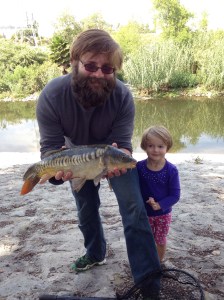
WHOA! Check out the lateral line on this beautiful, rare mirror carp Jihn Tegmeyer and friend caught. (John Tegmeyer)
WHOA! Check out the lateral line on this beautiful, rare mirror carp John Tegmeyer and friend caught. (John Tegmeyer)

Still Drill regrets the absence of native species, and there is no denying that the king we all wish to return to our area, the endangered Southern California Steelhead, is missing from this and the Glendale Narrows survey.

Although there are several photographs of two steelhead in Ballona Creek in 2008, as Rosi Dagit, RCDSMM senior conservation biologist, writes “Most years, fewer than 10 adult steelhead were seen throughout the whole area, concentrated in just a few rivers and creeks.” That is down from runs of literally thousands of fish in the 1940s, which has been well-documented in the Los Angeles Times.

“We thought for sure there were steelhead trout lurking in the river at Long Beach, waiting for concrete removal so they can make their way back upstream as they did for the last time in 1940, but no such luck,” writes William Preston Bowling, FoLAR’s special projects manager. “The California Killifish was discovered in this study and could be an indicator for water temperatures that a steelhead could survive in.”

To this end, it’s imperative that the billion-dollar re-imagining of the Glendale Narrows area go beyond architecture and new housing. What’s important for the steelhead is also supremely important to us: better water quality, reducing river water temperatures and restoring riparian function, as Dagit notes elsewhere in the text.

So, if you missed volunteering for Willow Street, don’t despair, the work continues, moving to the upper river and a chance to sign up for Wednesday’s field excursion.

See you on the river, Jim Burns
Volunteer Opportunity: FoLAR’s Sepulveda Basin Fish Study, Wednesday, June 29

slider solo
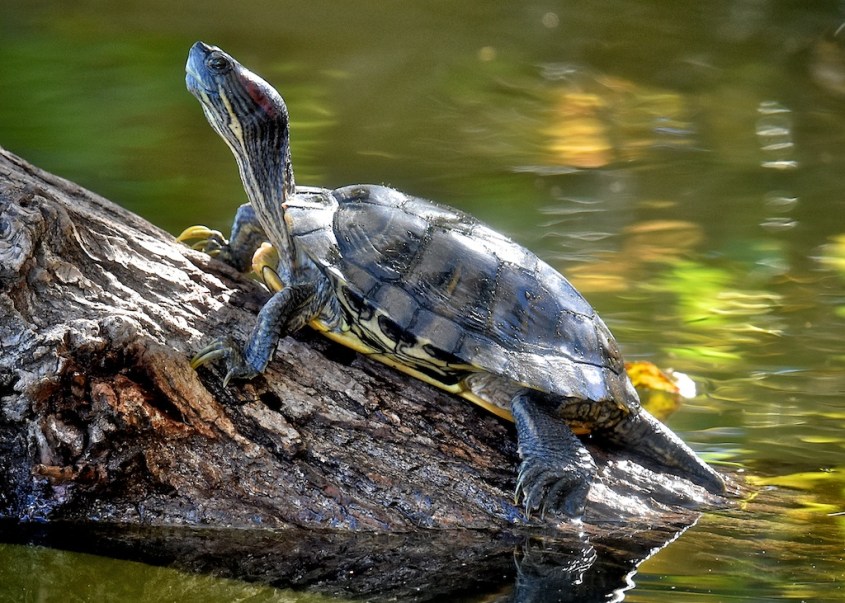
Red-eared Slider (Courtesy Charles Hood)

UPDATE: Sadly, this event has been canceled due to a lack of grant funding. Stay tuned for the reboot. 

Greeting fellow fish lovers!

We would love help to conduct the fish survey near Sepulveda Dam on Wed 29 June.
Details below! Please RSVP as we are looking for a crew of about 6 volunteers to assist with seining, but can use all the anglers we can find to help with catching by fly or standard rods. You need a valid CA fishing license to participate.

WHAT: Friends of the Los Angeles River “State of the River 4” — The Sepulveda Basin Fish Study

WHEN: Wednesday, June 29, 8:30 a.m.-3 p.m.

WHERE: Meet at the dirt road turn off Burbank Blvd. Email for exact location and directions.

WHAT YOU NEED:
– Waders if you have them or come prepared in closed toe shoes (no tevas or open water shoes) and be prepared to get wet to your waist.
– Hat, sunscreen, water, lunch, snacks, etc.
– Angling gear and fishing license if you want to fish!

Let me know if you are interested in joining the fun! thanks, Rosi

Rosi Dagit
RCD of the Santa Monica Mountains
540 S. Topanga Canyon Blvd
Topanga, CA 90290
310.455.7528
rdagit@rcdsmm.org

Volunteer Opportunity: Help jumpstart Owens River Water Trail

IMG_7953

From Larry Freilich, Inyo County Water Dept.

The California Natural Resources Agency will be coming out to Lone Pine on June 21 for a site visit to tour the Owens River Water Trail project. We are grant finalists under its River Parkways grant program. The grant would provide $500,000 to help establish the first designated paddle trail in the western U.S., if they like what they see.

Pretty exciting!

As part of the project tour we want to 1) get the Resources staff on the water to experience this amazing stretch of water, and 2) demonstrate that volunteer stewardship can help build and maintain the project.

To accomplish both objectives the County and the conservation group Friends of the Inyo are organizing two work weekends to open up a sample section of trail. Trail building weekends are June 11-12 and June 18-19.

We need all the assistance we can get.

It is especially helpful if we can demonstrate that out-of-area paddlers will come up to not only use the new paddle trail, but they will come up to help build and maintain the trail.

Building trail is almost as fun as using it. It’s an unforgettable experience, and participants can say that they were instrumental in helping to establish the first river paddle trail in California and the west.

If you’re interested, please contact me at lfreilich@inyocounty.us760-878-0001, for information and to sign up.

Memorial Day marks 4th opening day on the LA River

image3
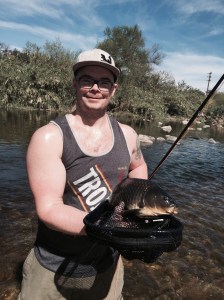
This could be your summer to pull a carp, bass or tilapia out of the LA River — and then put it back. (Jim Burns)

Tomorrow is opening day on the LA River — for the fourth year in a row. Even though there’s actually sneak-fishing year around in its Tide-scented waters, from Memorial Day throughout the summer until Labor Day, anglers can legally fishing in two designated recreational areas, Elysian Park and Sepulveda Basin.

You may have your license checked by an MRCA ranger on patrol, so be sure to buy one. Hopefully, you buy one every year to help out the conservation and stocking efforts of the California Dept. of Fish and Wildlife. A one-day license is $15.12; resident, annual weighs in at $47.01 (What’s with the penny?)


Check out these maps to get your bearings (Credit MRCA):

Remember that you can also put in your kayak, or go with any of the following companies: L.A. River Expeditions, L.A. River Kayak Safari. Minimum age is between 10 and 12, depending on the locale, and the price runs between $50 to $75, depending on the company and the trip.Also, to celebrate its 30th anniversary, L.A. Conversation Corps is offering $30 tickets for the Sepulveda Basin excursion though Paddle the L.A. River.

And, if you’re chillin’ in Elysian Park near Benedict Street, the Frog Spot’s always a good place to take a break, swap river stories and get some food. Lots of music happens throughout the summer, as well as educational programs. The FS serves beer and wine after 2 p.m. Saturdays, and there’s always free water and wi-fi as well.

Take some time to wander the neighborhood, one which is quickly reinventing itself. There’s a new brewery in the works, as well as new, open-air Salazar, close to the Fletcher Bridge.

So, before it gets real hot, catch and release a carp, raise a paddle, get dunked, try downward-facing dog in a pocket park, spot a frog, make friends with a duck, pretend the roar of the 5 Freeway is actually a gurgling mountain creek (believe me, it happens), whatever, but get out there!

See you on the river, Jim Burns