



Bugs
Meadows Matter from California Trout on Vimeo.


By Tom Walsh
President, Fisheries Resource Volunteer Corps
Repetitive comments from anglers, who have fished the East Fork of the San Gabriel River over the past five years, have indicated that there are no fish left. Based on 1,261 CDFW Angler Surveys over the past 15 years, anglers reported catching 10,901 fish. However, during the past five years only 777 fish have been caught, with only 11 being caught in the past two years.
What are the reasons for this significant decrease? Over the past five-to-12 years there are a number of events that have contributed to the loss of this fishery:
— 2005 – Twelve-year drought reduced total rainfall by 43.6 inches (3.6 inches/year) below 140-year season average.
— 2008 – Downturn in the economy brought an increase in encampments to the East Fork backcountry.
— 2008 – Price of gold hit all time high increasing from $769/oz. in 2007 to a high of $1,987/oz. in 2011.
— 2008 – Began removal of 20,000 tamarisk plants (One plant consumes up to 200 gallons of water per day)
— 2010 – California Department of Fish and Wildlife terminated fish plants on East and West forks to abide with court ruling.
— 2014 – High rain event on Aug. 3 bought significant amount of sediment downstream with large fish kill.
Of all of these events, the mining activity has been the most damaging, which has increased significantly, with the rise in gold prices, the promotion by mining guides via social media and the lack of enforcement of the mining prohibition.
The negative impacts to the stream and its riparian areas resulting from the mining activities are numerous. Large amounts of material in the stream and riparian areas are being moved to create dams, dredging holes and long diversion channels for sluicing, resulting in heavy silting, reduction in water flow and the interruption of the entire ecosystem. FRVC volunteer stream patrols have documented the loss old growth trees along the stream banks, permanent campsites within 50 to 100 feet of the stream, large amounts of equipment and trash from abandoned campsites, and the use of motorized dredging equipment.
In October 2010, the California Fish and Game Commission designated the East Fork from Heaton Flat to the headwaters as a Wild and Heritage Trout Stream. This designation includes 33.6 miles of perennial stream habitat, and is one of only 12 watersheds in the state with this designation. Unfortunately, the CDFW management plan has not been published or implemented.
This once-prominent fishery, which has been abandoned by almost everyone, needs the support of the Southern California fishing community.
By Analiza del Rosario
Guest Contributor
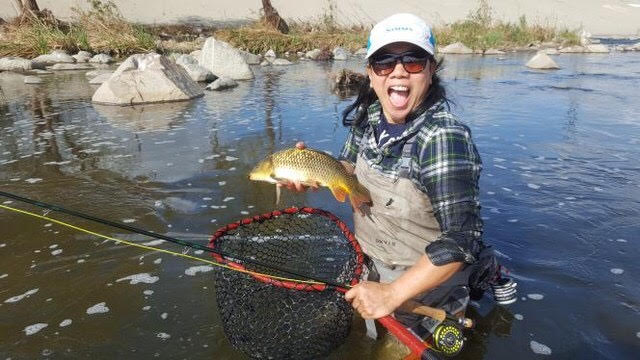
Since I had just lost one prior to hooking this one, I made sure I set the hook properly. I continued to scream while Celine @fishshootbrew started walking up with her big Rhino net, ready to assist. I was shocked to eventually land on, with so much excitement, I fell backwards!

Modern life is full of rites of passage: first date, getting your driver’s license, graduation from high school, maybe college, and later, a first pay check, the one where you find out that gross pay and take-home pay are two radically different numbers.
If you love fly fishing, add to that list buying your first fly rod and – on the down side – experiencing your first broken section.
I feel at least somewhat lucky that my first broken rod just happened after years of fishing. True, my son lost his tip top way back when in Juneau, Alaska, which tried to teach me the lesson I still don’t follow: pack a spare tip top.
But losing a tip top, the very top ring on your rod, and breaking your rod all together are two different miseries.
Most premium companies will repair your rod no questions asked for a processing fee, one of the reasons big-name rods cost so much. You’re actually paying for that replacement rod as part of the cost. And, it turns out, that can actually be a lot of rods during the season. Field and Stream reported one manufacturer saw 500 returned rods per week!
So, how do you protect your rod against getting broken? Here are a few tips:
— Don’t pack your rod in your car unless it’s broken down and away from the door. That’s how I messed up, by keeping my rod strung and whole.
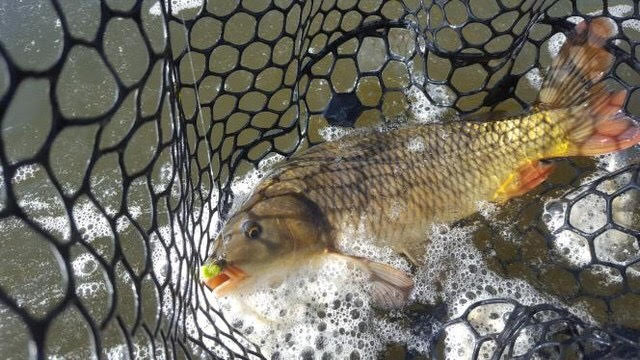
— Don’t pull that carp out of the river horizontally, putting all the pressure on the tip top. Instead point the tip of the rod at the fish and reel it in.
— Use your rod tube when driving to your destination. It’s made to protect your expensive purchase.
— Don’t put your rod on your truck or car’s roof. You might forget it’s there after a long day of fishing and – scrunch, it’s under the tires before you know what happened.
— Always carry a spare.
Now I’ll see how long it takes Sage to get me my replacement.
See you on the river, Jim Burns
 By Rosi Dagit
Guest Contributor
Dear Friends of Steelhead,
We have two important opportunities to help the recovery of steelhead in Southern California coming up FAST! We lost another one last week to starvation, and the impacts of the drought have continued. These fish need desperate help NOW!
 Chris York Chris YorkIrippchainsaws@yahoo.com 174.214.9.225 |
Restoration of damaged habitats for our struggling native species is as important as anything. Look at the amazing job that was done at the Carmel River Restoration Project. Thank you, Chris |
DUE FRIDAY BY 5 p.m.!!!! Rindge Dam Removal
Below I am forwarding an email from Jamie King of State Parks who is hoping that we can provide comments to the Coastal Commission on the upcoming review of the Rindge Dam Removal Project. Please take a look at the plan if you have not already, and take a moment to send in your thoughts. Support for this will be super helpful!
 Bob Blankenship Bob Blankenshipbob@hremcleanup.com 96.39.238.88 |
What Rosi says, goes! I’m commenting on behalf of the South Coast Chapter of Trout Unlimited, and you should comment too |
 Thea Boyanowsky Thea Boyanowskyboya@me.com 66.133.193.34 |
Hi, thanks for all your hard work. My concern is that all this habitat restoration will ideally occur but the rising temperatures in SoCal might mean that the water will be too warm to sustain the steelhead? Just a thought. Wondering about what maximum water temps are for those beautiful fish. |
Meeting on Tuesday 6 February 6-8 p.m.
On another front, I am attaching the media release sent out by State Parks regarding on going visitor services at Topanga Lagoon.
We have an opportunity on Tuesday, Feb. 6, to share our thoughts about the restoration of Topanga Lagoon. State Parks is holding a public meeting at the Santa Monica Civic Center to get input on concessions. The RCDSMM has worked for years with State Parks to obtain funds needed for the next steps of lagoon restoration, and these funds could be available soon.
The RCDSMM supports prioritizing lagoon restoration as envisioned by the Topanga State Park General Plan (2012). Any concessions/leases located in the proposed footprint of the lagoon restoration should be conditioned so that restoration planning and implementation can begin within 5 years.
Please take a look at the General Plan (found at parks.ca.gov) and either come to the meeting to speak, or send an email with your thoughts about the priority of lagoon restoration and how visitor services can supplement that vision in the General Plan to Angeles District Superintendent Craig Sap at craig.sap@parks.ca.gov and/or Suzanne Good at sgood@parks.ca.gov.
Thanks so much for your help in responding to these fast moving requests for input. Your voice is important!
Please feel free to spread the word! For the fish, Rosi
Hello Friends of the Rindge Dam Removal Project,
Our project goes in front of the California Coastal Commission on 2/7 for a CCC Consistency Determination. As we had hoped, the Locally Preferred Plan (CA State Park preferred plan) is the option that has been selected by the USACE and California State Parks and was supported by the vast majority of public commenters.
We invite you to show your support for the project either by sending comments in to the CCC Commissioners by 5 pm this Friday, AND/OR attending in person.
The Commission Meeting is 2/7 in Cambria. We are item W11b on the agenda. The meeting is located at 2905 Burton Drive Cambria, CA 93428. The link to requesting ex-parte communication is here: https://www.coastal.ca.gov/roster.html
To provide written comments: go to this link, and click the submit comment button under to item 11b,
CD-0006-17 (U.S. Army Corps of Engineers, Los Angeles Co.): https://www.coastal.ca.gov/meetings/agenda/#/2018/2
Edits to the FEIR/EIS and responses to comments are ongoing and we are looking to wrap that up in the next two months, and have the document sent up the state and federal chains for review and approval.
With thanks for all your support during this project, Jamie
Jamie King, Environmental Scientist
California State Parks, Angeles District
1925 Las Virgenes Road
Calabasas CA 91302


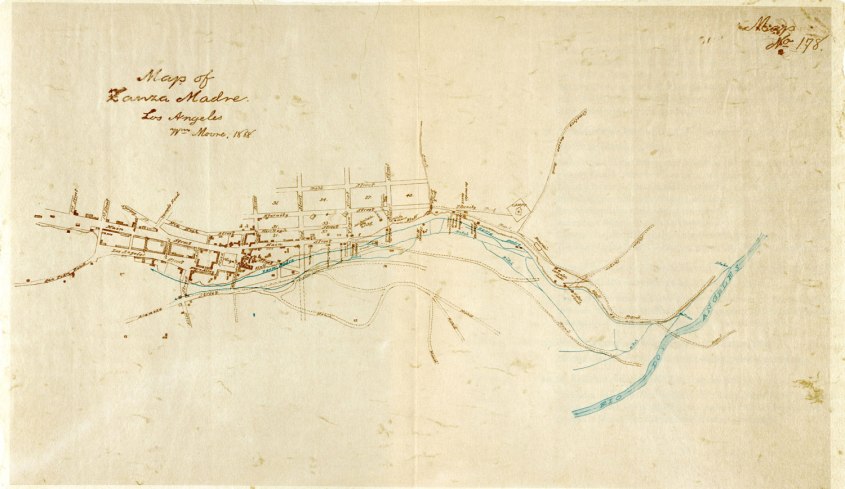
William Deverell, a historian at USC and the director of the Huntington-USC Institute on California and the West, recently penned this editorial in the Los Angeles Times. He skillfully recounts how the concrete-encased LA River came to be, but does deeper than other writers.
According to Deverell, the research for the U.S. Army Corps final work came from old-timers. Tasked with creating a profile of the river, two engineers asked these old people what it was like to grow up in the region before statehood, before the Gold Rush, even back to the Mexican and mission period.
“The people they interviewed were nonwhite: indigenous, Mexican, mixed-race mestizos. (No whites, or at least a very few, had memories that stretched back far enough to help.) These elders knew the river; it ran through their memories and lives. They grew up near it, but not too near, lest wintertime floods wash away their adobes. They drank from it, as did their livestock. They irrigated their crops from the zanjas they had carved from it. The river was lifeblood, the defining feature of the landscape.”
Yet this research from seemingly egalitarian roots was later used to create a river not for the people, but for those with money, power and clout.
As we near the approval of the renewal design plan, he advocates we not make the same mistake twice.
Thanks to Steve Kuchenski of the Pasadena Casting Club Conservation Committee for passing this along.
See you on the river, Jim Burns

 lariverflyfishing
My first time fly fishing, the guide told me to always put my fly rod on the windshield of my car making sure the handle of the fly rod was underneath the windshield wipers. That way, he said, you won’t slam the tip in the car door, forget it on the roof and run over it or forget it leaning up against the picnic bench. I know it sounds crazy, but so far I haven’t lost a rod or broken a tip . . . . I’m keeping my fingers crossed 🙂