With so much going on for our river, it’s easy to forget about other restoration efforts around the country.CarpSlam7-2013-Brochure is coming up Saturday, Sept. 7, to benefit the South Platte. Denver Trout Unlimited has used past proceeds to restore:
$11,000 to South Platte Suburban Parks and Recreation District Project
$14,000 to Overland Park Pond Restoration
$25,000 to River South Project
To raise additional money for the effort, McTage over at Fly Carpin’ has designed a T-shirt and is selling it on EBay. It’s $18 and the proceeds will go to Trout Unlimited’s restoration efforts.
Newly elected Council-member Mitch O’Farrell. (Courtesy City Council District 13)
Even though termed-out river champion Ed Reyes’s district went to Gilbert Cedillo, the new self-proclaimed keeper of the flame is newly elected Council-member Mitch O’Farrell. And front-and-center is the most important decision to impact the Los Angeles River since it was channelized last century.
“We have some alternatives that are being entertained right now by the Army Corps [of Engineers] and the Feds,” O’Farrell recently told The Los Angeles Downtown News, referencing Alternative 20, which is the most extensive and expensive of the revitalization plans. “We all support that, but it has a $1 billion price tag. There are some [alternatives] that are a lot less than that.”
Meanwhile, the Corps can’t officially comment on the details until the report containing the four alternatives (not three, as was widely reported in the Los Angeles Times last week) is released in early September, according to a spokesman. But sources close to the process say that Washington balked at the Alternative 20, billion-dollar price tag and will push for the cheapest of the alternatives. When released, the report will also identify the Corps tentatively selected plan (TSP).
“The TSP is ‘tentative’ and not a final agency decision,” said the new Los Angeles District Commander Col. Kim Colloton. “We will ask for public and agency comments on all alternatives, and consider all comments before we make a final decision. Transparency and community involvement are vitally important.”
In a press release, Colloton said the Corps, City of Los Angeles and stakeholders have jointly developed the alternatives, and the purpose of the collaborative effort has been to find ways to improve the L.A. River ecosystem in a constrained funding environment.
“Hundreds of ideas were explored, and the best of these were combined to come up with the final array of alternatives in the draft report,” she said. “The ultimate goal is to maximize ecosystem benefits relative to costs.”
Once released, the action will trigger a 45-day public comment period that will help inform a final report, which will include a recommendation to Congress.
Then Councilmember Eric Garcetti opens a part of the bike path along the Los Angeles River in 2011. (Jim Burns)
While river advocates await the public unveiling of the Los Angeles River Ecosystem Restoration Feasibility Study (nicknamed ARBOR), the p.r. battle for Angelino hearts and minds has already begun. In September, after several years of drafting and almost $10 million in cost, the U.S. Army Corps of Engineers will release four alternatives, each with a different cost, and each with a different impact on the river. The public will then have 45 days to comment before a single alternative moves forward.
“It’s a doozy,” said one person close to the study, which is currently undergoing legal review.
As Carol Armstrong, director of the Los Angeles River Project office, told me last year,“Remember that the fundamental purpose of the study is to improve the ecosystem values in the LA River– and that means riparian habitat that is good for wildlife, including fish species. The study will go public with its alternatives early next year. Once finished, it will recommend one of those as its recommended project, which will then go to Washington, DC, for approval by the federal powers-that-be.”
Think of it in terms of a Beverly Hills plastic surgeon’s menu of procedures. You could go for some Botox injections to temporarily solve that wrinkly face, or throw in for a full-blown, long-lasting, facelift.
The facelift alternative is what the nonprofit Friends of the River advocates with the “Piggyback Alternative,” known to the Corps as Alternative 20. It is the most comprehensive approach to river restoration, according to FoLAR president and founder Lewis MacAdams. The estimated price tag is $1 billion-plus to restore and remake 11 miles of the river between Union Station and Griffith Park.
Today, the Los Angeles River Revitalization Corp, another nonprofit, threw down with its 51-mile greenway project, which aims to have that much yardage in bike paths and foot trails along the river by 2020. That would essentially cover the entire length of the river from the San Fernando Valley to Long Beach. Currently, 26 miles along the river are open to bicyclists before they have to hit the mean streets, just north of downtown. Although not one of the alternatives, the 2020 Greenway plan aligns itself more naturally with Alternative 20 than with Alternative 13, said to be the Corps favorite in these times of tightening budgets.
Dating from 1943, it’s fair to ask what purpose this federal dam atop the Hahamonga watershed serves today (Jim Burns).
All right, even on the West Coast, we realize Vermont is famous for maple syrup, but what about the American Museum of Fly Fishing in Manchester, Vt.? Not so much.
Still, according to American River’s River Blog, the two organizations have partnered up to highlight eco-education. At a recent AMFF meeting, Steve White, who runs American Rivers’ Anglers Fund, talked about protection and restoration of vital fish habitat through dam removals, and Wild and Scenic designations, among other topics.
Meanwhile, the PBS NewsHour continues to cover restoration efforts for California’s San Joaquin River, which may be the largest river restoration project in the country. These troubled financial times may set the project back several decades, a project in which $100 million has been spent thus far, with a projected cost of $2 billion.
Closer to home, the Arroyo Seco Foundation and a bevy of environmental activists wonder why Edison continues to receive an E-ticket ride to trash the Hahamonga habitat in the verdant canyon area next to the Jet Propulsion Lab in Pasadena. At issue, the city of Pasadena granted Edison a utility easement through Hahamongna Watershed Park for its power poles heading north/south to Jet Propulsion Laboratory more than 60 years ago. The giant electric utility claims that the easement gives it the right to maintain access to the poles that lead along the west side of the park from near Devil’s Gate Dam all the way up to JPL, according to ASF’s website.
Concerned residents have lobbied the city and are ready to fight the utility, particularly after losing the battle to protect the Arcadia Oak Grove in 2011. What the Los Angeles Times described as a “a prized grove of more than 200 oaks and sycamores,” owned by the county Department of Public Works, was reduced to stumps and sawdust as the agency prepared the site to take on 500,000 cubic yards of silt, rocks and vegetation to be scooped out of Santa Anita Reservoir.
Meanwhile, we’re all waiting for the verdict of the U.S. Army Corps on the restoration of the Los Angeles River. Watch this space to find out which of the various proposals will get the green light.
AHOY, MATEY: Councilmembers Tony Cardenas, front, with Ed Reyes, far rear, enjoyed a day on the river last summer. (Jim Burns)
“Any press is good press,” so the adage goes, and a new post about the L.A. River from Wired Mag’s bloggerie certainly confirms it. And it’s good to see activist kayaker George Wolfe and the film about his historic river run, Rock the Boat, get a nod.
But the piece skates over the most recent volatile event, which is the pilot river project, slated to begin Memorial Day. This project would allow citizen kayaking on a portion of the river, as well as other recreational uses, including fishing, below the Glendale Narrows. Last I heard objections from the Dept. of Fish and Wildlife may scuttle the project late in the game,which was approved by the Los Angeles City Council in March. A meeting is planned with the Mountains Recreation and Conservation Authority’s Division of Natural Resources and Planning to find a resolution. The MRCA is slated to oversee the project, which would last until Labor Day. Developing.
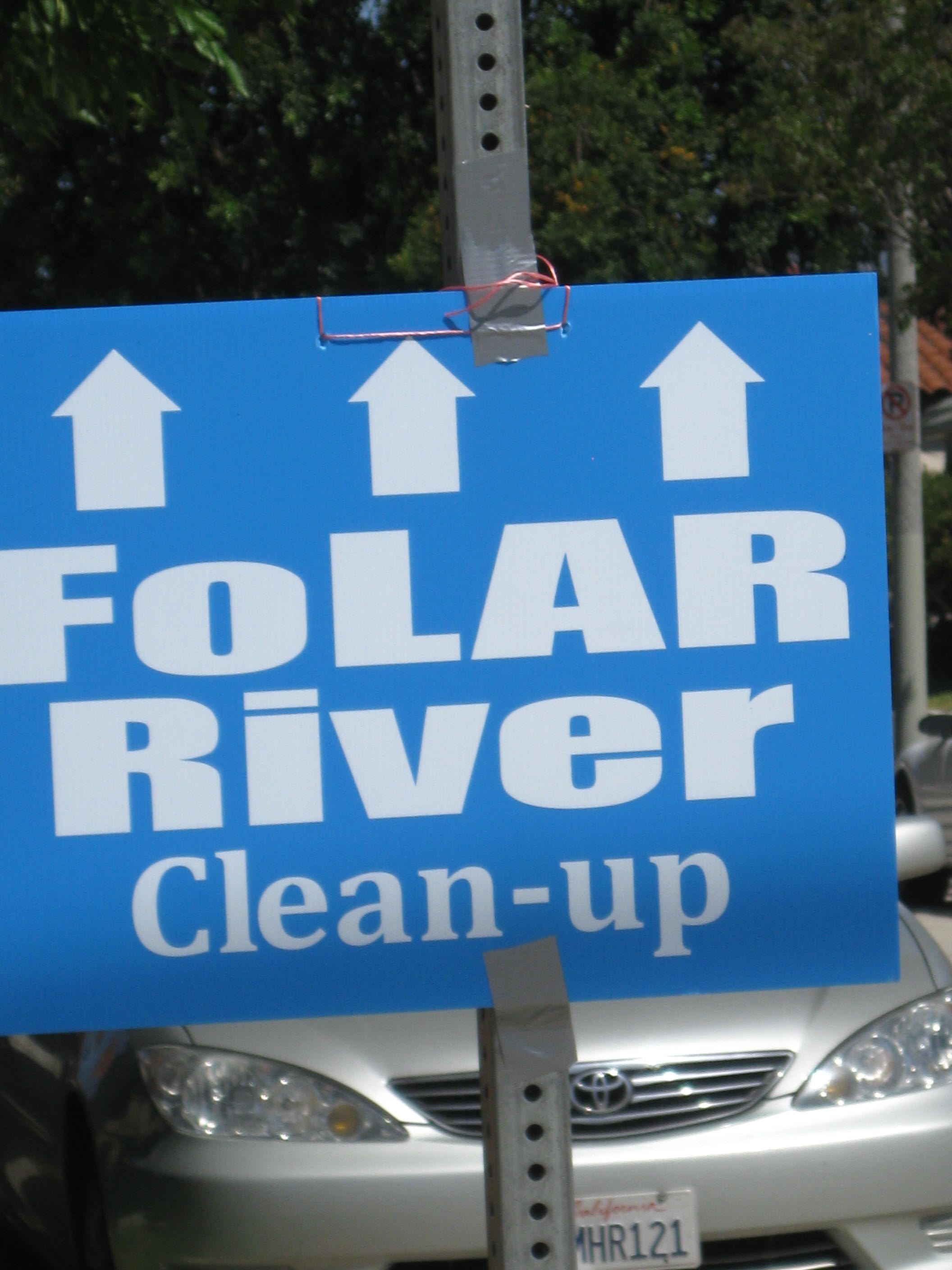
The next FOLAR river cleanup is slated for Saturday, May 18.(Barbara Burns)
UPDATE The new law goes into effect for large grocery chains and pharmacies beginning July 1, 2015. It will extend to convenience stores and liquor stores July 1, 2016.
Heartening news out of Sacramento, as the California Grocers Assn. announced support of a bill to nix single-use plastic bags in most grocery stores and pharmacies by 2015.
An initial hearing on SB 405, penned by state senator Alex Padilla (D-Pacoima), in the Senate Environmental Quality Committee is set for tomorrow, the Los Angeles Times reports.
See you on the river, Jim Burns
MAY 30, 2013, UPDATE: “Senate Bill 405 failed to top the 21-vote threshold needed for passage, with senators voting in favor of the measure 18-17. Four senators did not cast votes. The bill will be allowed to be reconsidered, meaning it could be back before a Senate committee or the Senate floor.” — Waste & Recycling News
California State Senator Kevin De Leon props up crushed vegetation while touring Sepulveda Basin’s South Reserve. (Courtesy Grove Pashley)
Yesterday, a friend sent me an article from the Wall Street Journal entitled, “Los Angeles Reimagines its Waterway,” that contained both a snarky East-Coast-centric tone, as well as surface reporting (Notice that the title says “waterway,” not “river” …) But I was struck by two quotes that I think aptly reveal where we are today:
“By year’s end, the Corps and city engineers expect to complete a joint $10 million study that will offer a handful of options for restoring native habitat, likely creating wetlands along the river and potentially removing or reshaping some of the river’s concrete walls. The study examines an 11-mile stretch of the river on the city’s east side, where some resilient plants have survived in a narrow, muddy strip of so-called soft bottom at the center of the channel.”
And
“Last month, to the surprise of many San Fernando Valley residents, the Corps cleared more than 40 acres of trees and plants near the river northwest of the study area, in the Sepulveda Basin. While not related to the Arbor study, the action set off an outcry among local environmental groups and has raised concerns about the future of the Arbor study.”
According to the article, “State Sen. Kevin de León, one of several local officials who has demanded an explanation from the Corps, said the Sepulveda project “doesn’t bode well” for the future of efforts to revitalize the Los Angeles River’s natural landscape.”
So true.
I’ve spent literally two years and change fly fishing this area that the article refers to as a “narrow, muddy strip of so-called soft bottom at the center of the channel.” If you visit these pages, you’ll find pictures of the carp I and many others have so enjoyed catching. But now I wonder, how can you trust the Corps not to destroy all fishing in the river once work actually begins? The motto of this blog is “waiting for steelhead, fishing for carp,” but I now have to wonder if everything non-native has to be tossed out, and with warm water temperatures the rule, will there be any fish at all left in the river? Reintroducing steelhead, which were found in the river as late as the 1940s, is all but impossible. There is no way to construct a run to allow steelhead to reach the ocean.
And are trout really plausible given the river’s high water temperatures? Maybe, with a lot of habitat engineering, and lots and lots of cash money.
That leaves carp, which already thrive in the river, have been resident for decades and, for the sports fisherman, are a lot more cost efficient to catch than traveling to Belize to snatch a bone fish.
I think it’s a crazy policy that has every plant, fish and game species returned to the halcyon of days before Los Angeles was the city it is now. Pragmatic room must be made at the table for all types of activity on the river, which includes fishing.
Question: Exactly what will we be fishing for in the Los Angeles River in 2016?
For those of you following the important issues of the Corps clear-cutting 40+ plus acres of the Sepulveda Basin to suit its own desires, see the links below that come courtesy of Sepulveda Basin Wildlife.
Damage can be seen on the trunk of this native Oak at the South Reserve. (Courtesy Glenn Bailey)
Click HERE to read the entire Finding of No Significant Impact for the Vegetation Management plan.
Click HERE to read the letter sent to ACOE by the Sepulveda Basin Wildlife Areas Steering Committee.
Click HERE to read the ACOE’s response to the SBWASC letter.
Click HERE to see ACOE’s web page about this issue.
Click HERE to read Daily News article about clear cutting of South Reserve.
Click HERE to read L.A. Times article “Army Corps of Engineers clear-cuts lush habitat in Valley”, HERE to read follow-up article.
Click HERE to view YouTube video about the destruction.
Click HERE and HERE to see Encino Patch articles with additional photos.
Click HERE to read letter from San Fernando Valley Audubon Society about clear cut.
Click HERE to read KCET blog by Carren Jao.
Click HERE to read letter from State Senator Fran Pavley.
Click HERE to read letter from State Senator Luis de Leon.
Click HERE to view video entitled “Wildlife Refuge Meets Army Corps or Engineers” by a concerned citizen.
Click HERE to read an editorial by Charles Miller on the KCET blog.
Click HERE to read story in the LA Weekly.
Click HERE to read Congressman Brad Sherman’s letter to Colonel Toy.
Regional Water Board Investigation – click HERE for Encino Patch article.
Click HERE to find out about the history and wildlife of what used to be the South Reserve.
Click HERE to visit the San Fernando Valley Audubon Society’s web site that has recommendations as to who to send comments, and other links.
This fly-fisherman is staking carp, a non-native species of the Los Angeles River. Would all carp be killed in the river once reconstruction begins?
I was shocked to read this story in the Los Angeles Times today that begins: “An area that just a week ago was lush habitat on the Sepulveda Basin’s wild side, home to one of the most diverse bird populations in Southern California, has been reduced to dirt and broken limbs — by the U.S. Army Corps of Engineers.”
With the public comment period for the long-awaited ARBOR study coming up this spring, the Corps may have a public relations nightmare on its hands. In this historic moment, the pubic will weigh in on which of four alternative reconstruction plans makes the most sense. That plan will then be sent to Washington for approval and funding. Make no mistake, the river will be changed, no matter which plan moves forward. The Corps and the city of Los Angeles are partners in the redevelopment.
As one highly placed city official emailed me recently (in other words, before this happened), “Remember that the fundamental purpose of the Study is to improve the ecosystem values in the LA River — and that means riparian habitat that is good for wildlife, including fish species.”
Just last week, I walked part of the river with a Corps biologist, who told me that she studied maps from the late 1800s to see which plants were prevalent along the river during that time. Re-establishing those plants along the river will undoubtedly be part of all four alternatives.
Up until this happened, Sepulveda Basin was the beautiful place where environmentalists, river advocates, Los Angeles and the Corps had found common ground. But with the Audubon Society calling for an investigation into the loss of habitat for 250 species of birds, as well as mammals, reptiles and fish, my guess would be the trust the Corps has been building within the community has been sheared by their bulldozer’s edge. Developing.
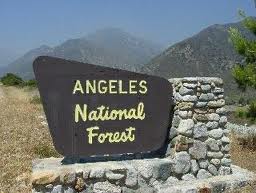
Could this sign soon include “national recreation area”? (Courtesy Forest Camping)
The only time I’ve been up to the East Fork of the San Gabriel River, I got the last parking spot, passed by a pretty rough crew, and — most importantly — got skunked. The last part is why I haven’t been back.
In today’s Los Angeles Times, Louis Sahagun pens a remarkably scary portrait of a river that’s facing real problems, both from budget cuts that make law enforcement difficult and from the interests of competing groups.
What I found telling is that of the players Sahagun interviewed, not one was a fly fisherman. Believe me, we’re out there in the Sab Gabes, but I think word is out that the East Fork needs some serious work before it once again becomes a local fishing destination.
Salon columnist Will Doig gets it right in his recent piece about urban waterways. If you want to find out what’s happening in cities across the country, give it a read. I know here in L.A. we are making real progress toward reclaiming our river.

 With so much going on for our river, it’s easy to forget about other restoration efforts around the country.CarpSlam7-2013-Brochure is coming up Saturday, Sept. 7, to benefit the South Platte. Denver Trout Unlimited has used past proceeds to restore: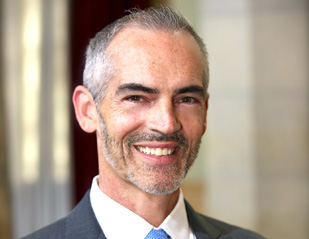





 lariverflyfishing