Category: Ecology

Will steelhead ever return to the L.A. River?

Twenty-five-inch steelhead trout caught in the Los Angeles River near Glendale, in January, 1940. (Courtesy family of Dr. Charles L. Hogue)

It may be a ridiculous notion to think the Los Angeles River could ever support a resident steelhead population.  In fact, it may be ridiculous to contemplate that this gritty icon of shoot-‘em-up movies like “To Live and Die in L.A.” will ever shed its miles of concrete, flood-control skin in favor of a sustainable habitat. Yet, talk to the various players in the multi-year, multi-million dollar reconstruction drama and a common theme emerges: steelhead restoration. Whether it’s actually feasible or not, the steelhead has become a symbol of the river’s potential rebirth. In the years to come, whether flapping fins or flummery will triumph, remains to be seen.

Problems abound with a restoration effort of this size, 51 miles through a morass of  cities, from the San Fernando Valley to the port of Long Beach. Those reading these pages outside of Los Angeles must wonder if steelhead ever swam in the river to begin with.  The answer, which is ironic even to those of us locals who regularly ply the water for carp, is “yes.”

“The southern steelhead Distinct Population Segment goes from the Santa Maria River in San Luis Obispo County down to the Border.  Say 50-75 years ago, the size of that population run was about 30,000 adults,” said Trout Unlimited’s Chuck Bonham, who will be the new director of the Department of Fish and Game, if his appointment is confirmed by the state senate. If you pull out a map and take a look at the enormous area he’s talking about, it’s obvious that even during the heyday, there weren’t a lot of fish.

Today, those numbers have plummeted in the area and are at zero in the river, itself. Southern California Steelhead have been on the Endangered Species list since 1997. To be put on it, a species must be viewed by scientists as imminently in danger of becoming extinct.

Although anecdotes (and the iconic picture above) point to the last steelhead being pulled from the Los Angeles River in 1940, activist and poet Lewis MacAdams, one of the three founders of FOLAR, has kept that mythology alive.  The river mantra is his: “When the steelhead return, we’ll know our job is done.”

In 1995, political restoration activities began with the county, which led to the City Council’s approval of the Los Angeles River Revitalization Master Plan in May, 2007, created with $3 million from the Department of Water and Power’s deep coffers. The plan contains many items – revitalizing the river, greening adjacent neighborhoods and creating value through economic opportunities – and includes more than a dozen references to steelhead. Key among them are “… ideally, developing fish passages, fish ladders, and riffle pools to allow for restoration of steelhead trout habitat.”

“It was a recognition by the design team and the city that fish habitat would be good and to strive for it as a goal,” said Ira Artz, the project manager at Tetra Tech, the environmental engineering and consulting firm responsible for the plan. According to the plan, “the long-term vision for the river involves restoring a continuous, functioning riparian ecosystem along the river corridor.” Improvements should include:

— Decreasing water temperature through shade

— Improving water quality

— Creating an unimpeded path from the ocean to the headwaters, along with areas to rest and to spawn

— Inducing a natural flow regime of high and low-flows

Two of the four have improved incrementally as of this writing, water quality and pathways.

Steelhead aside, getting any project shovel ready faces a myriad of political hurdles. According to city documents, the river flows through seven U.S. Congressional districts, 10 city council districts, approximately 20 neighborhood councils and 12 community plan areas. On top of that with about 10 million people, L.A. is the nation’s second largest urban region, and Long Beach down the road is one of the world’s busiest ports. It also happens to be where the river exits to the ocean.

Yet, there are the beginnings of a solution if you look north to one of the L.A. River’s main tributaries, the Arroyo Seco. If fact, the founding of the city in 1781 took place at the confluence of these two bodies of water. As part of the restoration plan, Confluence Plaza was inaugurated in the shadow of the I-5 freeway earlier this year.

“Historically,” Tim Brick, managing director of the Arroyo Seco Foundation, an environmental group, said in his offices at the River Center, “the Arroyo Seco had a really rich trout culture, including steelhead. And there are lots of historical references to steelhead on the Arroyo Seco and, really, in the L.A. river system. Brick is a “money where your mouth is” kind of guy, who recently with the help of CDM corporation and a $2 million grant from the state’s Water Resources Control Board, spearheaded the return of 300 minnowlike native Arroyo Chub to a newly restored native habitat. “We view the re-establishment of the Arroyo Chub as the first step toward the re-establishment of steelhead in the L.A. River.”

Wendy Katagi, CDM’s environmental planner, who worked with Brick on the restoration project, naturally agreed. “We should focus on doing steelhead recovery in the upper watershed. They miraculously hang on, these populations. The best thing we can do is create and mimic natural stream morphology elements through whatever is needed. Then the likelihood of species recovery goes way up.”

Moreover, Gordon Becker, a senior scientist with the Center for Ecosystem Management and Restoration, based in Oakland, Calif., spent months – if not years – analyzing Department of Fish and Game stocking records, field notes and surveys from the 1920s into this century for all of Los Angeles County. His study, published in 2008, speaks to the small number of fish currently present.

A steelhead rendered on the Guardians of the River gate. Once these oceangoing trout ran up the river. Time for them to return.

Unfortunately, it’s virtually impossible to provide an estimate for the number of steelhead in streams of L.A. County, according to Becker. The surveys he reviewed were not population estimates, which is what one would need to say anything at all about abundance.

“Essentially,” he continued in an e-mail, “steelhead in the county are opportunistic at this point. In some years, successful spawning may occur in Malibu Creek, or Arroyo Sequit, or Zume Canyon Creek, or Topanga Creek, but we can’t describe the situation as a steelhead ‘run’ of any particular size. It is my opinion that supplementation will need to be pursued if we are to have a real run in a SoCal stream in the future.”

Today, the city’s point person for the massive river project is Carol Armstrong. After serving in the Peace Corps in Thailand and witnessing firsthand the toll Asian development took on the environment, she enrolled in the University of Southern California’s Sustainable Cities program and received her PhD.

She coined “riverly,” which you’ll hear at most meetings about the subject. She explained another of her creations, Steelhead Fred, while standing next to the bike lane overlooking the river at three-acre Marsh Park, which is a “detention park,” meaning it’s designed to partially fill with water during heavy rain. As she looked across the river toward the San Gabriel Mountains, sporadic afternoon two-wheel traffic filled this newly opened stretch of the bike path, another sign of the river’s rebirth and its increasing connection to the community.

“Environmentalists say ‘we will not have accomplished L.A. river revitalization until the steelhead trout returns,’ so we came up with Steelhead Fred, the steelhead trout, and we ask developers and project proponents, all of them, is it riverly?”

Currently, consensus is that the most riverly project to finish is the U.S. Army Corps of Engineers L.A. River Ecosystem Restoration Feasibility Study that began in 2006 with the city as the local partner. It looks at the 10-mile stretch of soft bottom that stretches from Glendale Narrows, plus Headworks Reservoir in Burbank, through downtown to First Street. This area, part of which is across from Griffith Park, is the most popular with fly fishers looking to hook carp. Besides having a soft bottom – as opposed to concrete – it contains what the Corps calls “ecological value” and has the most water in it year around.

The Corps controls the concrete. So without the study, which would then possibly lead to an actual project, okayed by Congress, no concrete will be exchanged for terracing or plantings, or improving fish passage. It will remain what it was constructed to be – a flood conveyance channel with the aim of getting high-flow water from point A to point B as quickly as possible. Currently, completing the feasibility study will cost $2.6 million, according to Armstrong, and it’s nowhere to be found in President Obama’s 2012 budget, even though it’s a No. 1 priority of the Urban Waters Partnership Program. Recently, Councilperson Ed Reyes, the river’s chief and most dogged proponent, was in Washington asking President Obama to fund the study.

Josephine Axt, the Army Corps planning division chief, is a civilian, a PhD. biologist and rides her bike to work, changing into appropriately conservative work attire, picked from a closet inside her office. “There’s a lot of functionality that we can restore that then might create conditions that would be conducive to fish,” but she stresses that the goals and objectives for the long-awaited study were established some years ago and they’re not to bring back fish.

“To me, if steelhead come back or not, it’s not the measure that I hope the restoration study is measured by. To me, it’s much more about habitat in general.”

Paradoxically, of the 240 potential river projects, not one deals specifically with steelhead restoration.

“We know steelhead won’t be back tomorrow,” continued Armstrong, “but each and every thing we do should build to a place where it’s possible. And by looking at it now, it’s not absurd, but there’s a reason that we do what we do. It’s respecting life, bringing life back … .”

And nature’s clock continues to tick – albeit slowly. About a quarter-mile up from the Figueroa Street Bridge, lie slabs of concrete that the river has started to reclaim. The water’s going underneath the channel there and taking out the concrete. Eventually the river will have to be rechannelized, one way or the other.

“Maybe next time they rechannelize it, they do it to the specifications of the steelhead,” mused Lewis MacAdams. “Have a panel of steelhead, fins up, fins down. Let the steelhead decide the shape of the channel. I’ve always felt that what we were doing was calling things home. You know, ‘it’s OK to come back’. There is something to that.”

See you on the river, Jim Burns

‘Improvement Overlay’ is Councilman Reyes next approach to coaxing money from the feds

Lots of buzz this week about a proposed ordinance to establish the Los Angeles River Improvement Overlay District. That’s a mouthful to say to Washington, “hey, Obama, where’s our money?”

Cash, authorized by Congress, is needed to complete an essential Corps  study that analyzes the effects of ripping out lots of concrete. Currently, the last phase of the study is years behind schedule. Until it’s finished, Reyes’ river project can’t be completed.

Councilperson Ed Reyes chairs the Ad Hoc River Committee (courtesy photo).

He went to Washington last month to press his case.

Last week, both the L.A. Daily News and Curbed L.A. ran reports about the city council’s new-and-improved plan for waterfront development.

As Councilman Ed Reyes, who chair the council’s Ad Hoc River Committee, told the Daily News:

“This is the final step for us at the city to offer a map to developers on what the river can offer. It has taken us eight years to get to this point and we can use this as a way to convince the Obama administration to provide the funds to the Army Corps of Engineers to complete its study.”

The Army Corps has loosened up its river grip since the establishment of the Urban Waters Initiative in early summer, even going so far as to permit a pilot kayaking program, close to the Sepulveda Basin.

But, remember, even though the enforcement arms of the law, the LAPD and Griffith Park Rangers, have lightened up on handing out tickets, it’s still illegal to fly fish or even walk along the river’s bank, once you’re off the path.

And without the environmental impact statement, reshaping the river to echo what it once was ain’t gonna fly.

We’ll see where it goes, as Councilman Reyes’s office told Curbed L.A. that the council did not pass the final ordinance:  “The Council approved a Note and File update report on the RIO. Final ordinance will come back to Council in approximately 3 months.”

See you on the river, Jim Burns

Quick mends: Denver’s Sand Creek spill

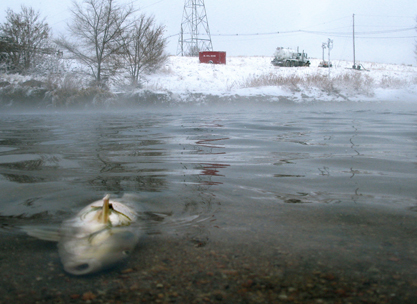
A dead carp floats in Denver's Sand Creek, site of a recent benzene leak. (Courtesy Will Rice)

What can you do, as a recreational fisherman, to protect the environment?

You can write letters to the powerful, join an environmental group, give money, pitch in to restore habitat, tell your friends, hell, turn them into fly fishers, so they’ll see what they’re missing. After all, at the habitat-loss rate we’re enduring, fishing for fun could sadly end up solely on private water a la England. And … that’s un-American.

Not what we want to see happen in L.A.

Or you could let your nose tell you something stinks, as in this story. While recently stalking our favored gamefish, carp, Denver-based fly fisher/blogger McTage knew something wasn’t kosher. He reached for his cellphone, reported it, later dogged it, and made sure the agencies charged with protecting his waters actually did their job. Important story here.  In his case, what he reported after getting a whiff  turned out to be benzene. How long did it take from his first call to actually getting some action? Read the story and be appalled.

Writer Will Rice of Drake Fly Fishing magazine, describes the chemical this way: ” If you are on the fence about Benzene, here are a few things you should know: Petroleum ether, also known as benzene is a group of various volatile, highly flammable, liquid hydrocarbon mixtures used chiefly as nonpolar solvents. During the Second World War some extermination camps experimented by killing people with benzene injections. Benzene causes cancer. Benzene is useful for removing the gum from self-adhesive stamps.”

Stay alert, vigilant. Whoever thought fishermen could be first responders? But when you think about it, we all could be. Bravo, McTage.

See you on the river, Jim Burns

Quick mends: Reyes presses Obama on critical L.A River study funding

AHOY, MATEY: Councilmembers Tony Cardenas, front, with Ed Reyes, far rear, enjoyed a day on the river. (Jim Burns)

I heard on NPR last week that our own Councilman Ed Reyes traveled to Washington to bend President Obama’s ear about the need to fund a study  critical to the river’s re-imagining. Although it’s an opinion piece, Jim Newton, from the Los Angeles Times, puts the Reyes trip into perspective.

From the piece:

‎”The Corps is supposed to be completing a study of the river that analyzes the effects of ripping out large chunks of the concrete, but that work is years behind schedule. Until it’s finished, Reyes’ river project can’t be completed, and he’s now trying to force that work forward. His latest thought: President Obama, as commander in chief, could order the Corps to accelerate the study.
Will the president issue an order to help a Los Angeles city councilman complete a local riverfront project? Reyes thinks he might.”

See you on the river, Jim Burns

San Gabriel Mountains inch closer to national park service protection

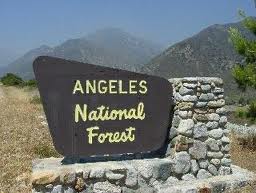
Could this sign soon include “national recreation area”? (Courtesy Forest Camping)

UPDATE: President Obama created the newest national monument on Oct. 10, 2014, by setting aside 346,000 acres in the San Gabriel Mountains.

Los Angeles’s natural resources have been on fire lately, with a burn that isn’t whipped up from a blistering fall Santa Ana. In June, the Urban Waters Federal Partnership chose the L.A. River as one of seven polluted city waterways to clean up, then the U.S. Army Corps of Engineers allowed a pilot kayak and canoe program on the river in August. And now the National Park Service is determining whether our own San Gabes might be suitable for a national recreation area.

According to its website, “The National Park Service (NPS) prepared the Draft San Gabriel Mountains and Watershed Special Resource Study to determine whether all or part of the study area is significant, suitable, and feasible for designation as a unit of the national park system. Congress authorized this study in 2003.

“The study area covers approximately 700,000 acres of land in the greater Los Angeles metropolitan region, including urban communities, local and regional parks and open space, and 415,000 acres of the Angeles National Forest.”

While stopping short of recommending national park protection, the NPS suggests four alternatives:

— expand the current Angeles National Forest to include the area

— turn the vast watershed into a national recreation area

— partner with other agencies to create something else

— or don’t budge.

In our era of downsized America, don’t think the last option might not appeal. After all, California is in the midst of closing 70 state parks to save money, and the national park system remains woefully underfunded. The department’s annual budget is $2.9 billion and includes some 28,000 full-time employees and over 2 million volunteers. President George Bush campaigned on a promise to wipe out an estimated $5 billion backlog in park maintenance projects, which had swelled to $9 billion by 2009, according to CNN, and was reduced by $1 billion through American Recovery and Reinvestment Act of 2009 funds.

Michael Kellett, director of the New National Parks Project, told the liberal website Remapping Debate that he would like to see more federal land be made into national parks and be brought under the umbrella of NPS protection, a change he thinks might actually save the tax payers money.

Lovin’ the East Fork of the San Gabriel River at sunset (Jim Burns)

“What is missing from the conversation of the costs of new parks,” he said, “is that we are already paying to manage these lands and that it would probably be cheaper to make them national parks,” because many places adjacent to parks or that could be potential parks are already federally owned. Many are national forests, which are owned by the public but are logged, mined, or otherwise used by private business for small fees. The government maintains the roads and infrastructure of these areas and charges businesses for a permit to used the lands.

In her story, KPCC reporter Kitty Felde tells us that at least two major dems are on board:

Democratic Sen. Barbara Boxer said she was “pleased the National Park Service is taking the next step toward preserving the unique natural resources of the San Gabriel Mountains and Puente Hills,” while Democratic Rep. Judy Chu said she was, “glad to see that the study has incorporated many of the comments voiced by the public, local stakeholders, and members of Congress.”

So … why don’t you get your opinion on the record? The public comment period kicks off at the El Monte Senior Center (odd place for a kick off …) Saturday, Oct. 29, and runs through mid-December.

See you on the river, Jim Burns

Habitat pits ranchers against Golden Trout in the Eastern Sierra

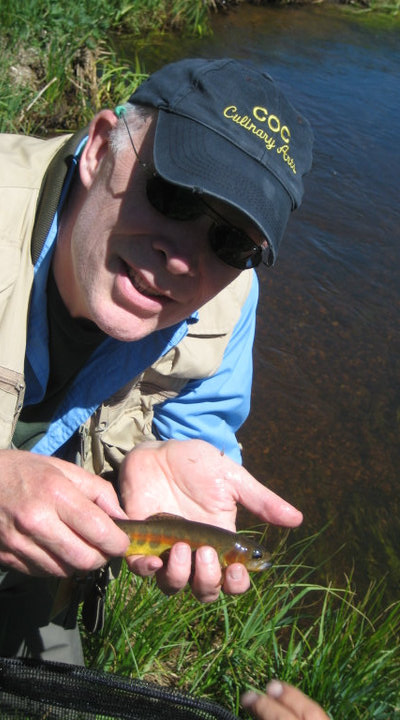
Golden Trout: The state fish is small, but beautiful (Courtesy Guy Jeans).

Last summer, a friend and I caught dozens, and dozens, and dozens of Golden Trout, all in one glorious day. Some days on the water produce memories akin to what used to be called a “Polaroid moment,” living for a long while in one’s memory. That was one of those days, when the weather is perfect, the company, just right, and the fishing, downright fantastic.

So it was with keen interest I read Louis Sahagun’s recent piece in the Los Angeles Times about ranchers rights within the Golden Trout Wilderness and the fate of our state fish. The  GTW is a massive 300,000-acre area that sits on the Kern Plateau and is accessible from at least three directions. On its eastern edge from Lone Pine, off Hwy. 395; from the south, accessible from the Sequoia National Park around Mineral King, itself a 30-plus mile adventure on a one-lane, dead-end road; or going north from Kernville.

Remarkably, three of the trout native to the state’s waters are within the area. Besides the California Golden (technically known as the Golden Trout Creek golden trout), there’s also the Little Kern Golden Trout and Kern River Rainbow.

“Common names abound for the golden trout of the Kern River drainage,” writes Robert J. Behnke in his authoritative “Trout and Salmon of North America.”  “This can be confusing because they tend to either pinpoint a fish to a particular stream, such as ‘Volcano Creek golden trout,’ or encompass a diversity of forms under one name, such as ‘California golden trout.’ The dozen or so common names for what are really two subspecies (aguabonita and whitei) of rainbow trout reflects the passion that so many have for this pair of jewel-like fish.”

The goldens my friend and I were stalking end up on many a fly-fisher’s bucket list for good reason: their jewel-like beauty. And, although they were once transported to Cottonwood Lakes, then to Arizona and beyond, the only place they naturally occur is right here, where they evolved in isolation from other trout

Size does matter, of course, but a 10-inch fish here is a monster, with the average running around 5-to-7 inches. They are a feast for the eye, with two red stripes, one on the belly, the other along the lateral line, running to the mouth and under the gill.  Also, look for large black spots – up to 10 – that run laterally as well. Put these together with a predominately yellow-gold color and there’s little reason for their cousins to enter the beauty contest.

This general description will also come in handy when trying to decided if you’ve landed a pure golden or a hybrid, created through breeding with hatchery rainbows. Remember, these very distinct markings mean you’ve got a golden in your net.

David Lentz, who is California Department of Fish and Game’s native trout conservation coordinator, said that the small size is because of 140 years of habitat degradation. “Continued livestock use results in shallower, wider, warmer water,” he said. Waters in their natural state would be both narrower and deeper, which, in turn, would mean fewer goldens that were bigger. The largest section of interconnected meadows for grazing lies in the South Fork of the Kern area. Sections are now being rested for eight-to-nine years at a time to regain this natural habitat. Some environmentalists have argued that the best way to prevent lifestock from grazing in the upper South Fork watershed is to get goldens listed on the Endangered Species Act, according to Behnke.

Meanwhile, you can volunteer for hands on projects to restore this fragile habitat through the Golden Trout Project.

See you on the river, Jim Burns
Quick mends: Trickster scissors send an environmental message on Matilija Dam

Cut and paste: A pair of painted scissors show exactly where to cut the concrete. (Courtesy PeakWater.org)UPDATE

UPDATE:Damnation” is a documentary well worth watching.

What a week for dam-busters. First, news of the bulldozers marking out space to begin the destruction of Elwha Dam in Washington, and now, closer to home, graffiti artists have painted a large pair of scissors and a dotted line on Matilija Dam, near Ojai, Calif.

Take a look at the reporting from the Los Angeles Times, then look for yourself at the amount of work dedicated to razing this old timer. It seems all sides are in agreement that it’s time to pull out the dynamite, but a lack of federal dollars stands in the way.

See you on the river, Jim Burns

Quick mends: Dismantling gets underway for Washington’s Elwha Dam

UPDATE: “Damnation” is a documentary well worth watching.

Don’t we all love to get good news? I relish, for example, when a friend rings me up with something cheery to say, or, I check my bank account to find I’ve got a couple of hundred bucks stashed that I thought I’d spent, but didn’t.

California Fish & Game biologist Doug Killam holds an 88-pound Pacific chinook salmon. It’s hoped the removal of the Elwha Dam in Washington state could result in even bigger fish. (Courtesy California Department of Fish and Game)

As far as the environment goes, I’m always on the lookout for positive stories. Most news is depressing, scary, messy. So today’s piece in the L.A. Times outlining the largest dam removal in our history made me smile. According to the article by Kim Murphy, after almost 100 years, salmon will now be free to swim up 70 miles of their traditional home waters, the Elwha River, instead of being stopped at the dam.

“Now,” of course, is relative, in that the project involves removing not one, but two, dams along the river that runs through Olympic National Park. Then there’s the matter of dealing with the removal of  24 million cubic yards of sediment. Apparently, the number is akin to a football field as high as the Empire State Building times 11.

Sound familiar? Closer to home, we’ve been watching the sediment removal debate revolve around Pasadena’s Devil’s Gate Dam, which is close to the Jet Propulsion Laboratory.  I’ve written in this space before about the suspect nature of Brown Mountain Dam, farther up the Arroyo Seco and its impact on returning steelhead to this mountainous region.

To quote the Times article about the Elwha River: “The effort is the largest dam removal project ever undertaken in the United States. It comes at a time when the nation’s 80,000 dames, many of them aging and backed up with choking silt, are increasingly suspected of having outlived their usefulness.”

The best news would be to get moving on bringing down Brown Mountain Dam. The Los Angeles River and its tributaries deserve to be returned to their natural state.

See you on the river, Jim Burns
Quick Mends: Pasadena to hear comments on plastic bag ban Tuesday

And, this just in from Wilson Lau, Watershed Coordinator at the Arroyo Seco Foundation:

Bag Man: Now that you can be nicked a dime for a paper bag at grocery stores in unincorporated areas in L.A. County, it pays to bring your own. (Barbara Burns)

The City of Pasadena is having a Special Meeting of the Environmental Advisory Commission (EAC) Tueday at 6 p.m. to receive comments on a recommendation for a proposed ordinance that would ban plastic carryout bags, impose a 10-cent charge on paper carryout bags, and require affected stores to provide reusable bags to customers for sale or at no charge.  The stores that would be affected by the proposed ordinance includes large grocers (gross annual sale of $2 million or more), retailers (at least 10,000 square feet of retail space and has a licensed pharmacy) as well as farmer’s markets, drug stores, pharmacies, supermarkets, grocery stores, convenience food stores, food marts, liquor stores, vendors participating at City-sponsored special events, and events held at City facilities or on City property.

Pasadena is committed to forging policies in support of increased environmental stewardship in partnership with the business community. Pasadena’s Green City Action Plan, adopted in 2006, identifies the development of a plastic bag reduction program to support its goal of achieving zero waste to landfills by 2040.

Questions? Contact Ursula Schmidt, Sustainability Affairs Manager, at (626) 744-6729.

Comments will be heard in Pasadena City Hall,  Council Chambers, S246, 100 N. Garfield Ave. Street parking is available on Garfield Avenue and Ramona Street, adjacent to City Hall.  A public parking lot is located at the Paseo Colorado Shopping Mall just south of City Hall at 280 East Colorado Blvd.

See you on the river, Jim Burns

It’s a hike to Arroyo Seco’s Brown Mountain Dam

UPDATE: “Damnation” is a documentary well worth watching.

I’ve been working on a complicated piece this summer that, frankly, I’ll be happy to send in to the editor next week. It’s about Southern California steelhead. That alone may come as a shock to some readers of this space — not that I’m working on it, but that there actually is such a fish in our Mediterranean clime.

Dating from 1943, it’s fair to ask what purpose this federal dam serves today (Jim Burns).

When I think of the mighty steelhead, I envision surging rivers somewhere in the Northwest, and rain-soaked attempts by dogged casters to get a strike, as these powerful giants return from the ocean to spawn in fresh water. Unlike salmon that spawn and die, a steelhead may make more than one trip to the ocean and back to its native waters. Because it covers so many miles, the fish is known as an “umbrella” species, whose health can either augur well or poorly for the rest of us. Steelhead made the Endangered Species List in 1997, and the status was reaffirmed in 2006, according to the National Marine Fisheries Service.

In pursuit of the truth about the viability of this species here in So. Cal., I’ve spent time with city officials, the Army Corps of Engineers, environmentalists of varied stripes, biologists and just plain everyday folks who love to fish.

All of them agree that one of the literal obstacles to getting steelhead off the list is dams that stop them from returning to their native habitats to spawn.  I wanted to see for myself what one of these dams looked like. My wife agreed, and so we walked upstream yesterday in the July heat from Jet Propulsion Laboratory about four miles to Brown Mountain Dam.

Googling any topic can be deceiving, and so it was with our sojourn. No one in Pasadena needs to be reminded of the horrific Station Fire that took firemen’s lives, burned homes and ruined habitat two years ago. From reading, we expected our hike to be grim: lots of lunar landscapes, dead trees and squashed hopes. Not so.

Yes, there were dead trees. And, yes, there were large debris flows along the modest flow of the upper Arroyo Seco, all the way to the dam. But, there were also marvelous live oak canopies, wildflowers, cacti, blooming yuccas, calling birds, annoying insects. The Station Fire was devastating, but it hasn’t robbed us completely of this splendid natural respite.

Fish, however, were another matter. I spent unscientific time tossing rocks into likely holes, and even nymphed riffles and edges for a bit. If there are still fish, they were taking a long nap. This is particularly bad news as native rainbow trout (actually any rainbow trout) under the right conditions can become a steelhead. And there is a lot of work going into various plans to recover this species — in the Los Angeles River watershed.

Back to the dam. You’ve got to ask yourself, why, with the county ready to pour some $32 million into dredging and dumping the area above Devils’ Gate Dam, this little gem goes unnoticed. If I were a good reporter, I would have already asked an engineer how many tons of sediment lie behind Brown Mountain, just waiting to foul the county’s efforts if, God forbid, we have an earthquake of sufficient magnitude to bring the thing down.

Walking around its structure made me wonder aloud if the idea behind this dam was to slow the notoriously fast flow of winter storm water down the canyon. From my layman’s perspective, it’s a long way down those four miles to the flood plain alongside JPL. Couldn’t we allow it to return to its original state?

If nothing else, a walk up the Arroyo Seco should cure anyone of doubts about removing our channelized monstrosity of flood control to return our streams and rivers to the way they were.

See you on the river, Jim Burns