Category: Ecology

Quick Mends: Useful links update Sepulveda Basin habitat destruction

California State Senator Kevin De Leon props up crushed vegetation while touring Sepulveda Basin's South Reserve. (Courtesy Grove Pashley)
California State Senator Kevin De Leon props up crushed vegetation while touring Sepulveda Basin’s South Reserve. (Courtesy Grove Pashley)

Yesterday, a friend sent me an article from the Wall Street Journal entitled, “Los Angeles Reimagines its Waterway,” that contained both a snarky East-Coast-centric tone, as well as surface reporting (Notice that the title says “waterway,” not “river” …) But I was struck by two quotes that I think aptly reveal where we are today:

“By year’s end, the Corps and city engineers expect to complete a joint $10 million study that will offer a handful of options for restoring native habitat, likely creating wetlands along the river and potentially removing or reshaping some of the river’s concrete walls. The study examines an 11-mile stretch of the river on the city’s east side, where some resilient plants have survived in a narrow, muddy strip of so-called soft bottom at the center of the channel.”

And

“Last month, to the surprise of many San Fernando Valley residents, the Corps cleared more than 40 acres of trees and plants near the river northwest of the study area, in the Sepulveda Basin. While not related to the Arbor study, the action set off an outcry among local environmental groups and has raised concerns about the future of the Arbor study.”

According to the article, “State Sen. Kevin de León, one of several local officials who has demanded an explanation from the Corps, said the Sepulveda project “doesn’t bode well” for the future of efforts to revitalize the Los Angeles River’s natural landscape.”

So true.

I’ve spent literally two years and change fly fishing this area that the article refers to as a “narrow, muddy strip of so-called soft bottom at the center of the channel.” If you visit these pages, you’ll find pictures of the carp I and many others have so enjoyed catching. But now I wonder, how can you trust the Corps not to destroy all fishing in the river once work actually begins? The motto of this blog is “waiting for steelhead, fishing for carp,” but I now have to wonder if everything non-native has to be tossed out, and with warm water temperatures the rule, will there be any fish at all left in the river? Reintroducing steelhead, which were found in the river as late as the 1940s, is all but impossible. There is no way to construct a run to allow steelhead to reach the ocean.

And are trout really plausible given the river’s high water temperatures? Maybe, with a lot of habitat engineering, and lots and lots of cash money.

That leaves carp, which already thrive in the river, have been resident for decades and, for the sports fisherman, are a lot more cost efficient to catch than traveling to Belize to snatch a bone fish.

I think it’s a crazy policy that has every plant, fish and game species returned to the halcyon of days before Los Angeles was the city it is now. Pragmatic room must be made at the table for all types of activity on the river, which includes fishing.

Question: Exactly what will we be fishing for in the Los Angeles River in 2016?

For those of you following the important issues of the Corps clear-cutting 40+ plus acres of the Sepulveda Basin to suit its own desires, see the links below that come courtesy of Sepulveda Basin Wildlife.

Damage can be seen on the trunk of this native Oak at the South Reserve. (Courtesy Glenn Bailey)

Click HERE to read the entire Finding of No Significant Impact for the Vegetation Management plan.
Click HERE to read the letter sent to ACOE by the Sepulveda Basin Wildlife Areas Steering Committee.
Click HERE to read the ACOE’s response to the SBWASC letter.
Click HERE to see ACOE’s web page about this issue.
Click HERE to read Daily News article about clear cutting of South Reserve.
Click HERE to read L.A. Times article “Army Corps of Engineers clear-cuts lush habitat in Valley”, HERE to read follow-up article.
Click HERE to view YouTube video about the destruction.
Click HERE and HERE to see Encino Patch articles with additional photos.
Click HERE to read letter from San Fernando Valley Audubon Society about clear cut.
Click HERE to read KCET blog by Carren Jao.
Click HERE to read letter from State Senator Fran Pavley.
Click HERE to read letter from State Senator Luis de Leon.
Click HERE to view video entitled “Wildlife Refuge Meets Army Corps or Engineers” by a concerned citizen.
Click HERE to read an editorial by Charles Miller on the KCET blog.
Click HERE to read story in the LA Weekly.
Click HERE to read Congressman Brad Sherman’s letter to Colonel Toy.
Regional Water Board Investigation – click HERE for Encino Patch article.

Click HERE to find out about the history and wildlife of what used to be the South Reserve.

Click HERE to visit the San Fernando Valley Audubon Society’s web site that has recommendations as to who to send comments, and other links.

See you on the river, Jim Burns

L.A. mayor announces largest solar contract in DWP history

Mayor Antonio Villaraigosa announces two major solar projects while at Occidental College. (Jim Burns)

Los Angeles Mayor Antonio Villaraigosa announced the creation of two large solar projects today while at Occidental College.

“Today, we’re signing the largest solar contract in the history of the DWP,” Villaraigosa said. “Our contract with the K Road-Moapa Solar Project will provide 250 megawatts of solar power. That’s enough energy to power over 113,000 homes.”

K Road will develop the solar arrays on the Moapa River Indian Reservation in southern Nevada.

The contract with the Copper Mountain Solar Project will send up to an additional 210 megawatts to Los Angeles, enough to power another 76,000 homes. These two projects join the city’s other major solar projects, the Adelanto Solar Project, Kern County and the Feed-in Tariff program, which provides a financial incentive to homeowners who install on-grid photovoltaic systems.

The mayor chose Occidental College because of its new $6.8 million, 1-megawatt solar array, a project whose innovative design takes a distinctively liberal arts approach to green power with its blending of technology and art, according to the college.

With the almost-completed hillside array as a backdrop, he told a group of around 50 that the city’s goal for renewable energy use is 33 percent by 2020. Los Angeles gets about 40 percent of its energy from coal.

“We’re the only public utility that I know of in the entire state that isn’t just talking about a goal, but we have a real plan to get there. The fact that we’re at 20 percent and will be at 25 (percent) by 2015 is indicative of the milestones necessary to get to 33 (percent).”

Sierra Club President Allison Chin lauded the contracts as well as Villaraigosa from the podium.

“The Moapa Solar Project will be a boost to the Paiutes and the Sierra Club’s ongoing efforts to replace coal with clean energy in southern Nevada. The Pauite families are suffering from high numbers of asthma attacks, heart conditions and even cancer that’s associated with coal pollution,” she said.

The Sierra Club and the Moapa Band of Paiutes, located near the Reid Gardner plant, have called for its closure, but in August the federal Environmental Protection Agency green-lighted NV Energy to continue operations, as long as it installs controls to reduce the air pollution.

See you on the river, Jim Burns

New L.A. River funding brings new questions

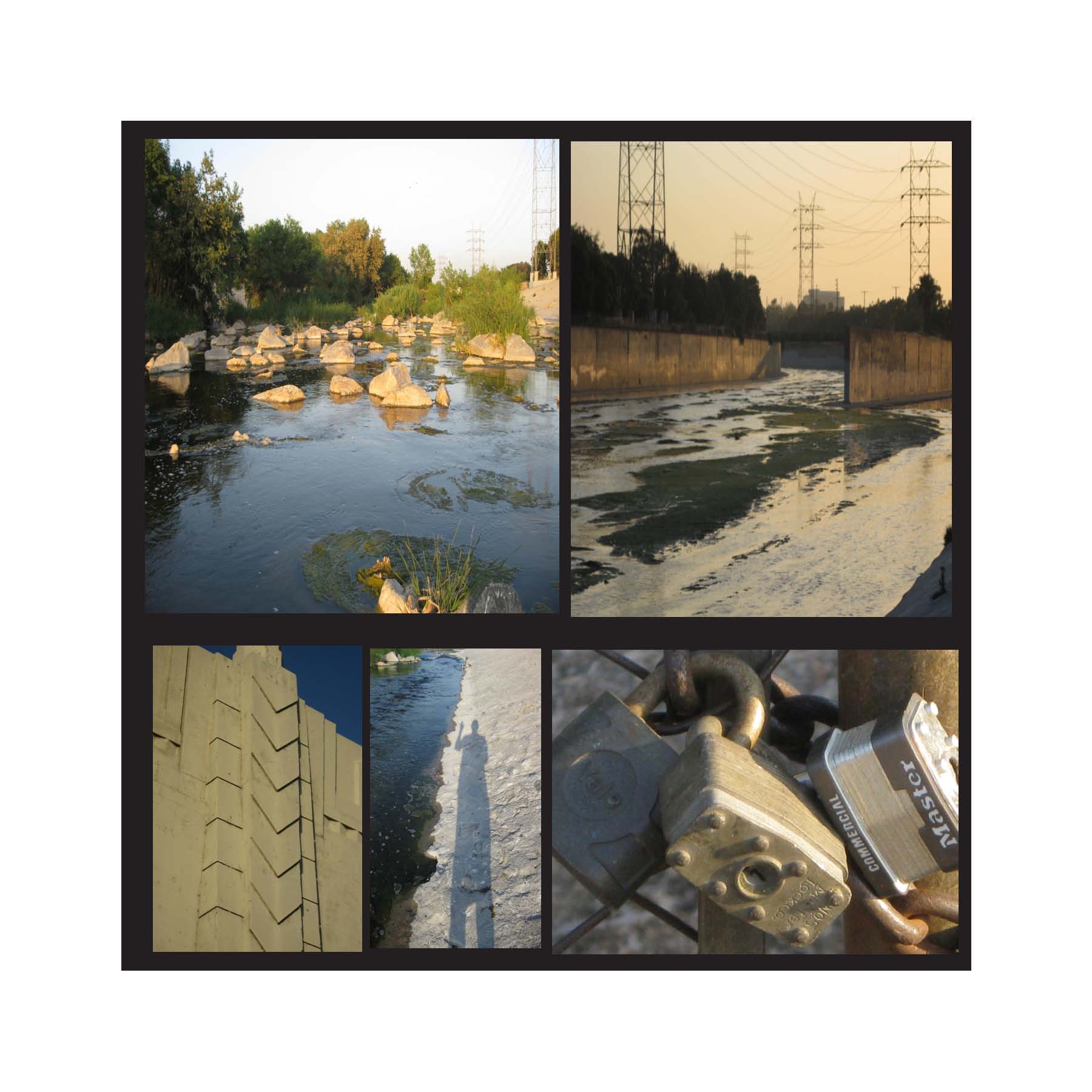
From top left, clockwise, the tranquility of carp-filled pools, at the beginning of Glendale Narrows. Once you get past the city locks, you can see self-shadows and nifty bridge architecture. (Jim Burns)

The Buddhists say that the curse of the human realm is change. And if you live long enough, you tend to agree with them.

Of course, even if you haven’t lived a long time, only a fool won’t recognize that change comes in two flavors: good and bad. Maybe some would quibble with me and argue change can be neutral, but those changes aren’t the ones any of us remember. A neutral change is akin to no change. Most of us see the world in Manichaean terms — a big word for good versus evil. Change is flavored by one side or the other.

Maybe that’s a tad too much philosophy for a Monday morning, perhaps a shadow of tomorrow’s election, but change felt palpable on the river this weekend, and I wondered which flavor it would eventually be.

I took advantage of the 80-degree weather to explore three favorite fishy spots, looking for carp. One thing that doesn’t change — I often get skunked by these elusive fish. Water in the Glendale Narrows section is two-to-three feet deep in most spots. Consequently, fish see you as quickly as you spot them. And, at least on the fly, sight fishing is the best way to land one, and it has certain risks.

My boots scraped down the river’s  rip-rap skin, close to the giant bunkerlike concrete abutments that once held electric Red Line tracks, jutting out from the old Glendale Avenue bridge. There, the wide concrete swatch of the river’s artificial bottom is entirely concrete, and as I watched the water’s constant flow, I realized this vista I’d taken for granted was vulnerable to change.

By now, if you follow “riverly” events, you know that clothier Miss Me has  breathed new life into the stalled keystone environmental feasibility study with a substantial gift. As Molly Peterson reported for KPCC: “The Army Corps of Engineers study, nicknamed  ARBOR (Alternative with Restoration Benefits and Opportunities for Revitalization), was $970,000 short of the $9.7 million needed to proceed.”

And the clothing company has offered almost $1 million to close that funding gap. The Corps lead planner Kathleen Bergmann recently told me that the money has to pass through some approval hoops. “We are moving forward on last year’s funds.  While funds have been offered, we must receive permission to receive those funds, and sign an agreement.  Congress has set up a very precise method for doing this, and must be notified as well. We are in the process of taking those steps to get approval to receive the funds.”

So green is green, and it’s great to know that the money is finally available, even given the ridiculous amount of time it’s taken to fully fund the study during the Great Recession.

“Remember that the fundamental purpose of the Study is to improve the ecosystem values in the LA River– and that means riparian habitat that is good for wildlife, including fish species,” said Carol Armstrong, director of the Los Angeles River Project office. “The Study will go public with its alternatives early next year. Once finished, it will recommend one of those as its recommended project, which will then go to Washington, DC, for approval by the federal powers-that-be. So, those alternatives are under development now. Basically we’re moving from Study to Project now that the Study is fully funded.”

I believe it’s a given that at least sections of concrete are on their way out. Since I began this post on a mystical note, look at the signs.

— The Paddle the River program, although only around for eight weeks a year, is in its second year, with a five-year contract. Now apparently,  program leaders have aspirations to paddle the seven miles of Glendale Narrows as well.

— Gov. Jerry Brown signed SB1201 into law this year, which broadens the L.A. County Dept. of Public Works 100-year-old mission of flood control and storm water management to include education and recreation. Friends of the L.A. River and UCLA’s Environmental Law Clinic spearheaded the effort that was then introduced by State Senator Kevin de Leon.

— I haven’t heard of any tickets being issued to those plying the river’s bottom during the last few years.

— Also, I haven’t heard of LAPD harassment of activists since Jenny Price’s  river tour was disrupted over a turf war some three years ago.

Add to all that Arroyo Seco Foundation Exec Tim Brick’s recent grant acquisition of over $3 million to improve the Hahamongna watershed above JPL in Pasadena. As he wrote me in an email, “A key goal of this project is to improve conditions for the trout and other fish in the Arroyo stream.  The water intake facilities were not designed to protect the fish, but we want to change that by redesigning the facilities and improving the habitat there. This brief video shows the facilities and the area to be improved: Water Facilities in Hahamongna Canyon.”

It’s time for optimism, to see the change as very good. In other words, this puppy is going to happen, because after decades of inertia, the political will has arrived to bring in the bucks.

But am I the only one who gets a little nervous with big money?

As I trudged along in the autumn heat, marveling at this wonderful liquid behemoth, I wondered what the change would actually look like, and I felt that nagging bite of Manichaeism again. I want to be able to fly fish, enjoy the din of the I-5, ponder the eastern vistas of Griffith Park. I don’t want to buy souvenir T-shirts a la San Antonio’s River Walk stalls, although enjoying a crafted beer by water’s edge wouldn’t be all bad.

So let me ask you, what do you want?

— See you on the river, Jim Burns

Enter a thirst-quenching idea

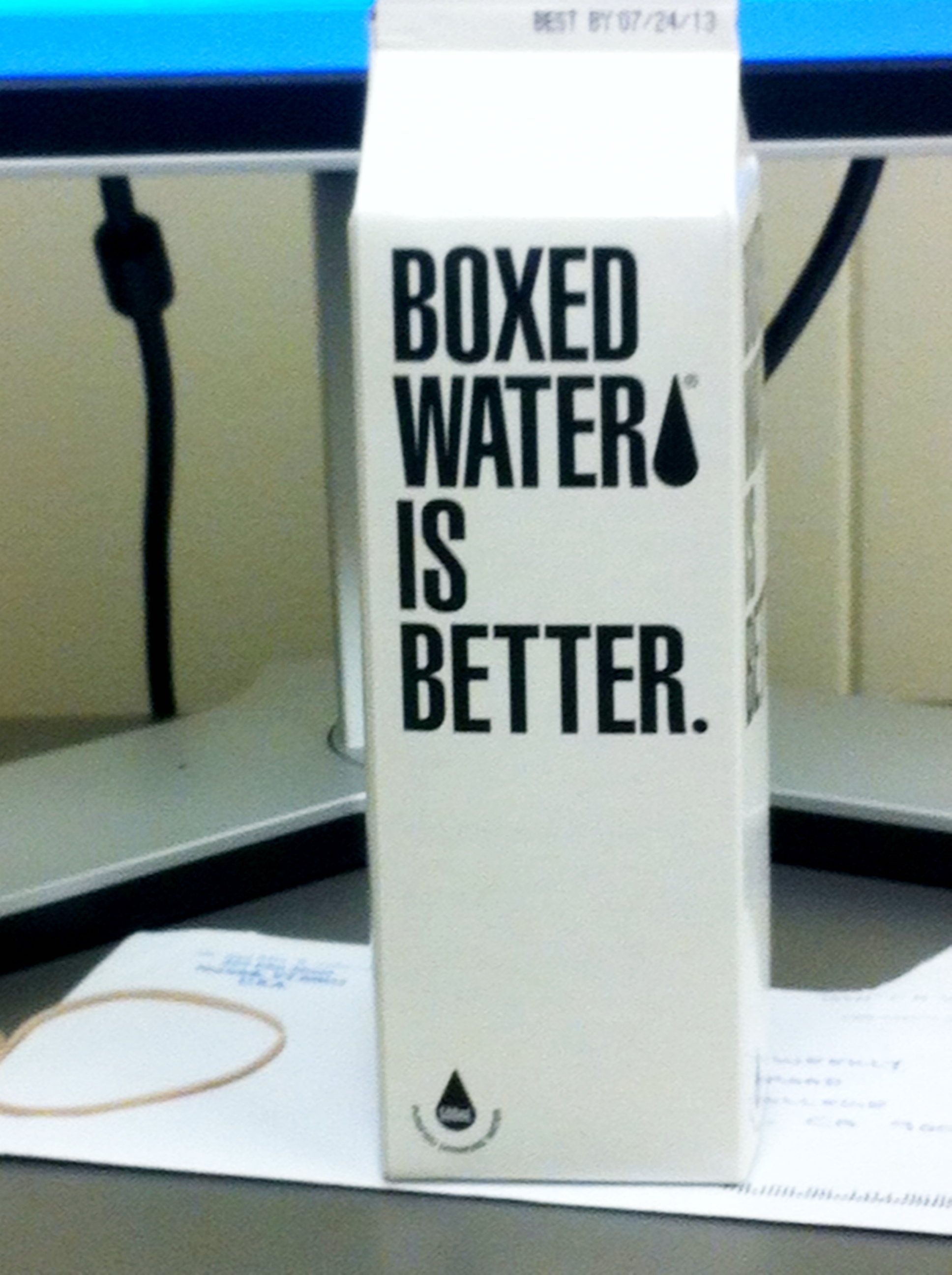
A one-use plastic water bottle, it ain’t. (Jim Burns)

There’s not a whole lot to say about this new boxed water, except try it. As it says on the 500 ml box that retails for $2:

— over 75 percent composed from renewable trees

— boxes shipped flat to reduce footprint

— 10 percent of profit goes to world water relief foundations

— 10 percent of profit goes to reforestation foundations.

See you on the river, Jim Burns

A&F Conservancy christens Rosemont Preserve in La Crescenta

OPEN SPACES: The area at the end of Rosemont Avenue in La Crescenta is a mix of private property, flood control access and now eight acres purchased by the Arroyos & Foothills Conservancy. (Jim Burns)

Saturday was a good day in La Crescenta, Calif., at least for those who care about open space in our congested Los Angeles basin.

The Arroyos & Foothills Conservancy officially opened its latest acquisition, the 7.75-acre Rosemont Preserve. The land is situated behind a gate  at the mouth of Goss Canyon, which is then backed by an additional 300 acres  maintained, according to conservancy press materials, as mostly wilderness over the decades by private landowners. The gate will remain locked to control access to the property.

Scheduled to appear during the fete was  L.A. County Supervisor Michael Antonovich, who spearheaded $350,000 in grant money to acquire the now-protected acreage. Donors made up the additional $100,000, which included  contributions of $250 from assembly members Mike Gatto (D-43rd district) and $500 from Anthony Portatino (D-44th district).  According to Gatto’s office, he also helped to raise $10,000 toward the purchase. The sale price of $450,000 was under market value. The real estate site Zillow estimates one home situated on over two acres at the top of Rosemont Avenue at about $883,000.

Preserving the land secures habitat for a range of wildlife, including mule deer, mountain lions, bobcats, bears, coyotes and Arroyo toads, as well as at least 31 bird species, according to the conservancy.

Although it is a win for the area’s wildlife and for groups, most likely school children and volunteers who can access the property through the conservancy, the location remains problematic, at least for neighbors who fear for their serenity because of the newly acquired access. Indeed,while early guests arrived, one resident whose home is next to the gate asked for reassurance from John Howell, executive director and general counsel.

‘X’ MARKS THE SPOT: Local heavies, volunteers and donors were on hand to inaugurate the Rosemont Preserve in La Crescenta Saturday. (Jim Burns)

“They are understandably concerned. It’s been shut off forever. They are concerned about just opening the gates, having it be an open space. It’s not, it will be controlled access,” he said during an interview earlier in the week. “But probably more telling, more significant than that in terms of having it be controlled access is that there’s a neighbor to the north who owns 212 acres.

“So the worst thing that could happen, you know, is announce it, here it is, then a week later she’s got people on her property. She’s got webcams. The first words out of her mouth when I first met her were, ‘I just want you to guarantee that nobody’s going to come on my property. Period.’ So, we’re going to try to turn that negative into a positive.”

Apparently, neighbors had a hand in nixing another plan for the property, to turn it into a school in 2005. The owners of La Canada Preparatory then eventually sold to A&FC during negotiations that first began in 2007.

The next steps for the conservancy, the neighbors and property owners in the area will be about public access.

” It’s a two-step thing: save it and acquire it, and then what do you do with it then?” Howell said.  ” Steward it, husband it and have it be a resource to the community. So we’re going kick off something called the Rosemont Society, which will be (composed of) folks who want to participate on a volunteer basis to help us manage the property.”

BYOB (that’s bag) to begin in Pasadena, July 1

FILL ‘ER UP: By the end of the last Friends of the River Clean Up Day, this baby was a whole lot fuller. (Jim Burns)

Beginning of rant:

If I didn’t fish, I probably wouldn’t care about plastic bags or banning them. But, hey, I do fish, and enjoy plying our urban waters as often as I can. And that’s why I support the Pasadena single-use plastic bag ban that goes into effect July 1. Here’s some background on the decision.

You can say all you want about the evils of the nanny state, but here’s a personal review of how well our waters have fared  without our Uncle Nanny:

— item, 1998, West Fork weekend overrun overwhelms me. How much trash can anyone actually leave in a river? Take a look at these recent, enlightening photos from West Fork San Gabriel Conservancy.

— item, 2007, used throwaway diaper floats by, blind-pooping me in the leg, on Bouquet Creek. Admit to gag response.

— item, 2010, Hanging out on the L.A. River with new-found, grade-school kids who want to learn to fish. No child should have to play near trees fouled by dozens, and dozens and dozens of filthy plastic bags. Drove home truly pissed off.

So, if you’re an urbanite who is equally pissed off about the bag ban, I suggest you go down to the L.A. River, or to any of our beaches, or to the mountains and pick up some of the junk that’s been left behind. For some reason, cleaning up after others when you’re supposed to be enjoying yourself brings it home.

And if you’re a libertarian fly fisher, come up with a better solution than the ban. Not theory, somehow based on the Constitution, but something that might actually decrease the junk floating around the Southland.

Meanwhile, I’ve been hoping that either the city or local business will give bags away for a day, as the Department of Public Works folks did in La Canada last year. No word as of this writing. Once you’ve got your own bags,  just keep them in your car. It took me about three months to get tired of walking into the store sans bag. That’s what my wife calls  “training” … She’s right!

Now, about those plastic bottles …

End of rant.

See you on the river, Jim Burns

Pack trash out … all the way out

ImageTramping through the San Gabriels today with my son was a wonder: we caught 16 trout, rainbows and browns, in a half-day’s work. I even foul-hooked a rainbow, which is certainly nothing to brag about, but was fun all the same.

But the point of this post is, please, don’t trash the wilderness. I walked through some brush, only to be snagged by old line that someone had left carelessly near a stream. Attached to it was an old-school wet fly, around a No. 4, so I guess I’m a fly richer, but that could have also tagged me in the eye. Not cool.

I also found a discarded spinning reel (!), more line at another part of the stream, and a Sports Chalet receipt that didn’t looked great against the wildflowers. I mean, come on, if we want to keep our resouces safe and sacred, we can’t treat them like a public toilet.

Remember: pack it in, pack it out.

And, if you are fishing in areas that don’t get stocked, please release your catch. One hole I’ve fished for many seasons with success contained only two small trout. I doubt that my other friends fell prey to cranes or other feathered pros. If you take out the fish, they are gone, Period. Once the fish are gone, what’s the point of our sport?

Sorry for the rant, but as you prepare to get out there for a fantastic season of fly fishing, let’s respect what we have. Please repost.

See you on the river, Jim Burns

Quick Mends: Increased river access update

With the upcoming river cleanup happening Saturday, it’s an appropriate time to check in with California State Senator Kevin De Leon SB1201, a bill that could bolster efforts to open up the Los Angeles River for lawful recreational uses, such as fishing. For context and the finer points, read this excellent summary from Legal Planet, a collaboration between UC Berkeley School of Law and UCLA School of Law. The site defines itself as “providing insight and analysis on energy and environmental law and policy.”

As a fly fisherman, here’s my beef in a nutshell: I’m tired of being in a legal access morass as soon as I cast into the water.

We want to see legal access to the river for kayaking, fishing, and swimming. This won’t be the panacea that changes the river over night, but it will create a legal basis for people to come down to the river, FoLAR’s Lewis McAdams said to the wonky The Planning Report late last month.

“Fishermen have been ticketed. The City just uses a loitering ticket because they don’t have any L.A. River tickets. Of course it usually gets thrown out, but people have to spend the day downtown dealing with it. We want people to feel that the river is open. When I started Friends of the Los Angeles River, my first official act was cutting a big hole in the fence, declaring the river open. It’s only taken 25 years to get to this point. We’re at the point where the river is about to be opened, and we’re pushing the door gently open wider.”

See you on the river Saturday, Jim Burns

Don’t ‘carp’ about Earth Day …

Participants carry a large traditional carp-shaped wind sock called "Koinobori" at a parade demanding a stop to all nuclear power plants in Japan as part of an event for Earth Day in Tokyo. The carp banners are flown in Japan from April to early May to wish for the good health of children. (REUTERS)

… instead, sign up for FOLAR’s 23rd annual L.A. River clean up, Saturday, April 28, from 9 a.m. until noon. Check the link to find which of the 15 locations is best for you, then … sign up!

See you on the river Saturday, Jim Burns

Quick Mends follow-up: Forest Service reaffirms all mining prohibited on East Fork

A recent post on this site stirred up the pro-con constituencies about suction dredge mining, with the arguments basically boiling down to habitat vs. access. Although the petition was directed at the California Department of Fish and Game, the U.S. Forest Service has just posted this on its site:

All mining operations (location of mining claims, prospecting, and mining, including panning, sluicing, and dredging) under the 1872 Mining Law are prohibited within withdrawn areas of the Angeles National Forest.  Public Law No. 578 (1928 withdrawal) withdrew areas from entry and location under the mining laws.  There is no provision in PL 578 which provides for even a limited right to enter the withdrawn lands to prospect.  Therefore, National Forest System lands within the East Fork of the San Gabriel River are not open to prospecting or any other mining operations.

When I called for comment, the Arcadia office was closed (at 4:30 p.m., Wednesday), but without further reporting on this topic, looks to be a win for fishing habitat.

See you on the river, Jim Burns