

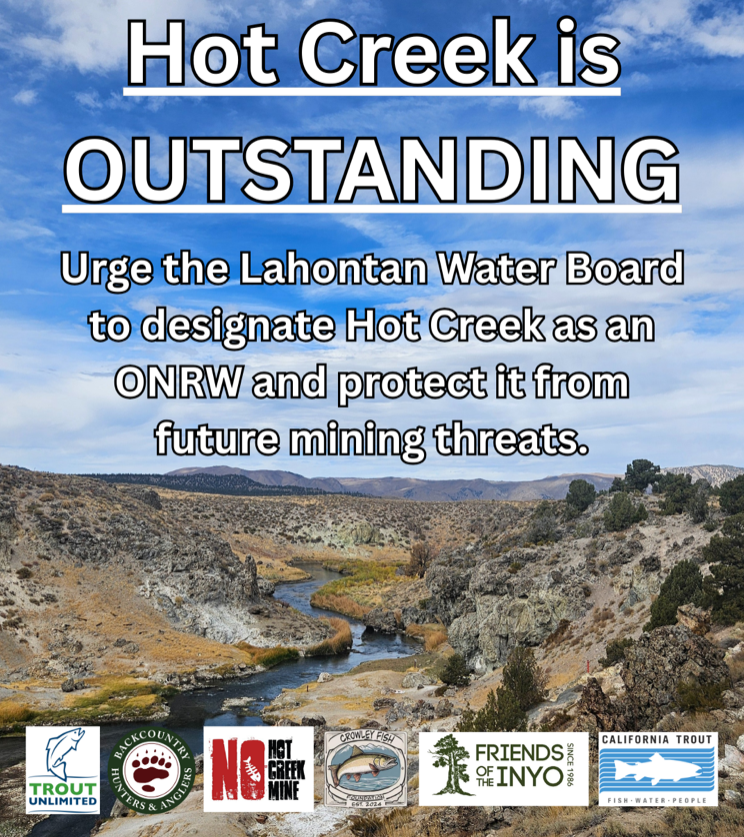
From Trout Unlimited:
Help us protect Hot Creek from mining.
Hot Creek is a unusually productive stream, ecologically – its distinctive water chemistry and temperature regime influenced by the hydrothermal inputs up and down its length, combine to produce huge volumes of aquatic plant growth and macroinvertebrates, which in turn support one of California’s most famous wild trout fisheries, known for its impressive biomass (number of fish/mile).
But Hot Creek is threatened by gold mining. A proposal now before the Lahontan Regional Water Board would permanently protect the water quality in Hot Creek from being degraded by mining waste by designating it an Outstanding National Resource Water (ONRW).
We have until May 5 to urge the water board to make this critical designation.
In September of 2021, the Inyo National Forest approved a project that involves “exploratory drilling” for gold near Hot Creek, one of California’s most famous wild trout streams. The drilling site is located about one-third of a mile from the creek, in Mono County. In the wake of widespread public opposition and litigation by partner organizations, the Forest Service’s approval of the project was overturned in 2024.
But the threat of future mining near Hot Creek remains, especially given the federal government’s new emphasis on increasing mineral production on public lands.
Together, we can help to secure permanent protections for Hot Creekand its legendary trout fishery by submitting comments before May 5th to the Lahontan Regional Water Quality Control Board to designate Hot Creek as an Outstanding National Resource Water.
Even if it were not threatened by mining, Hot Creek deserves this designation, which is reserved for waters with the highest water quality characteristics and which prevents permanent degradation to water quality while protecting existing uses such as recreation, angling, and ranching.
Urge the Lahontan Regional Water Quality Control Board to designate Hot Creek as an ONRW here!

Greetings Stakeholders and Interested Parties,
This email is to notify you that the objection period for the subject project will start on Friday, March 7, and end on April 21. You are receiving this message because you have submitted comments on the project previously, and may be eligible to file an objection.
To learn more about the process and requirements for an objection, or to view the Environmental Assessment, the Comprehensive River Management Plan, or the Draft Decision Notice and Finding of No Significant Impact, please visit the project website >>HERE.
You may also contact me for questions.
Thank you for your interest in Piru Creek Wild and Scenic River.
Gary Seastrand
Natural Resource SpecialistForest ServiceAngeles National Forest
p. 626-574-5278
c: 626-320-0038
gary.seastrand@usda.gov
By Blake Karhu
Greetings SoCal fly fishers. Our good friend and messenger of the local streams, Jim Burns, has relocated to fishier waters up north and he asked if I would share an update with you all.
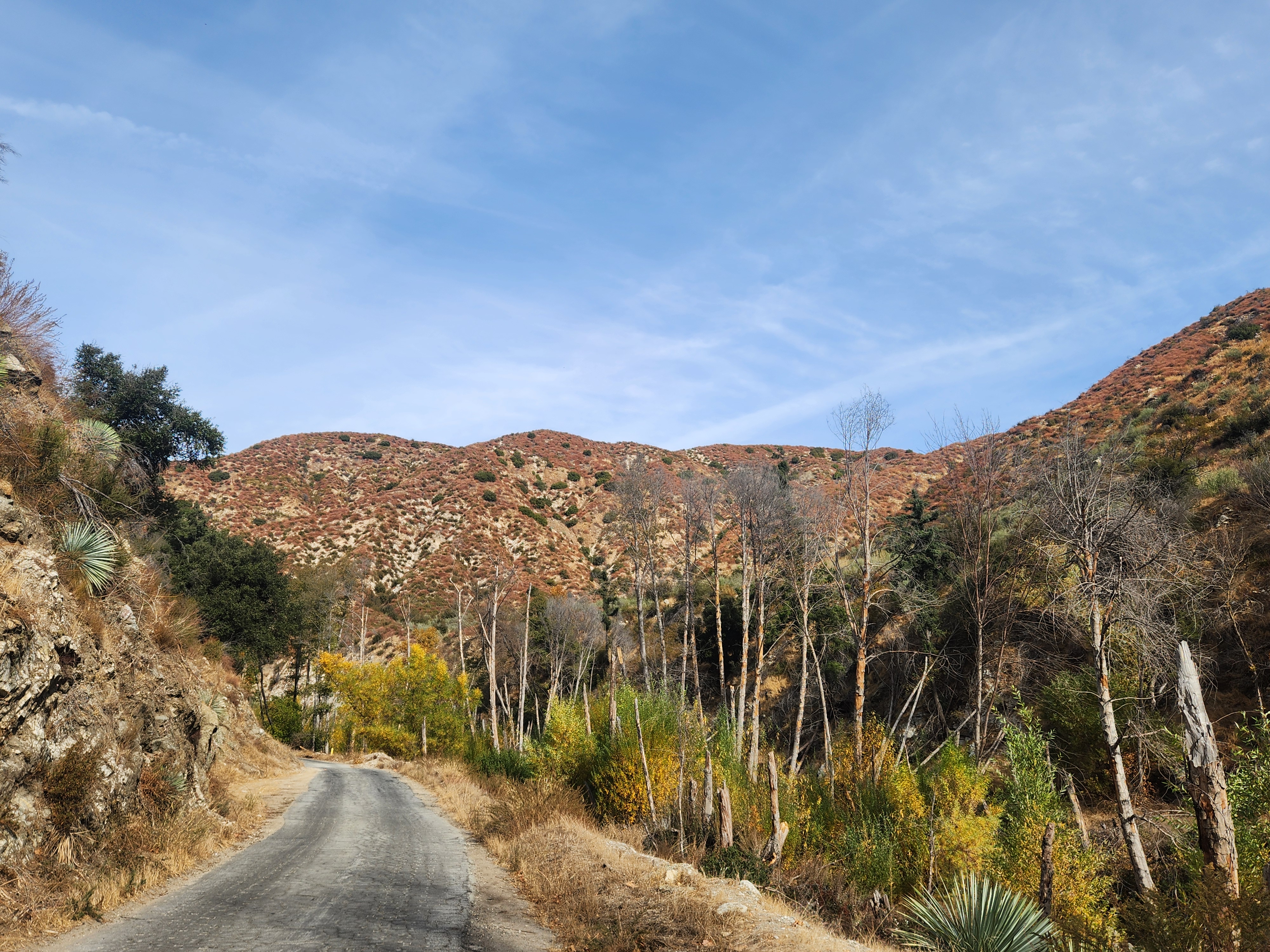
We have been dealt a late arrival to cool winter temps this year and our local trout are still active. So, if you like solitude and the contrasting late fall colors of our natural landscapes, then this is your last chance to get out there before real winter sets in and trout fishing is largely on hold until spring.
After some of the highest flows in years, flows are now low and the early fall extreme heat wave was stressful for fish and aquatic insect populations. The trout are cautious and your A-game is required for the bigger fish (“bigger” = larger than 9 inches in in most local streams).
The good news is that after years of drought and fires, most of our watersheds are largely bouncing back as they naturally do following good rain years, so there are a lot of young trout in the streams too.
Not to say that the fires are not destructive, especially if they are too frequent, and the Bridge Fire on the East Fork San Gabriel represents a once in a generation reset of that watershed. Fishing may be on hold there for two or more years as the trout population recovers.
Nymping is generally the way to go this time of year but dry flies can still get them, especially during the warmest part of the day. Also, be gentle when catching and releasing fish as they prepare to spawn and don’t fish for spawning fish–we need all the spawning success we can get as local streams are no longer stocked. Barbless/pinched barb hooks, wet your hands before handling fish, and keeping fish in the water as much as possible is key.
Some good catch and release etiquette from CDFW >>HERE.
Good luck and enjoy our local natural treasures!
Timothy
I was just out at the West Fork today, after not fishing it for about 6 years. I’m happy to report that there was the least amount of trash and graffiti I have seen, probably since the late 90s, when I first learned to fly fish up there. The water was low, though not the lowest I have ever seen. Many of my old spots were gone. For example, the straight that runs from the West mountainside under the first bridge to join up at Bear Creek. That entire section, probably 75 yards, used to be fabulous. Caught many fish there.
On the West side of the bridge, the water split in two for about 20 feet and came together again to create a deep and productive pool. Not there anymore. I saw another young guy fly fishing there and he claimed he caught something, but I didn’t see any fish or any rises. It was ok enough for me to return soon.
I live in Riverside County now, so its about an hour drive for me. I have to compare that to the drive to Bishop and the Owens, which is three hours and much better fishing. I sincerely hope the river continues to recover and we see a return to the glory days, which to me ended with the drought in SoCal in the late aughts.
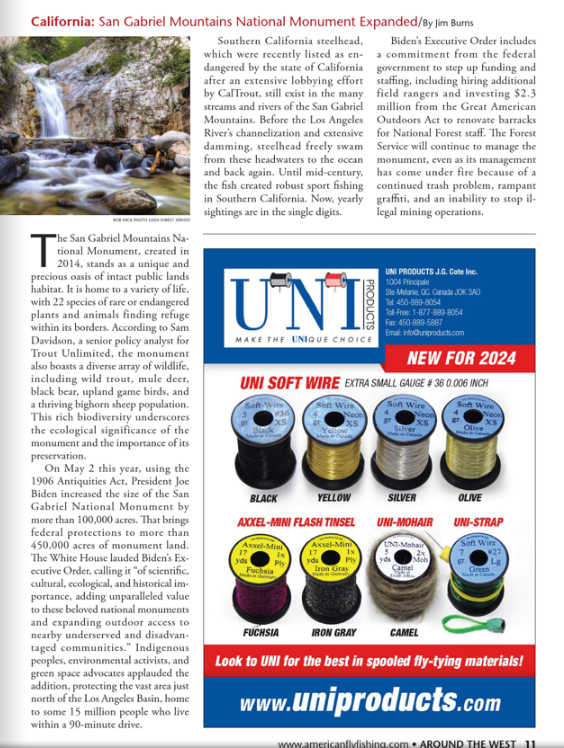
You never know what you actually miss about a place until you’re no longer living there. I spent about 40 years in SoCali, I think. And while I can tell you a lot of things I don’t miss about living there–the traffic being No. 1–I do miss the land, especially the San Gabriel Mountains National Monument. I spent years exploring its creeks, rivers and have so many special memories of the place. Many of those spots I chronicled on this blog.
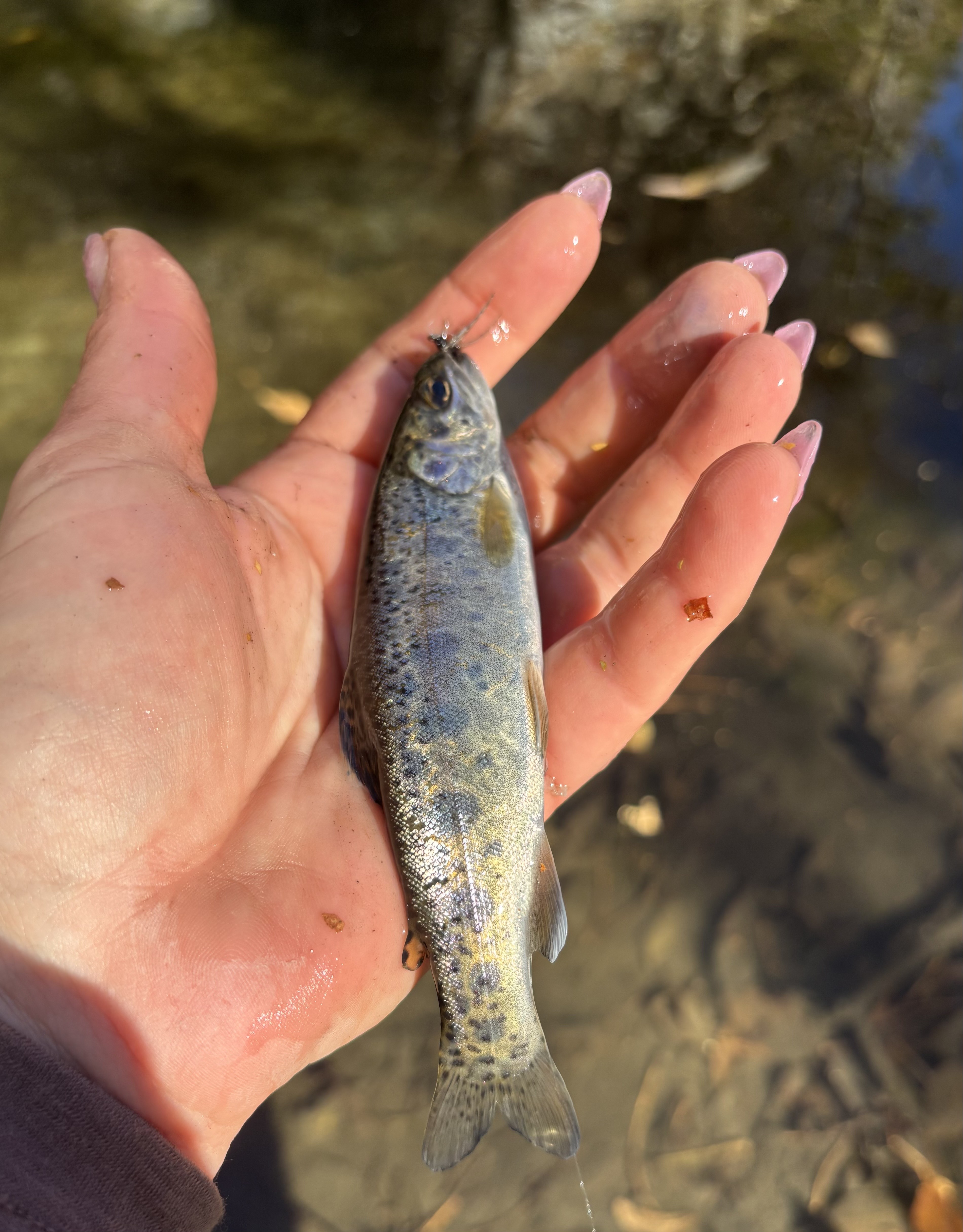
It’s super gratifying to get emails from readers who are looking for the same kinds of excitement I always found in those bone-dry hills. This week’s was from a young woman who just relocated from Montana! She wrote ” I’m … ready to drive 2-3h for the thrill of catching even small guys :).” She gets it.
Even here in Oregon, I’ve not found a thrill so big as being able to coax a small wild trout out of hole that’s not deep. I guess I’m the guy who says, “Hey, it’s a miracle!” about a seven-inch rainbow, instead of showing you just how dang big that sucker was from my last fishing safari. Just knowing that life continues on, if we only help it along a bit, is a thrill that kept me going back again, and again.
Here in Southern Oregon, this week, I was one of a few who volunteered to check hoop traps to see what was coming up the small streams. Our fish ID chart included Coho, Chinook, Steelhead and Cutthroat. This tiny creek ran next to a local high school, and the biology teacher there has lead a fish in the classroom project for something like the last dozen years. While in So Cal we call it “Trout in the Classroom,” here it’s called “Salmon in the Classroom.” Different name, same spirit. Those lucky students just need to walk out of their classroom to watch citizen science in action.
I also had to leave the Fisheries Resouces Volunteer Corps and miss the friends I made in that terrific organization. If you ever thought about volunteering, FRVC could use your help. Get more information >>HERE.
Check out what they did this year:
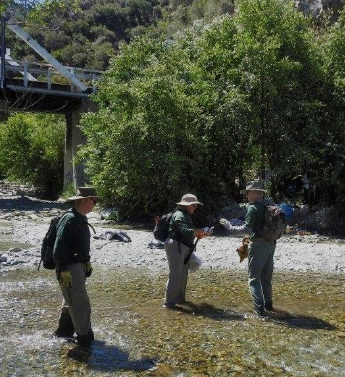
Can you believe that trash number? I can tell you that all the garbage is removed by people who care about the land. It’s all done by hand and takes a lot of work. A day of garbage collection in the San Gabes leaves you tired, possibly angry at the lack federal solution to stem the tide, but overall happy. While you’re toiling away wondering why some of your fellow Angelinos just toss away their pizza box and El Pacificos, instead of getting jaded, you can find hope in kindred spirits.
The fact FRVC only logged 51 angler surveys is a bit disturbing. If you go out to the West Fork, don’t forget the angler box is just above the first bridge. Take a few minutes to log your catch.
See you on the river, Jim Burns

For fire updates, >>CLICK HERE.
Hey, fishers, the East Fork area and East Fork Road are closed today, so it’s a good idea to stay off Highway 39. Last night, although Camp Williams wasn’t evacuated, area hikers and campers were, so the situation is once again very hot and dire for our mountains, the visitors who frequent them, our firefighters, the fish we all love and hopefully, not for homes and residents. News reports, as I write, say 300 acres have burned so far, CalFire has called in air support, and containment is at zero.
Don’t we all dread these times? Biologists say that fire is natural and a good thing, but that the burn cycle is 20 years between events. Ash fertilizes the ground for seeds to grow, Giant Sequoias have a natural fire retardant in their bark and the jack pine depends on fire to release their seeds, according to the National Forest Foundation.
If an area continues to burn, say every three or four years, the habitat becomes less able to support the rich land and aquatic life we all enjoy. Wildlife die or flee in search of better habitat and food. Even worse in long term, grasses and shrubs colonize what used to be a forest of trees. Invasives can then get a leg up as well.
If you’ve been to the WF recently, you’ve noticed that the flow is way down because of construction efforts to control the Bobcat Fire debris in Cogswell Dam. The water clarity is not great, and it is way hot.
We are in the fourth year of a five-year emergency debris clean-up project, and because of the turbidity, the California Department of Fish and Wildlife’s surveys on the West Fork in the last two years haven’t been completed.
“CDFW has just recently completed a 2024 annual survey of the WFSGR and results are still pending,” CDFW Environmental Scientist Joseph Stanovich said in an email. “There has been internal discussion regarding the status of the wild trout populations and plans to help it rebound, but with the current conditions and keeping the wildlife resources in mind, it doesn’t seem to be feasible right now.”
I know we’re all anxious to take a look at that report when it is released.
You can keep an eye on local flows >>HERE. I’m not sure if the West Fork gauge is broken or what, but taking a look at the flow, it ain’t good.
I’ve been hearing much better things about fishing the EF, so let’s all hope that firefighters get the Fork Fire out soon and that these precious habitat treasures for wild trout and all our animals come out of this all right.
See you on the river, Jim Burns
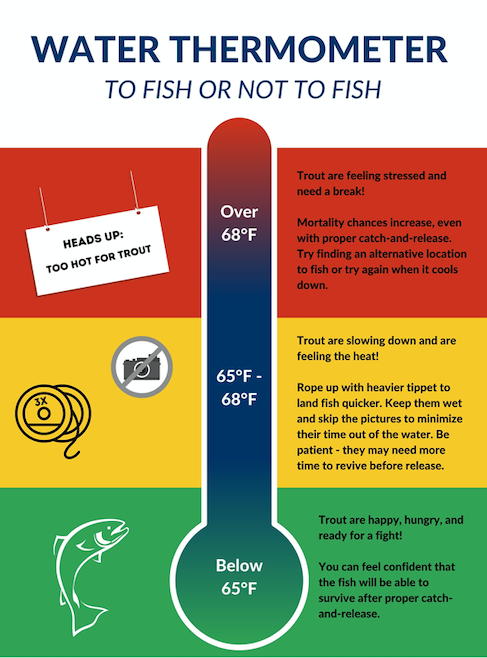
When a good fisher friend texts you that the water temperature is 68 degrees at 7 a.m., you know it’s July in the San Gabes. Dawn Patrol is a great way to get into lots of our beautiful, wild trout before the summer hordes descend. But, remember the limit for safe fish handling is 70 degrees.
I broke my water thermometer and need to buy a new one. For those who care about our local waters’ health in summer, it’s as important a piece of equipment as a leader billfold or a hemostat.
Many of you savvy anglers already know what “hoot owl” restrictions are. I first heard about them on Montana’s Big Hole River, a waterway that struggles each summer with allocating enough water for ranchers, fishers and trout. They’ve done an amazing job over the years, sharing their watershed and keeping it alive and healthy.
Hoot Owl restrictions recommendations, according to CDFW, mean being active as an angler during times of day when owls can still be heard hooting. These times are typically earlier in the day when weather conditions are cooler.
Keep Fish Wet goes farther with its “No Fish Dry July” campaign .
“No Fish Dry July encourages anglers to rethink their interactions with fish during hot summer months and challenges everyone to make a month-long commitment to “do better”. Whether it is by not taking a single photo of fish for July, using best practices for each fish we catch, or by only targeting warm water species each angler can find a way to participate.”

Whatever you decide to do, remember that once the water hits 70 degrees, it’s better to hang up the rod for a bit, grab a cold one and wait to hear that hoot owl. The trout will thank you and so will your fellow conservation-minded fishers.
See you on the river, Jim Burns

From the Forest Service:
Big Santa Anita Canyon (which includes the Chantry Flats Picnic Area) adjacent to Sierra Madre/Arcadia remains temporarily closed until mid- to late-summer.
More work is being done to repair roads and resurface the picnic area parking lot after the Bobcat Fire and subsequent flooding. In addition, volunteers have been working hard on trail repairs.
It can take three to five-plus years or more for an area to recover from a wildfire, especially with excessive post-fire flooding. When plants’ root systems are burned out, there is little to nothing to hold soil in place until more regrowth.
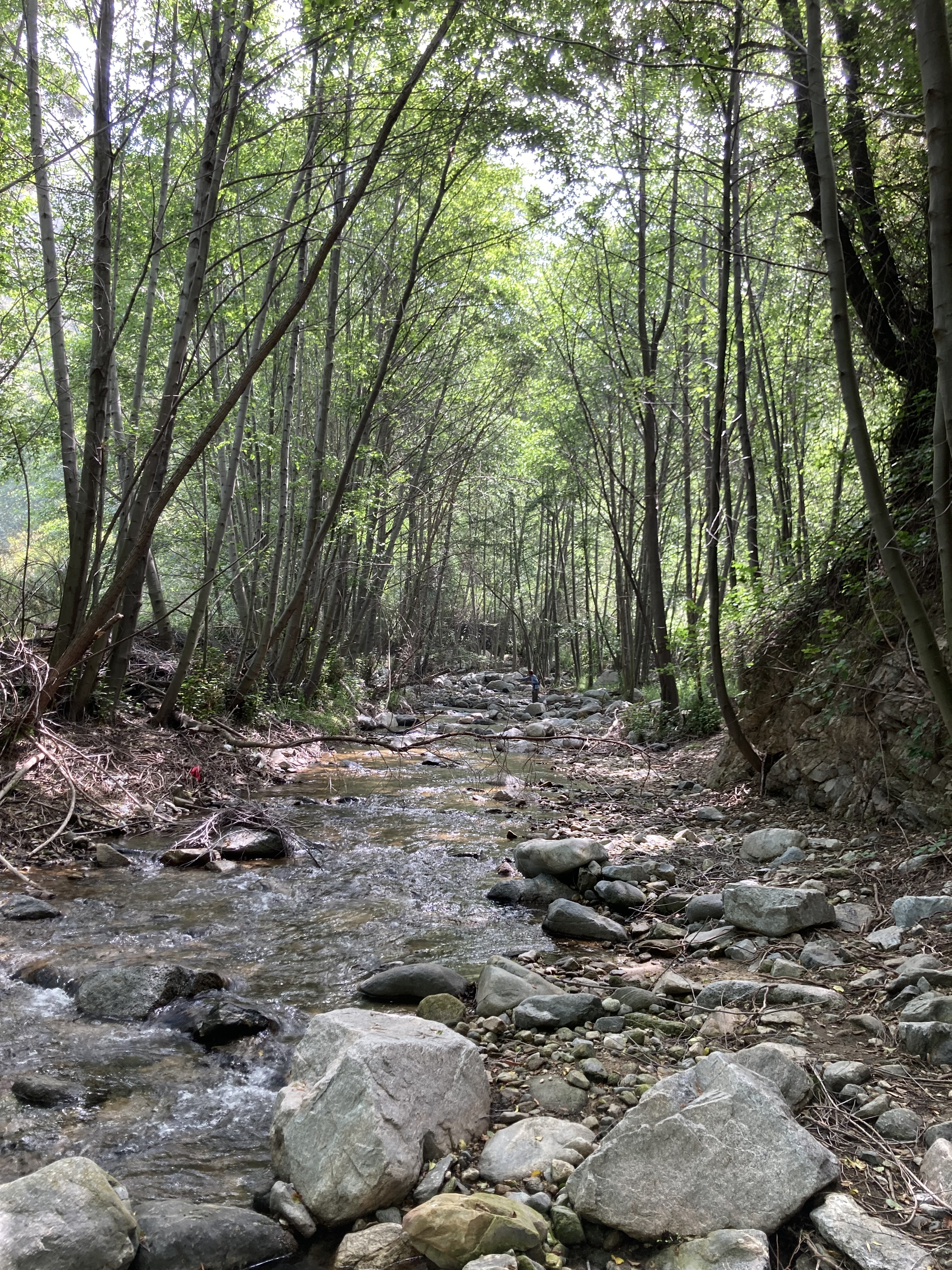
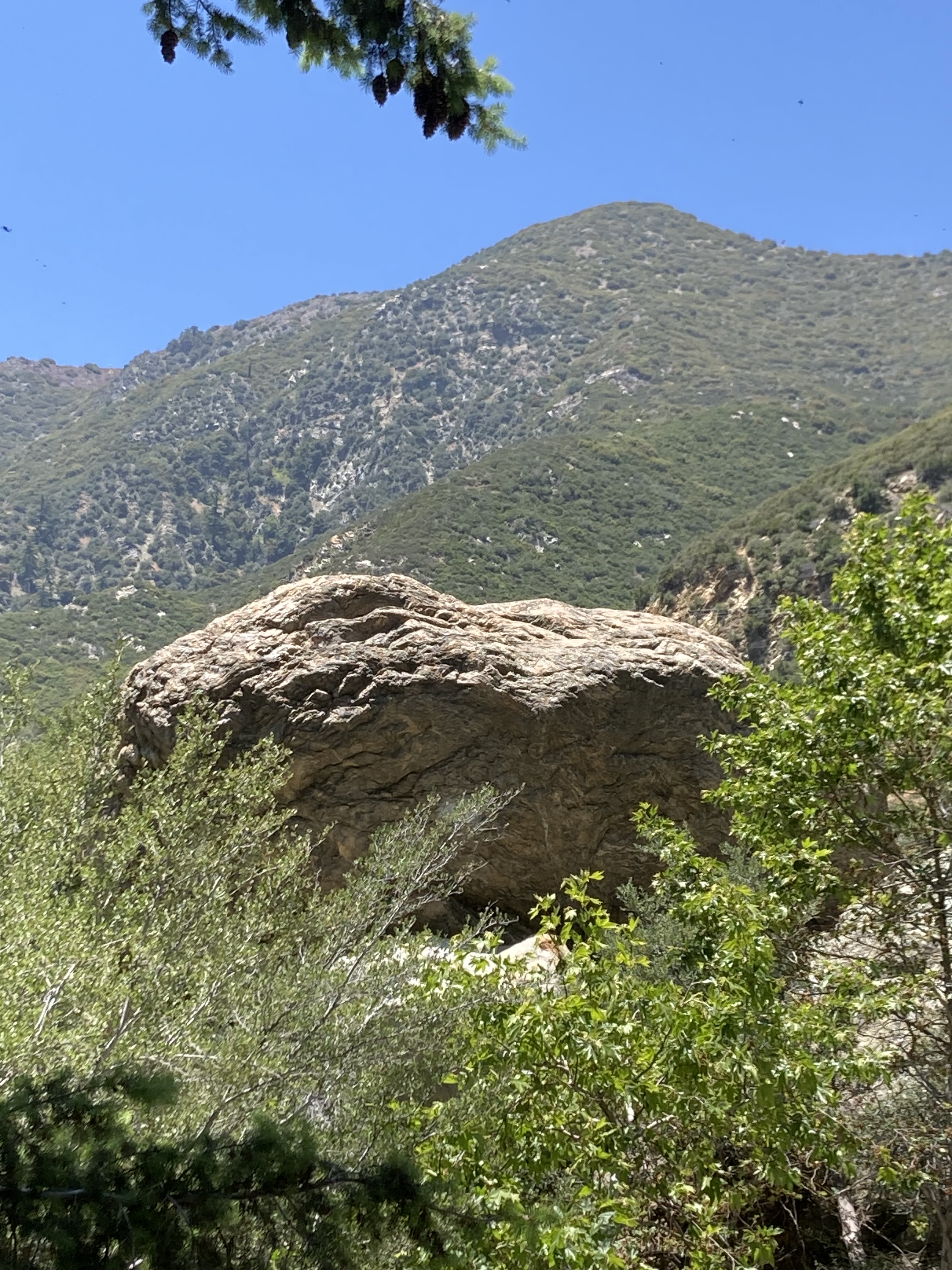
With fishing buddy Jim the Man(oledes) on the East Coast for the summer, I decided to solo it on a canyon fly-fishing adventure today. I strayed from my usual places, the forks of the San Gab. The verdict: if you live anywhere near the expanded Monument, live to fly fish, and, well, you know, actually have a terrible case of fish fever, get on out there!
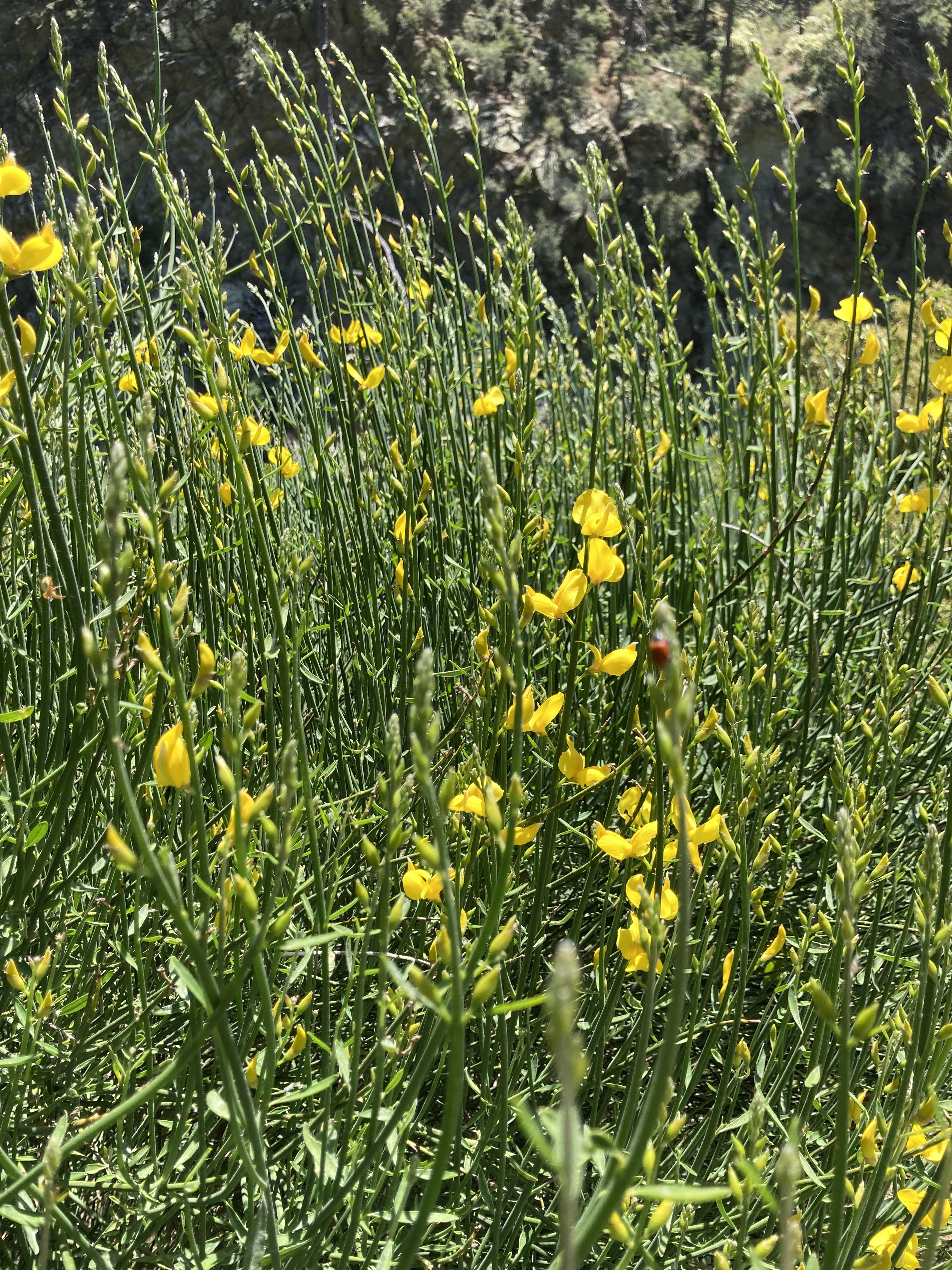
Although the pic (third row, Scotch Broom) doesn’t even begin to do the hatch justice, I saw literally thousands of — ladybugs! — swirling around all over the canyon. At first, I had no idea what I was looking at. They appeared to be tiny round orange flying buttons. When one finally landed, I couldn’t believe it.
Also, I didn’t get a shot of two snakes coiled like a legendary Cadeusus in everyone’s favorite springtime activity. That was amazing.
So, head out early to avoid the coming heat; bring lots of water, sunscreen, a decent hat, and a great lunch. Don’t wear shorts or short sleeves because we have a whole lot of poison oak and stinging nettles. If you don’t know what they look like, safe your skin some real agony and look the up.
I now take my Zoleo with me into areas without a cellphone signal. I’m also crazy about two apps: the amazing Merlin Bird ID from Cornell Lab and the in-need-of-an-update Seek connected to INaturalist.
Be super mindful of snakes. Little rattlers are just starting to grow up, and you don’t want to inadvertently put your hand in a crevice or step on one. Their rattles are still immature, and they don’t yet know how to control their venom flow.
I Euro-nymphed and pulled in seven in about an hour and change. The trout were still hanging way down. The biggest (second row) was a porker and dove straight into a deep pool, which was a thrill. Technically, I guess I was nymphing because I used a 4 wt., eight-footer, but what the hell, it’s all high sticking, anyway. There was not another soul on the water but me. Now that’s fishing.
I’m not going to name this spot, but if you email me, I’ll give it to you.
See you on the river, Jim Burns

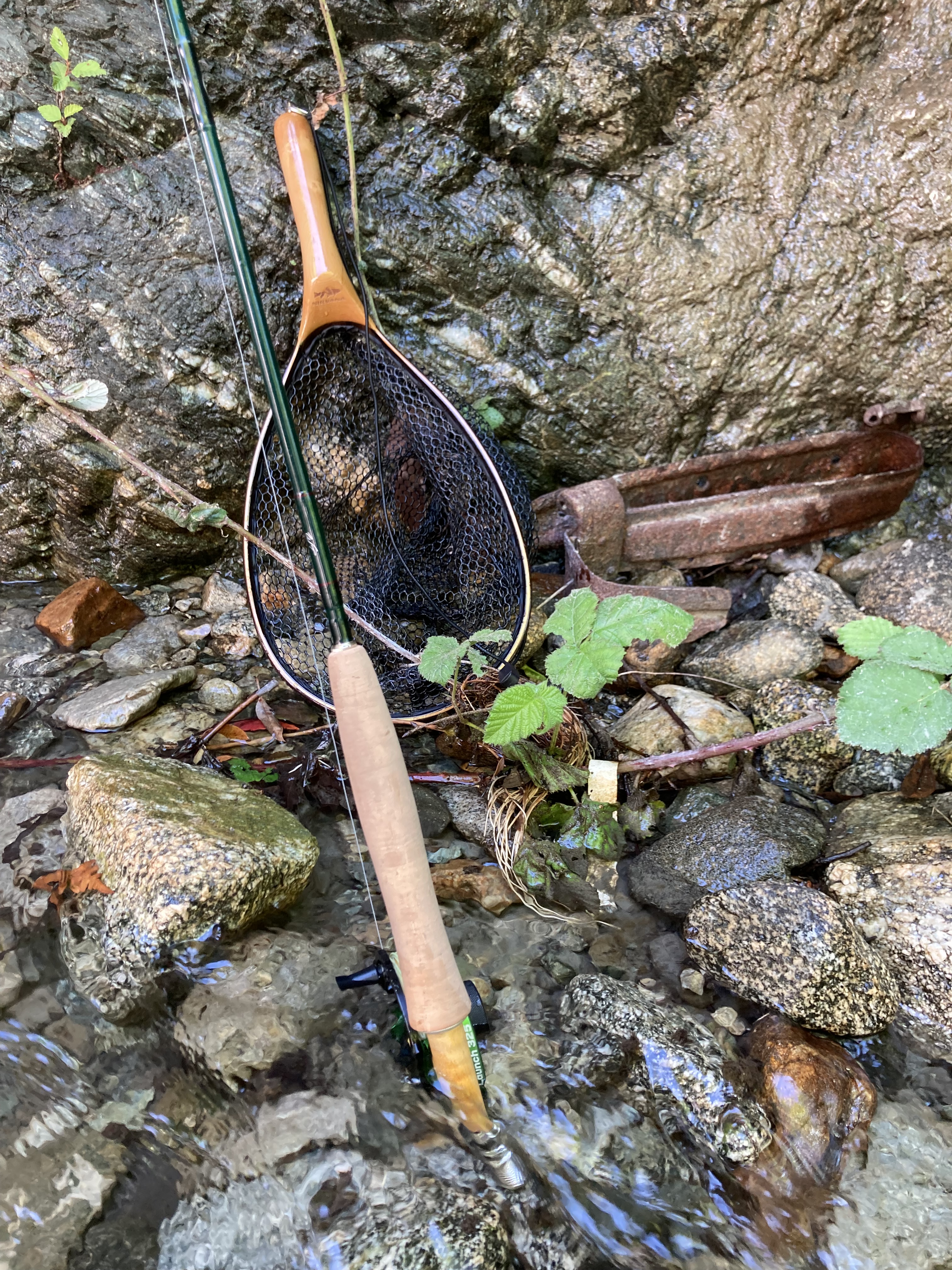




 lariverflyfishing