A HERO’S RETURN for this fall-run Chinook Salmon spotted on Oct. 16, in a tributary of the Klamath River after removal of four dams marking the first fish to return since 1916. (Photo by Mark Hereford, Oregon Department of Fish Wildlife, Courtesy: ODFW)MEANWHILE, ARE THESE fish endangered Southern California Steelhead in Orange County? (Courtesy William Preston Bowling)
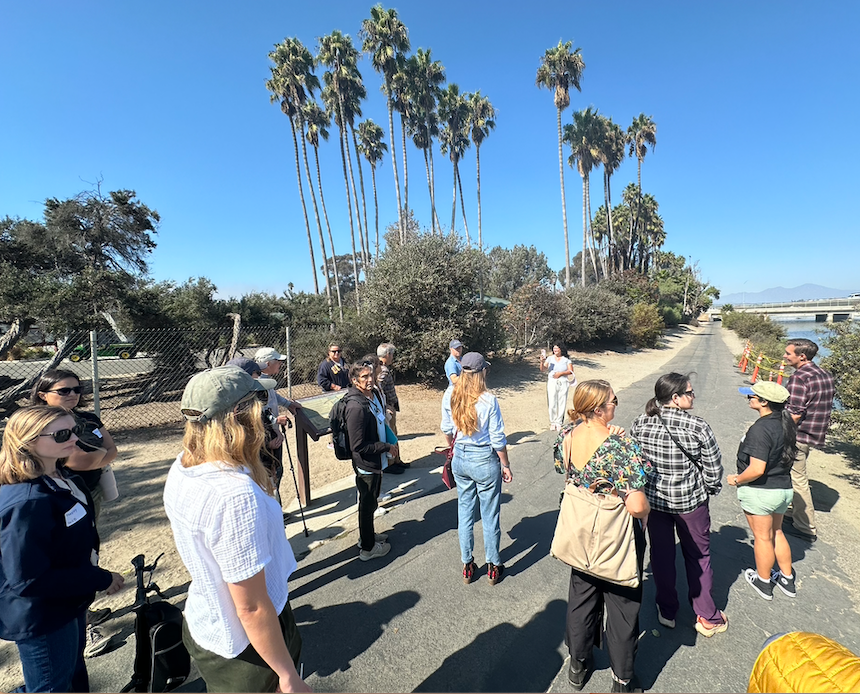
Were they steelhead? That was the question a group of environmentalists and scientists asked themselves as they watched a group of large fish navigate the urban waters close to Orange County’s San Juan Creek Estuary.
Ironically, the group was there on a site visit for Trout Unlimited’s San Juan Creek Estuary Restoration Project, led by longtime advocate George Sutherland, who with help from the California Department of Fish and Wildlife wrangled a 30-plus inch steelhead from estuary waters back into the Pacific Ocean. He’d been tipped of the fish’s inability to reach the ocean by a local shopkeeper. That was in the early 2000s.
Fast forward to 2024 and TU is pursuing grants to improve the area’s habitat for native fish, wildlife and plants, restoring the health of this important water.
Even though Sutherland spearheaded signage about steelhead in this area, the group was amazed to sight what could be the almost mythical Southern California Steelhead, an endangered species, once caught in the thousands in local rivers.
“It was a sign, as we walked past our sign–The Trout Unlimited Steelhead lifecycle–that a hard look is needed in the San Juan Creek Estuary as a place that needs to be restored for the animals that use this area,” ” said William Preston Bowling, President of Trout Unlimited South Coast Chapter. “Evidence of Steelhead Trout and other fish species with an osprey in a palm tree to balance out the circle of life.”
But, the biologists weren’t completely convinced that these fish were steelies, focusing on the shape of the dorsal fins, as well as what they characterized as larger mouths.
Ironically, at least according to one participant, these biologists admitted they’d never actually seen a steelhead in the wild.
The mystery continues until a positive ID is confirmed.
(Credit: NOAA Fisheries. Click to watch a three-minute video.)
As of this Earth Day, the verdict is in for Southern California steelhead. State wildlife officials have voted to list the fish all readers of lariverflyfishing love (fishing for carp, waiting for steelhead) as endangered. The listing, which echoes the federal listing in 1997, adds such protections as:
— Hands off. SoCal steelhead are off limits to angling.
— State agencies must protect these steelhead and their habitat when approving projects.
— Matilija Dam, Rindge Dam, Trabuco Creek, and the Santa Margarita River, Solstice Creek will all receive further scrutiny. Who knows if this will actually speed the process up of dam removal, fish passages and more water staying in our local watershed? I also wonder what this means for our own Brown Mountain Dam? Aren’t the trout in back of JPL the great-great-great- grandsons and daughters of ocean-going steelhead? Tear that sucker down as well.
George Sutherland, South Coast Chapter, Trout Unlimited’ s Conservation Chair and the co-founder, SC Steelhead Coalition, put it like this:
“I hope that this will lead to completion of many great projects of value to our watersheds, streams, estuaries, wetlands, ecosystems and habitats.
“The steelhead just need a bit more help. I’m proud to have been be a part of this focussed effort since 1980 and can’t wait to get moving forward.”
From Cal Trout: The evidence is undeniable: Southern California steelhead teeter on the brink of extinction. Southern steelhead serve as crucial indicators of watershed health and river ecosystem integrity. These fish play a role within the ecosystem that you, your family, neighbors and friends are also a part of. If one piece of the ecosystem changes or disappears this ripples throughout the rest of the ecosystem affecting every other species – plant, animal and human. Historically, Southern steelhead thrived, with tens of thousands of them swimming through Southern California rivers and streams. Today, it’s rare to see them in double digits. Their dwindling numbers stem from habitat loss, fragmentation, and the encroachment of urbanization. Please, Sign your name by April 4. CLICK HERE >>.
In 2021, conservation nonprofit CalTrout submitted a petition to the California Fish and Game Commission to fully protect Southern steelhead as endangered under California’s Endangered Species Act. Listing these fish as endangered would promote actions to protect them including removing obsolete dams, improving habitat, securing instream flow, and restoring watersheds. All of these actions would also benefit human communities. For example, improving aging infrastructure would reduce the risk of flooding and increase public safety and holistic watershed restoration would enforce and build strong relationships throughout the community.
In January, 2024, the California Department of Fish and Wildlife submitted a peer-reviewed species status report to the Fish and Game Commission. Their extensive review came to the same conclusion as CalTrout’s initial petition – the Commission found the petitioned action to list Southern steelhead as an endangered species under California’s ESA to be warranted.
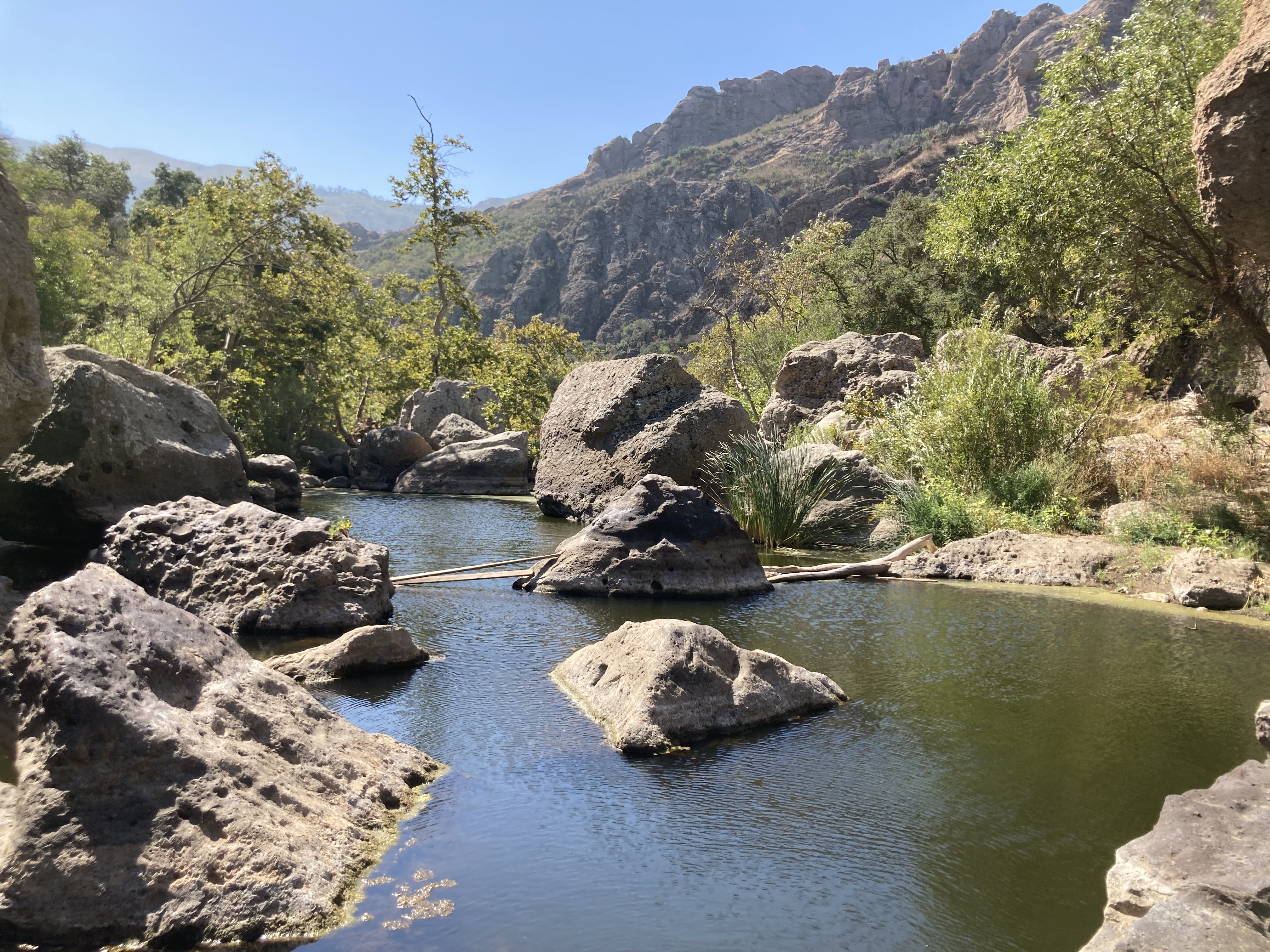
AT MORE THAN 8,000 acres, Malibu Creek State Park includes the old “M.A.S.H.” television set and the Reagan Ranch. (Credit: Jim Burns)
Malibu’s Las Virgenes Water District was in the news last summer because of gross home watering overuse by celebrities such as Kim Kardasian, Kevin Hart and Sylvester Stallone. But in the shadow of the rich and famous of Calabasas and Lost Hills, conservationist Debbie Sharpton has quietly and insistently been preparing for the return of the endangered Southern California Steelhead, which means first ridding the watershed of persistent invasive species.
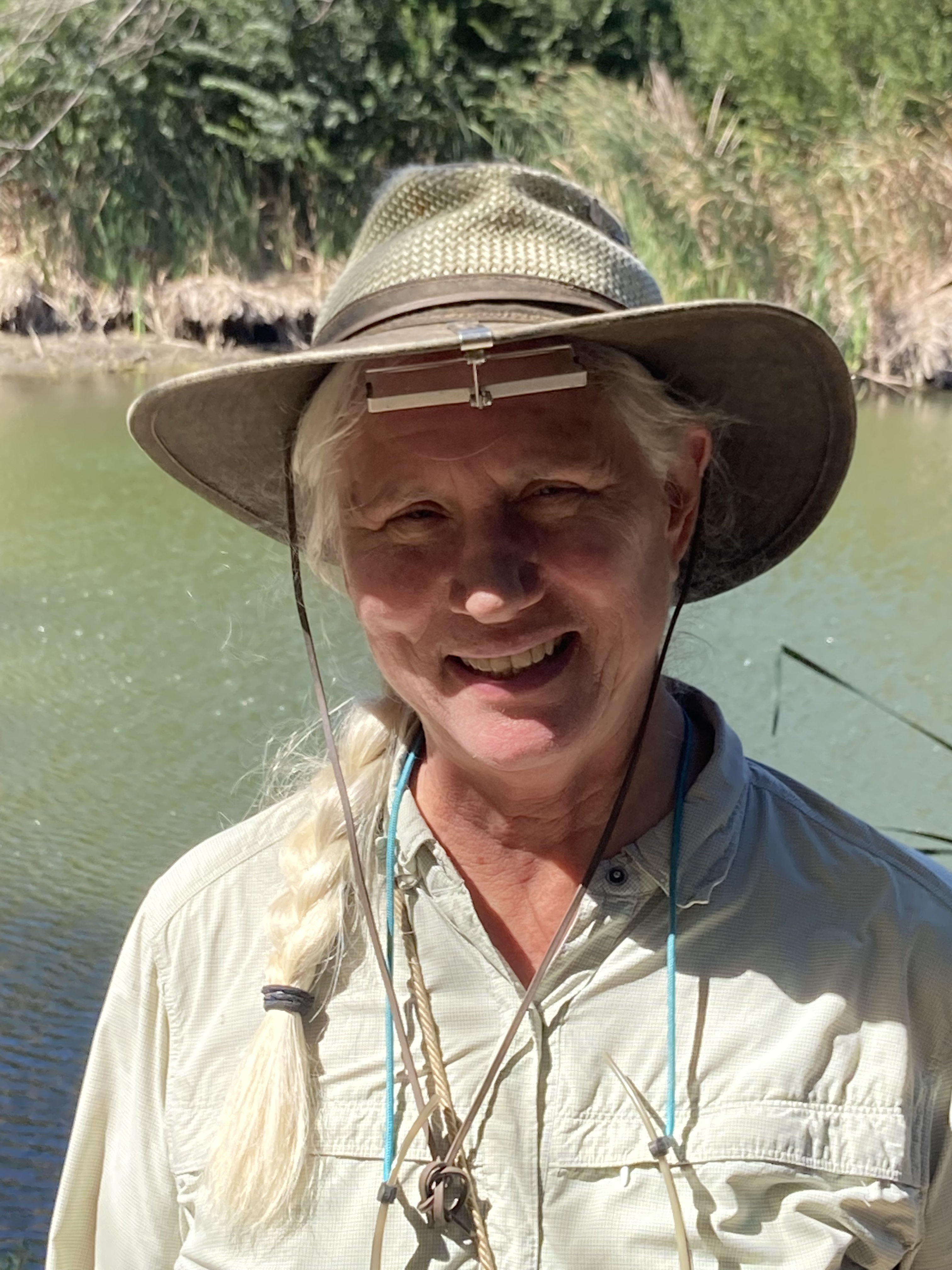
CONSERVATIONIST Debbie Sharpton at Century Lake in Malibu Creek State Park. (Credit: Jim Burns)
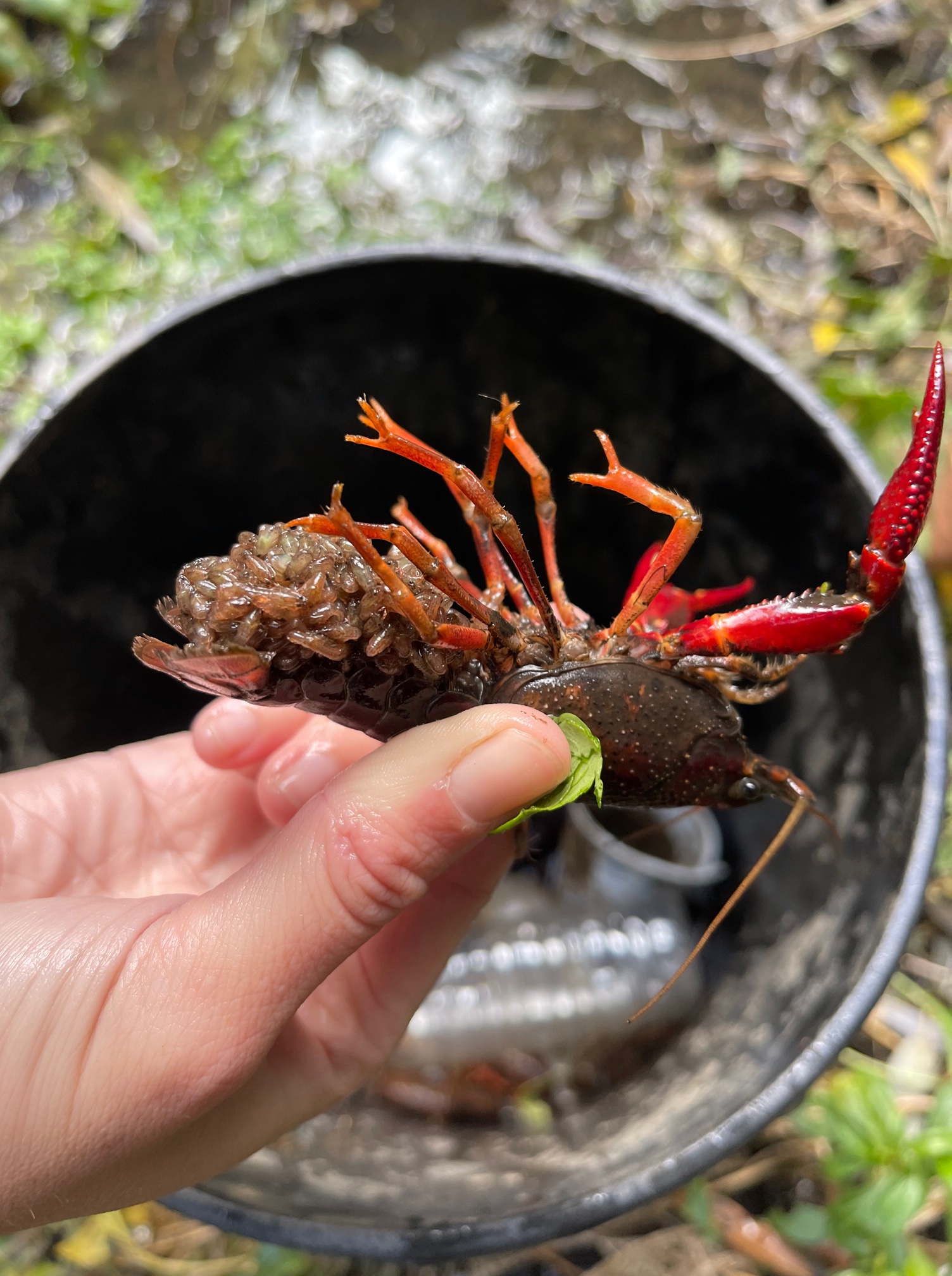
One of her prime targets is the invasive red swamp crayfish, better suited to a crayfish boil in New Orleans than in Santa Monica Mountain streams, yet here they are. Sharpton’s current efforts are aimed at eradication of the crayfish, which can devastate native wildlife, including the already threatened California red-legged frog. Crayfish directly compete for resources that native Arroyo Chub, and one day steelhead, need to survive. Other invasives for Sharpton include carp, bass and catfish.
Each month, Sharpton directs removal of these small creatures through baited traps that look like funnels and simulate crayfish burrows. Once inside, a crayfish can’t escape until it is removed by gloved volunteers, it’s fate to become bait for the next round of the trap checking.
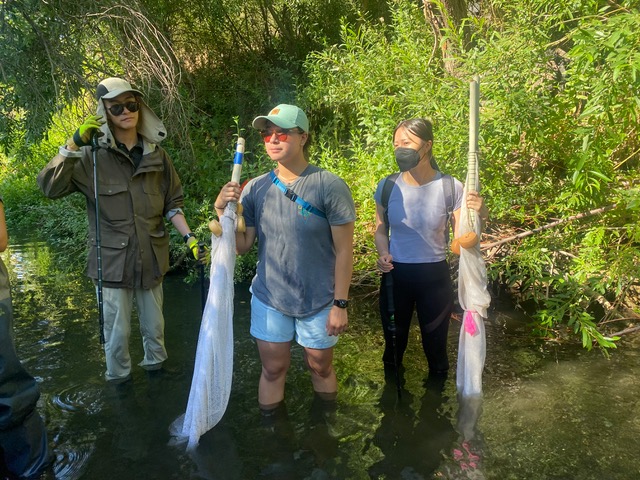
As I stand in the low-flowing waters of Tapia Creek assisting young college volunteers to check crayfish traps, I can’t see the remnants of the “M.A.S.H.” television show production set, nor the Reagan Ranch. My focused attention is on not getting my fingers snapped by wary crayfish claws. As we slowly move upstream, our Home Depot bucket is full of writhing crustaceans, along with large mouth bass fry, tiny catfish, stinging spines intact, and juvenile carp.
“Basically, we go in teams of two, so you have the lead trapper and an assistant trapper,” Allison Linsey says.” “As the trapper, you’re the one who kind of makes the decisions, you decide when traps need to be replaced or taken out. You’re also responsible for entering all the data we collect.”
The traps dot much of the riparian areas of Malibu Creek State Park. Stream areas are divided up into sections, with each section’s traps checked at least every three days. That puts these teams in the water for several shifts per week.
INSIDE Malibu Creek State Park, a trapping team gets ready to move into another section. (Credit: Debbie Sharpton)
“We start around 8:30 in the morning,” says another volunteer, Amanda Chi.” Then maybe we would end around noon. At first, it was surreal to because it’s my first time doing fieldwork. But just being in the river early in the morning. It was really beautiful.”
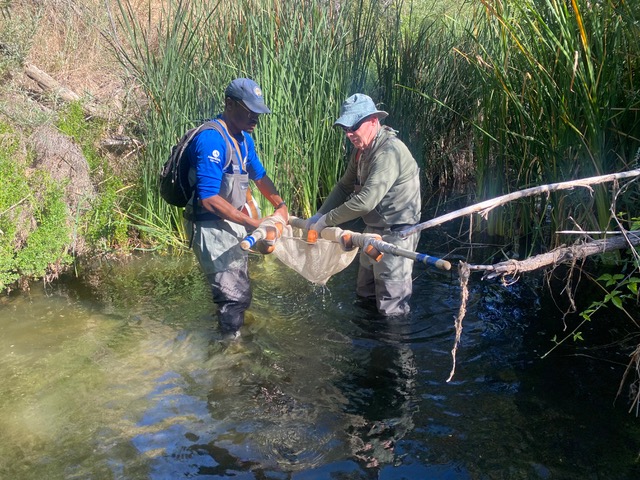
Volunteers also include fly-fishers who are committed to conservation. Tools of the trade on any given day might be a fly rod for “catch and take” fishing, seine netting, which forms a barrier across a stream and scoops up its inhabitants (not as easy as it sounds …), and those crayfish traps.
Financial and technical support for the project comes from California State Parks, U.S. Fish and Wildlife, and the National Park Service, Santa Monica Mountains.
While this slow work may seem akin to David battling Goliath, further south the San Diego Regional Water Board may significantly up the ante in the fight to rid California streams of invasive pests. If passed into law this spring, invasive species would join mercury, lead and other toxics under Section 303 (d) of the Clean Water Act. The plan would enable collaborative watershed planning and restoration activities to be eligible for state and federal funding.
“I’d like to lobby the L.A. Regional Water Board to move on getting Malibu Creek a TMDL for non-native aquatic species,” Sharpton says.
Meanwhile, the Southwest Council of Fly Fishing International, where Sharpton is the Vice President of Conservation, has received a donation of $5,000 from Sierra Pacific Flyfishers to begin a new conservation program called “Fishing for Conservation: Steelhead Recovery in Malibu Creek.” It will commence this spring after the frogs finish breeding.
Her years-long conservation efforts, first as Executive Director of Mountains Restoration Trust and now with Environmental Restoration Group, LLC, have reached an inflection point with the anticipated downing of the Malibu’s Rindge Dam. Some two and a half miles from the coast, the dam stops the natural steelhead route from the Santa Monica Bay to Malibu lagoon, inland to spawn.
Built in the 1920s, Rindge was decommissioned in 1967, yet still stands. It is actually part of Malibu Creek State Park, the 8,215-acre gem that includes remnants of the “M.A.S.H” television set, as well as the Reagan Ranch.
Invasive crayfish in the thousands live in the watershed, consuming dragonfly nymphs that eat mosquito larva. (Credit: Debbie Sharpton)SMALL, but hungry, a large-mouth bass, left, and carp fry, devour the same food sources as native Arroyo Chub. (Credit: Debbie Sharpton)LOOKING for invasive species, such as large mouth bass fry, tiny catfish and juvenile carp. (Credit: Debbie Sharpton)
Vistas truly earn the moniker of “breathtaking,” with one peak that soars more than 2,700 feet. California Department of State Parks owns and manages the dam, as well as the park.
For Sharpton, all of this natural beauty includes the flora and fauna that rightfully belong here — and excludes those that don’t.
“I’m hoping to engage the lake managers by assisting them to reduce the amount of unwanted non-native fish in their waters. I don’t know the source population, it may be people moving fish for recreational fishing, it may be storm overflows moving the fish downstream,” Sharpton says.
Musician, fly fisher and conservation advocate Bernard Yin shot the drone footage for this video from CalTrout. Follow Bernard on Instagram @bernardyingram
This small rainbow was caught last year before the Bobcat Fire destroyed the West Fork, closing it into 2022. Several hundred rainbows were transported to the Arroyo Seco for safekeeping. With water levels already very low, this is no time to divert more water for use by the City of Pasadena. (Credit Jim Burns)
UPDATE: The Pasadena City Council hearing has been continued until Monday, July 19, 4:30 p.m.
From Tim Brick, Arroyo Seco Foundation:
We need your help to save Arroyo Seco trout now!
The Arroyo Seco Foundation is working to restore conditions for steelhead in the front range of the San Gabriel Mountains. Yes, steelhead – the anadromous form of Coastal Rainbow Trout. We are collaborating with a variety of agencies and organizations on the LA River Fish Passage Program in downtown Los Angeles and on an assessment of watershed conditions in the mountainous reaches of the Arroyo Seco.
Pasadena has prepared an Environmental Impact Report on the Arroyo Seco Canyon Project (ASCP), which will increase water diversions from the Arroyo Seco stream, a major tributary of the Los Angeles River system that is critical to steelhead recovery prospects. ASCP will build a new five-foot dam and diversion facility to divert additional water from the Arroyo Seco stream for domestic use by the Pasadena Water & Power Department (PWP).
The National Marine Fisheries Service has declared the Southern California steelhead an endangered species and prepared a steelhead recovery plan that includes the Arroyo Seco and the Los Angeles River.
The goal of this recovery plan is to prevent the extinction of southern California steelhead (Oncorhynchus mykiss) in the wild and to ensure the long‐term persistence of viable, self‐sustaining, populations of steelhead distributed across the Southern California Distinct Population Segment (DPS). It is also the goal of this recovery plan to re‐ establish a sustainable southern California steelhead sport fishery.
While the Arroyo Seco was once home to a thriving population of rainbow trout and steelhead, steelhead have been blocked since 1920 from returning to their mountain home in the Angeles National Forest. Native Rainbow Trout have been present since then in the Arroyo Seco, although the Station Fire and the extended drought of recent years have made conditions difficult for those fish.
Based on survey techniques described by the California Department of Fish and Wildlife as inadequate, Pasadena’s ASCP EIR states that there are no fish in the Arroyo. Pasadena’s projections for water availability are based on historical weather and streamflow patterns and do not consider the likely impact of climate change. The design of the new dam and diversion structure do not provide for two-way fish passage around or through those facilities nor for an environmental flow to protect the fish and aquatic species during dry periods as required by CA Fish and Game Code Sections 5901 and 5937.
Throughout the environmental review, the Arroyo Seco Foundation has asserted that Rainbow Trout are still present in the Arroyo Seco and that Pasadena has done an inadequate job of finding and documenting them. The ASCP EIR was tentatively approved by a Pasadena hearing officer on January 6th, but ASF joined with the Pasadena Audubon Society and several individuals to block EIR certification by appealing the decision. The matter was then considered in March by the Pasadena Board of Zoning Appeals, which added a few new conditions to the EIR. ASF and PAS again appealed that decision and forced EIR certification to be considered by the Pasadena City Council. A hearing date for that matter has now been set for next Monday, July 12, 2021.
During the appeal period, the California Department of Fish and Wildlife (CDFW) announced that they had conducted a Rainbow Trout rescue program on the West Fork of the San Gabriel River after the Bobcat Fire last Fall. CDFW personnel translocated 469 native Rainbow Trout into the Arroyo Seco canyon in the area to be impacted by Pasadena’s ASCP program.
Faced with irrefutable evidence of the presence of many Rainbow Trout, Pasadena has not changed its position regarding the design and operation of the new dam and diversion structure that they plan to build. They state that when steelhead passage from the Pacific Ocean is restored, they will evaluate various ways to meet the requirements of the relevant sections of the Fish and Game Code.
The Fish and Game Code requirements for fish and passage and environmental flows, however, are not limited to steelhead trout. They apply to any fish as well as to other aquatic species that would be trapped by the PWP facilities. Clearly it will be difficult and expensive to retrofit the dam and diversion facilities at some distant point in the future when the steelhead return. This is the time to do it to protect the fish that are there now and to establish better conditions for the future.
We are disappointed in Pasadena’s cynical dereliction of its environmental responsibility. We believe that Pasadena and its Water & Power Department must be good stewards of the natural resources they exploit.
Send a Letter to Pasadena Mayor Gordo and the City Council Today
We urge you and your organization to send a letter to Pasadena Mayor Victor Gordo (vgordo@cityofpasadena.net) and the City Council this week urging them to require PWP to alter the design and operation of any new dam and diversion facilities to accommodate fish passage and to provide an environmental flow during critical periods as required by Fish and Game Code Sections 5901 and 5937.
Please contact tim@arroyoseco.org if you have any questions or need any further information.
Once known for its fly-fishing close to home, the Arroyo Seco above Pasadena’s Jet Propulsion Laboratory has become an unwilling poster child for all the calamities trout face: devastating fires, ruinous mudslides, parching droughts and , of course, human pressure. (Jim Burns)
An amazing story from the incomparable Los Angeles Times environmental writer Louis Sahagun: “In an era of increasing drought and nearly back-to-back wildfires, state conservationists have been working overtime in the San Gabriel Mountains to rescue frogs, fish and other species facing potential oblivion by rounding up populations of threatened animals and transporting them to safer areas.
While most of these efforts have occurred in obscurity, one recent mission to save hundreds of doomed rainbow trout has touched off a heated battle between humans and fish over the clear waters of Pasadena’s Arroyo Seco. The controversy has also served to highlight the challenges wildlife biologists now face as they search for havens amid Southern California’s patchwork of urban development, wildfire scars and seasonal mudslides.”
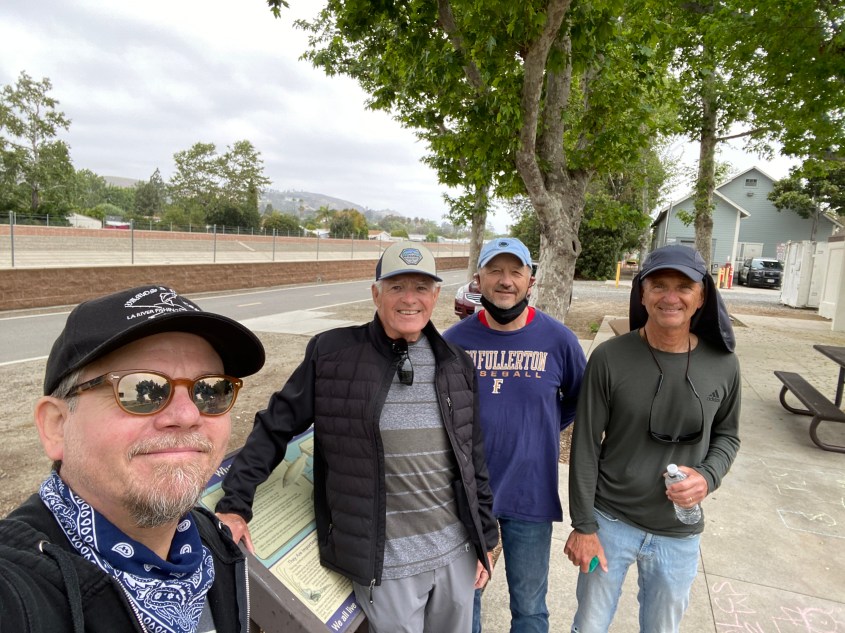
TROUT UNLIMITED spent a recent morning cleaning signs that illustrate the life cycle of steelhead trout in San Juan and Trabuco creeks. Listed as endangered, steelhead are still spotted during heavy storm surge years. From left, South Coast Chapter President William Preston Bowling, past president George Sutherland, and members Greg Nelson and Dr. Donald Forthal. (Courtesy William Preston Bowling)









 lariverflyfishing