Tag: Los Angeles River

And so it ends …

I began writing this blog when God was young — November, 2010. It sprang from exploring the LA River, then grew to include our national monument. Now that I’m in Oregon, I can’t provide the fresh reporting and content that made it fun for me and hopefully enjoyable to read for you. It’s time to say goodbye.
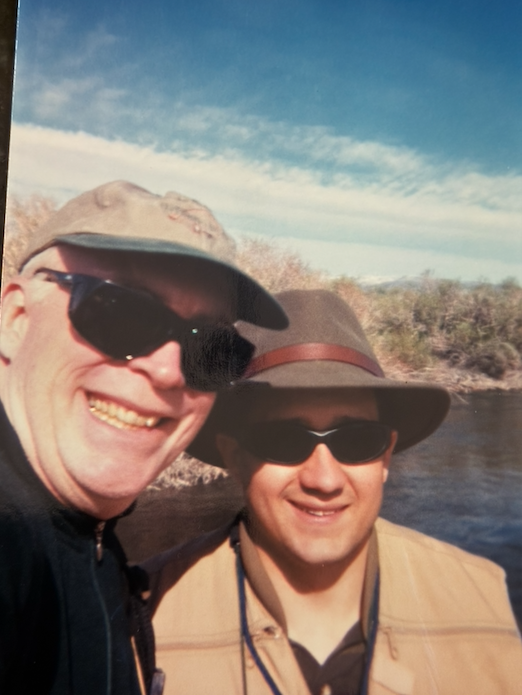
Oh, man, Dave and I had fish fever in the ’90s!

Along the way, I’ve made a bunch of friends: poets, photographers, cyclists, magazine editors, lots of fish lovers, a few dedicated biologists, one fellow dawn-patrol member, a lonesome cowboy, musicians, several tree huggers and even a few of the monarchical persuasion.

I’ve learned one thing: what you do is who you are. If you don’t do anything, but complain about a situation, you will be miserable, make your family, friends and acquaintances think you’re a total bore (or worse). And you’ll rob yourself of getting in on the greatest action of all: positive change.

I’ve met besties through the Friends of the Los Angeles River’s Off Tha Hook annual fishing throwback, inaugurated in 2014. Bob Blankenship, Karen Barnett and Bill Bowling, who together with Trout Unlimited South Coast chapter, continue to dream the impossible dream of removing some of the concrete from the lower river. It’s like the poet and activist Lewis MacAdams once said to me:
“When the steelhead return, we’ll know our job is done.”

The dude changed my life, and I barely knew him. But he was one of those people whose ideas are so potent they take on a life of their own.

Even here in the outdoor paradise of Southern Oregon, I think about the many times I spent exploring the forks of the San Gabriel, especially the West Fork. How many catastrophes has that water survived? Fires, mudslides, mountains of garbage, fishers who catch and keep above the second bridge. I knew that water like no other, knew its shade trees in summer, loved its talking winter waters, the cooling mists of its seasonal waterfalls.
So many guest contributors to thank, I don’t know where to begin: Roland Trevino, Mark Gangi, Freddie Wiedmann, Blake Karhu, Rosi Dagit, Bernard Yin, Keegan Uhl, Derek Flor, Malachi Curtis, Greg Krohn, David Del Rio, Analiza del Rosario, John Goraj, Patrick Jackson, Greg Madrigal, John Tobin, Jeff Williams, Charles Hood, Steve Kuchenski, Johnjay Crawford, B. Roderick Spilman, John Tegmeyer, Julia Spilman, Ansel Trevino, and Ken Lindsay. Some of them wrote multiple posts throughout the years. Thank you, all!

Then, there were the commenters. Of the more than 1,000 comments, some really got into deep explorations of our area, including moekhn, Jim Manoledes, TU’s Sam Davidson, Rivertoprambles, muddler5, PCC’s Scott Boller, Jessica Groenevelt, Capt. Joel Stewart. msangler, Ken Iwamasa, Larry Pirrone, Jack Train, Ken Uede, Omar Crook, Alex Brown, James Pogue, Bryan Rasmussen, paracaddis, Jane Herrmann, sublimedelights, Zino, Ryan Anglin, Trevor McTage Tanner, H. Carl Crawford, Al Q, Tim Brick, Janna Roznos, Izzac Walton, Celeste Walter, Fish Foo, Tilly, Gregg Martin, David Oh, Nicholas Blixt, paracaddis, Dianne Patrizzi, Fly Fishing God, Princess Hahamongna, and Lester Maypole.

Fifteen years and more than 330,000 views later, I can honestly say that many of the names on this page changed who I am and how I view the world. For there is no better starting place for learning to love nature than to see what gets lost in taming it. I think the point is not to doom spiral because of what we’ve lost, but rather to work like hell to try to keep what we have. In the coming years, that will be a particular challenge.
What would the world be without birdsong? Birding has become the No. 1 outdoor activity in Britain, even as we witness bird numbers crash around the globe. So what do you do? Where do you begin?

I started in my backyard with a couple of feeders, which I know my friends, the scrubjays, certainly appreciated when food gets scarce in winter snow. One will even call in my open office window to remind me, it’s time for more peanuts.

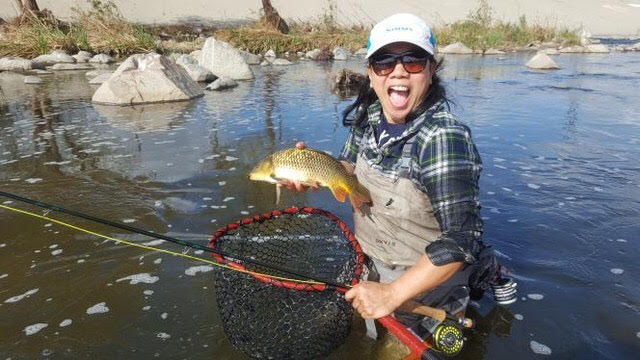
Where would the world be without fish? I’ve never worked in commercial fishing, but sport fishing so captured my heart that I’ve spend all this time documenting what it means to fish literally in the middle and on the edge of Los Angeles. And I can tell you one thing: given a chance, nature always comes back. May it be so in the future.

Finally, where would we all be without each other? That’s a scary thought, but many of our young folks don’t view society like their elders. Think about how apps have commoditized our mutual experiences. “Take me to the airport?” a big ask, has been replaced by Uber. Pay for play, instead of friendship reciprocity. What were once blind dates, set up by a friend, have become the domain of Tinder. And risking talking about your feelings with your friends, well, now that, too, is paid for with a human — and increasingly — an AI therapist. We must be careful to not let technology separate us from each other. It takes an effort to pull someone (including me) away from my cell. Make the effort. It begins with the loss of communication, but, really, it’s about the loss of trust, as young writer Clare Ashcroft, puts it so well in The New Critic.

I am convinced there is no antidote to trust loss quite like getting out of doors. Simple things, like remembering the vastness of a blue sky, the smell of recent rain, the chatter of birds that makes you wonder what to call them. Running waters hold a kind of magic, but only if you take the time to slow down, look and listen. Nature has its way of breaking down barriers. Take the time. Consider bringing a friend, especially a younger friend, on your next adventure. We really do need to learn to trust each other again, and the outdoors can teach us how to regain the bits we’ve lost.

For the last time, see you on the river, Jim Burns

RIP, a true visionary and friend, Dave Baumgartner.

Pick a spot to help out during the 34th Great LA River Cleanup

Volunteers from Friends of the LA River, Trout Unlimited, CalTrout and many others have rocked this event for the last 34 years, collecting more than 1.6 million pounds of debris from harming local habitat or flowing out into the Pacific Ocean. This Saturday, Oct. 5, it’s time to put the gloves back on, grab some trash bags, and get back to work at one of four sites, listed on the map. Check the link below for all the info, including shift times and locations, and register to volunteer.

Learn more about The Great LA River CleanUp and sign up>> HERE.

Here’s a fun story from the archives about the Bowtie Parcel from back in 2016.

Around 20 student volunteers from Santee School in Los Angeles posed after rounding up the muck during the 23rd Annual L.A. River Cleanup Saturday in 2013. (Jim Burns)

See you on the river, Jim Burns
How will we ‘rewild’ the LA River?

When you think about it, most of the conservation buzz for us anglers who deeply care about such things is farther away.

What I mean by that is for Angelenos, catching steelhead means climbing into the car to drive to the airport (because your good buddy wouldn’t think of taking you to LAX), then an airplane, flying to Sacramento or Redding, renting an automobile, hitting the Trinity, or the Klamath or the Rogue. It’s a simple fact of the fishing world. Big river fish are in wilder places.

For many years now, I’ve advocated that while hoisting a chrome is certainly a sign that God loves us, fishing locally isn’t to be forgotten. Stalking the San Gabes in search of wild trout is such a thrill. And if you want to fish locally, you need to have a place in which to do it. All you trash pickers in the San Gabriel Mountains National Monument, all you stubborn advocates of the LA, I love you for all the volunteer hours you’ve put in!

Which brings us to the “taking care of what ya got” part of this story. The clever title of this book, “Rewilding the Urban Frontier: River Conservation in the Anthropocene,” uses two current catchphrases in turn. “Rewilding” is defined as “a conservation approach that involves restoring large areas of nature to their natural state.”

How would that truly apply to the Los Angeles River? I doubt the city, nor its homeowners, renters and visitors, would like to wake up one morning to find the LA was once again slipping its course. Flooding, after all, is how our river became encased in concrete and what gave the Flood Control folks an iron grip over conservation efforts.

Back in the day the river’s course could meander over several miles within its alluvial flood plane. So actually “rewilding” the LA? Not gonna happen.

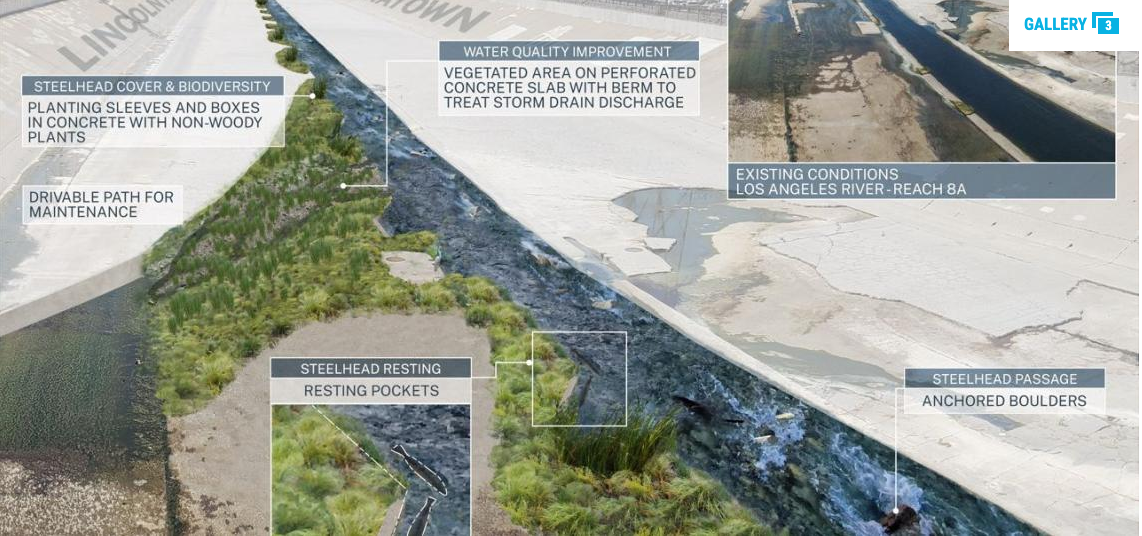
Still, we’ve all waited patiently (and not so much so) for the Army Corps to make good on its promise to at least naturalizing a section of the river near downtown sculpting it to a more natural state, to bring back cooler water temps, shade and more fish-friendly environs. And watch this space for an upcoming article in American Fly Fishing about Trout Unlimited South Coast Chapter’s efforts in the lower river.

(Courtesy Urban Los Angeles.)

For all the money spent, actual “rewilding” is a misnomer. Many scientists, activists, politicians, and good hearts have tried to make things better for years, and maybe that’s enough. To my mind, a wildlife corridor, though essential, is not rewilding.

Of the word “anthropocene,” there can be no doubt that we live in an age in which the human hand has touched just about everything on Earth. The thing I find tricky about this definition, “the proposed name for a geological epoch following the Holocene, dating from the commencement of significant human impact on Earth up to the present day,” is precisely that it advocates for a geological epoch. Isn’t it a bit fanciful to include human activity as creating a geological epoch? Climate change, yes, leading to increased heat and wildfires, certainly, but to me geologic means something more.

Pegging efforts to the 1972 Clean Water Act, which acted as a catalyst for water clean ups during an era of both budding environmental awareness and explosive urban growth, the book tackles two separate tracks: ideas about preventing further loss of biodiversity; and conversations about environmental and social inequities.

(Courtesy High Country News.)

Brian B. Rasmussen, a professor at Cal Lutheran, wrote the Los Angeles chapter. He contacted me a few years ago and we had a nice chat about all things “riverly” as we used to say. My thoughts are included in his chapter, which dwells mainly on the inequities of the “white river” and the “minoritized river,” in other words “fishing for fun, not food.” The lens through which he views the LA is certainly worth a read, especially for its history of carp and how they got here. The name of his chapter, after all, is “Angling in the Anthropocene: Carp and the Making of Race on the Los Angeles River.” A feature on the homeless fishing for food came out a couple of years ago in High Country News.

Finally, if you’re interested in this topic, Gonzaga Climate Institute will host a YouTube conversation with the book’s editor and some of the contributors on Tuesday, Oct. 22.

See you on the river, Jim Burns
Help teach kids to fish this Saturday!

2024 LA River Fishing Workshop
Day: Saturday, June 1
Time: 9 a.m- 2 p.m.
Where: Lewis MacAdams Riverfront Park 
Call for Volunteers!!!

Are you an avid angler who would like to help kids 5 to 17 years old learn safety and how to setup fishing gear? This is a unique opportunity to see one of the soft-bottom sections of the Los Angeles River and get some big fish secrets from the local insiders.

We will have two shifts, 8 a.m. till 11 a.m., and 11 a.m. until 2 p.m..
Please get in touch with Bill@SouthCoastTU.com for more information

Monsters still lurk on the LA

Mayfly Project’s Jane Winer-Miller
caught this absolute beast back in
October on the LA. Pasadena Casting
Club’s Caroline Craven’s fly design turned out to be a real winner!
(Credit: Caroline Craven)

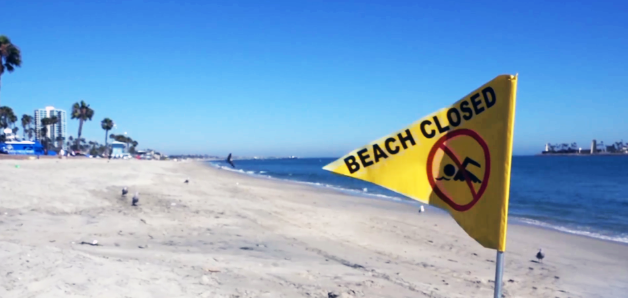
LA River spill closes some beaches


The spill is the second to affect Long Beach in two months. (Credit: Long Beach Local News)

Just two days before Earth Day, health officials closed all coastal swimming areas in Long Beach after 250,000 gallons of raw sewage spilled into the Los Angeles River in Downey on Thursday morning. Read the whole story on Patch >>HERE.

Drone footage shows natural power of refugia on the LA River

Ask any stream fisherman where to find trout and one of the answers will be “Behind the rocks.” That’s exactly what this brilliant drone video from Trout Unlimited’s Bob Blankenship shows to be true on a long, lonely stretch of wet concrete here in LA. If you are in a hurry, go to about minute 2 and you’ll see big carp hanging out behind the few rocks on this desolate river run. Most of this trench is a foot deep by maybe three foot. That ain’t much room for anything, much less a school of 16-inch-plus carp.

When I saw this, I thought to myself, anytime you give nature half a chance, it comes back. With a little help from us, in the form of shade, boulders and occasional slower water, we could see a return of the fish we really want — endangered So. Cal. steelhead. Don’t ever let anyone tell you that there are no fish in what look to be uninhabitable sections of our river. And where there are fish, there are birds! Anyway, check this video out!

See you on the river, Jim Burns

Three views of a raging LA River

Many thanks to William Preston Bowling, Trout Unlimited South Coast chapter president, for these up close and personal videos of the majesty — and danger — of the LA when it rains.

With our seemingly never-ending drought, we need engineers to come up with a way to secure all this fresh rain water that’s racing out to the ocean, along with tons of trash.

See you on the river, Jim Burns

New York Times: ‘Remaking the river that remade LA’

WHEN OUR river gets angry, watch out. (Credit: Bob Blankenship)

FEBRUARY 1938 WAS a wet month in Los Angeles. The ground, where it hadn’t been paved over, was saturated, which meant rain had nowhere to go except into the streets, canals and washes. On the 27th, a storm arrived. During the following days, the city received its second-highest 24-hour rainfall in history. Reservoirs overflowed, dams topped out and floodwaters careered down Pacoima Wash and Tujunga Wash toward the Los Angeles River. By the time the river peaked at Long Beach, its flow exceeded the Mississippi’s at St. Louis. “It was as if the Pacific had moved in to take back its ancient bed,” wrote Rupert Hughes in “City of Angels,” a 1941 novel that climaxes with the flood. In an instant, the Lankershim Bridge in North Hollywood collapsed, and five people were swept away. Sewer and gas lines ruptured; communications were cut; houses were lifted straight off their foundations and sank into the water. In all, 87 people died. Read More.

Ueda’s ‘Planet Carp’ splashes down in Pasadena

Holy mackerel, that’s some slab, Glen! (Courtesy Pasadena Casting Club)
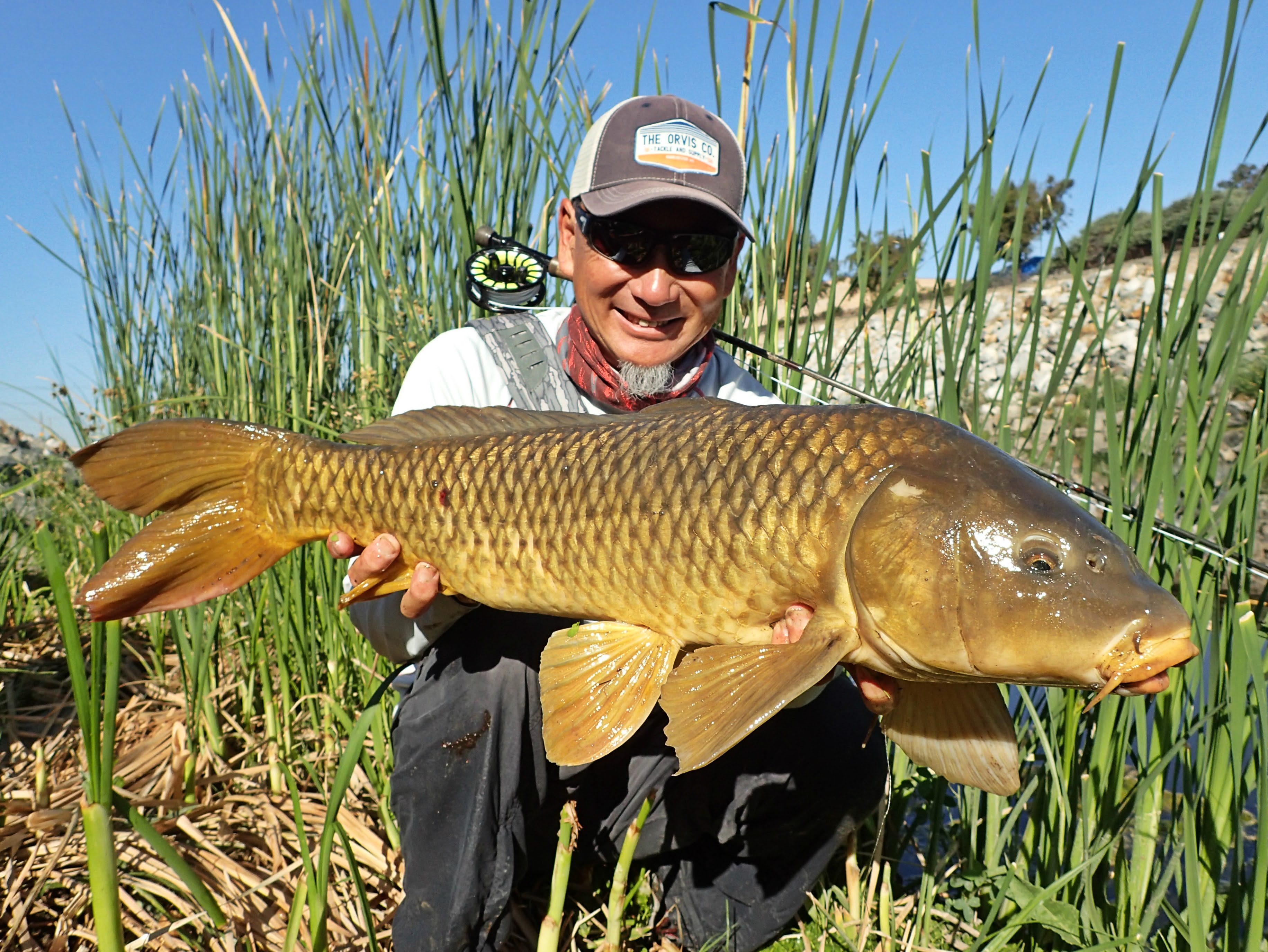
There are literally miles and miles of carp water throughout Southern California and beyond. Some of these watersheds literally untouched and ready to reward the intrepid fly fisher. 

Please plan on attending his presentation “Planet Carp” as Glenn Ueda will be sharing his experiences over the past decade, personal fly fishing tackle, and specific techniques when sightfishing for carp.

A native of Southern California, Glenn was introduced to surf fishing as a child by his father. Every Sunday, from Morro Bay down to San Onofre, they caught their own bait and targeted everything from striped bass to barred perch to corbina. Reading about fly fishing in Field and Stream, Glenn soon learned basic fly casting and tying at world famous Long Beach Casting Club, He was ten. A local pond provided endless joy fooling bluegill, crappie and bass. Almost five decades later following a rewarding career as an architect, he sought new challenges. Taking all of those cherished surf and freshwater lessons he built a very successful business “So Cal Flats Fishing Guide Service” teaching fly anglers the art of sightfishing in shallow surf for one of the world’s most challenging species, the California Corbina. Guiding highly skilled anglers from all over the globe, many agree after a day’ of stalking that they our “Ghost of the Coast” is as difficult if not worse than the very popular and highly coveted flats permit.

Thursday, March 10, 7 p.m.

San Marino Masonic Lodge
3130 Huntington Drive
San Marino, CA 91108

Editor’s Note: This is the monthly meeting for members of Pasadena Casting Club, but non-members are also invited to attend. It’s free.