

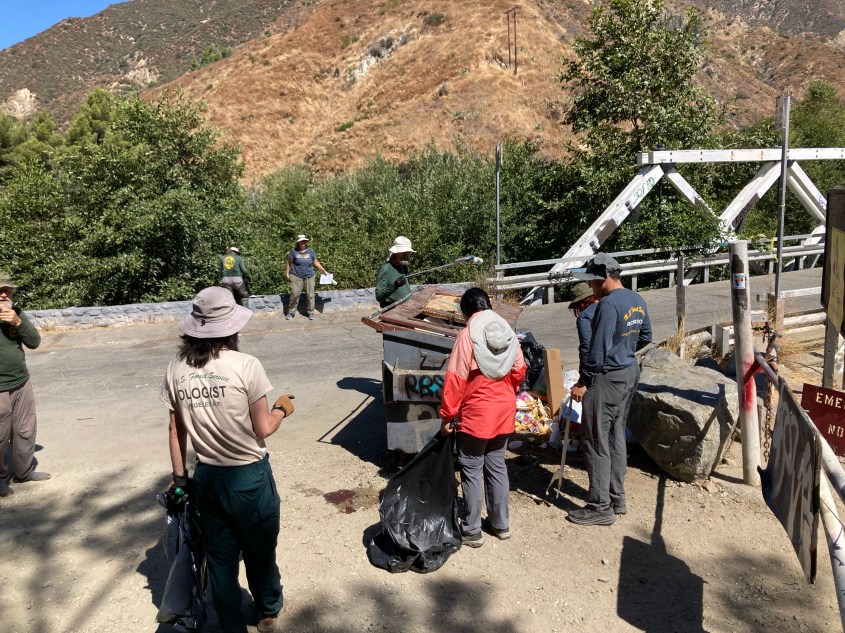
Last week, I logged my last Fisheries Resources Volunteer Corps mission. About a dozen of us began at 7 a.m. and completed the Total Maximum Daily Load measurements at four different spots by 2:30. We skipped lunch because we all wanted to “get ‘er done” and the temperature was hot as blazes in the San Gabriel Mountains National Monument. Plenty of sunscreen couldn’t hide the true grit of this group. It’s nasty, hot, brutish work.
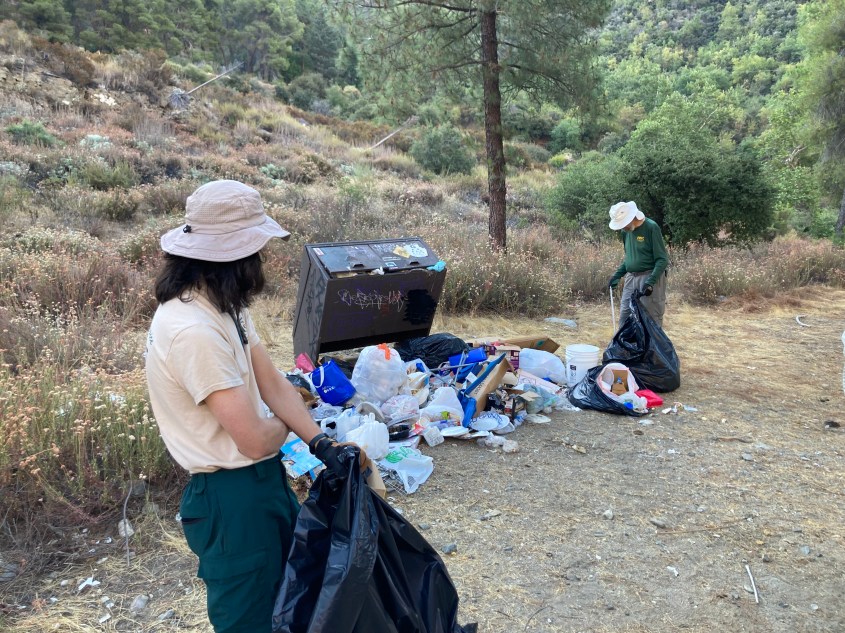
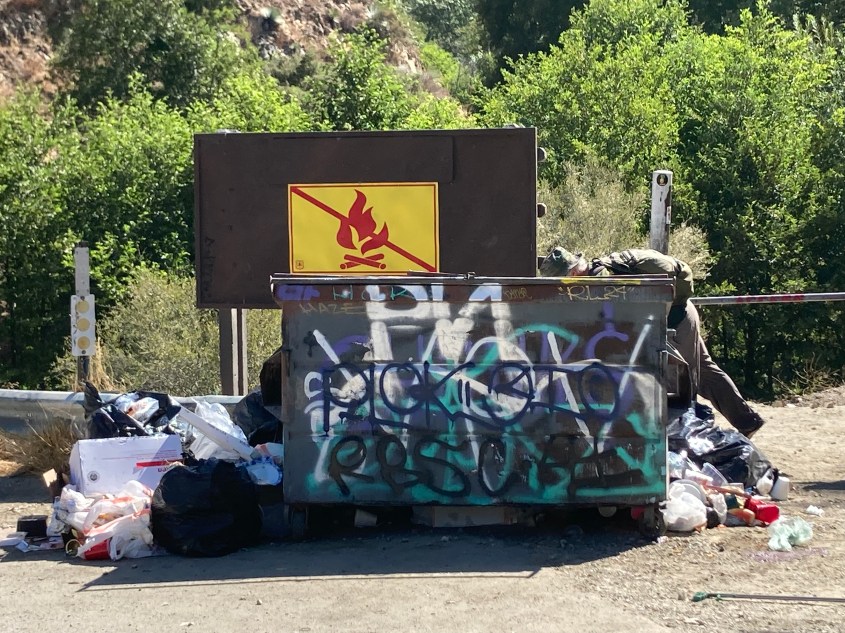
For a TMDL survey FVRC volunteers record all the garbage by category and by pound within a 100-foot stretch of what should be pristine water flowing from Mount Baldy into the East Fork of the San Gabriel River. A TMDL was my first patrol last year and I couldn’t believe how positive these folks were about a dire situation. After all, who can say that they actually had fun cleaning up human waste, plastic bags, dozens of straws, discarded socks, kids pool toys, cigarette butts, beer bottles galore, in other words all the leftovers from those who visit our Monument and should know better than to leave it all behind.
Each time we go out, we dutifully bag several hundred pounds of consumer society’s discards, lug them uphill from the stream, weigh each bag, then drive the bags to the dump. I joked with Craig, a dedicated volunteer, about what a good time we had doing this and he said,
“Yup, my friends ask me if I’ve done something wrong? If that’s why I’m out here collecting garbage.”
If you knew Craig and his daughter, Haley, you’d realize all they seem to do is what’s right.
Each year, FRVC forwards the survey of how many pounds of soft plastics, hard plastics, threats to human health and all the other TMDL categories to the Forest Service. I think this is the second year of of three year study, but don’t quote me. At the end of the study, the powers-that-be will be able to ascertain what anyone on one of these patrols–as well as anyone visiting the East Fork during summer– already knows: we are overrun with garbage, graffiti, illegal stream dams, fire rings, illegal parking and all the rest of it.


That’s why I was particularly heartened to hear from a Forest Service employee who also volunteered that day; there are plans by the FS to actually take action. One idea is to designate parking spaces that would be accessed by a reservation system. Your car would get a numbered parking spot for the day that was just for you and nobody else.
Sounds familiar, right? Parks and camping areas all over California use the same fee-based system. Then—very important—there would be enforcement from the Sheriff’s Department or the California Highway Patrol. In all the years I’ve fished the Sab Gabes, I’ve never seen a cop give anyone a ticket for anything.
Another idea is to create a kiosk and gate where visitors would stop and pay a fee for the day at the nearly invisible Visitors’ Center at the start of the canyon on Hwy. 39. Again, this is a system anyone who visits our state parks is familiar with: You pay a fee, get a map and speak with the rangers to get oriented.
Or both might be implemented.
The point is that even though implementation will require wading through layers and layers of bureaucracy and a public review before we all see any changes, it seems the FS is finally taking notice that the status quo can’t continue.
As a concrete example, expect to see a net stretched downslope of the bridge before the East Fork parking area in the near future. That’s a direct result of the monthly TMDL studies that FRVC carries out. Who knows if it will keep the hundreds of pounds of summer trash out of the water, but trying solutions, even when they fail, can lead to more and better remedies.
See you on the river, Jim Burns


 lariverflyfishing