Stories keep me coming back

What do you make of it when you see an insect in your man cave? Not much. I spy all kinds of wiggling legs there, spiders (OK, arachnids) maybe a beetle or three, the odd brown ant.

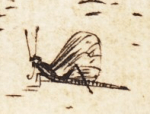
But last night as I looked closer at that speck on the wall, it was … a mayfly! I mean a mayfly in late December when Santa is on his way, how crazy is that? I immediately texted a fishing buddy, who responded “L.A. City of Trout.” I fingered the “haha emoji,” to which he replied, “I’m serious! Spring creeks galore, back in the day.”

His typed words hit me. Back in the day, sure, Octogenarian Robert Richardson who has volunteered in the now-monument since the ’50s — you read that right — regaled me this fall with eyebrow-raising stories about pulling 18-inch trout from the West Fork, when there was a game warden up there who would catch poachers as they emerged from the shore, pitch black of night, waiting for them in his jalopy, necking with his girlfriend. When there was a size limit on keeping trout from Cogswell Dam, bigger than 36 inches (now, no fishing allowed)! His stories are jewels of a time we’ve lost, but then again …

Stories from Bernard Yin, rock-n-roller activist, mountains archivist and fly fisher extraordinaire, will keep you coming back to our steep slopes and deep canyons above the City of Angels, just to get a glimpse of what he sees, what he knows. Another deep source of knowledge, but gleaned from a different time than Robert’s tales. He and Rebecca Ramirez, his co-rocker and wife, put in so many miles scouting trout in our most beautiful wild places, as well as our dumpster dives.

Then, there are the miracles, themselves the making of possibly timeless stories, like the one in my man cave last night. Keep those especially close, for we need the optimism and strength drawn from experiences that skirt the boundaries of mere intellect. These are stories visited upon us, instead of told to us by another.

For I need the energy of miracle when I pick up what seems to be unending amounts of trash on the way to my fav off-the-track spot; I need that unexpected freshness to keep me in a good spot when I contemplate the graffiti spray-painted across rocks raised up more than 6 million years ago. I need it to not despise those who threw out the trash, the ones who defaced the forest, as well as those charged with protecting it, yet do little.

Nature is the key to what we are missing. It’s that simple. Go into it, breath it, embrace it, feel your own soul, calm and serene, as the miracle of peace settles upon you.

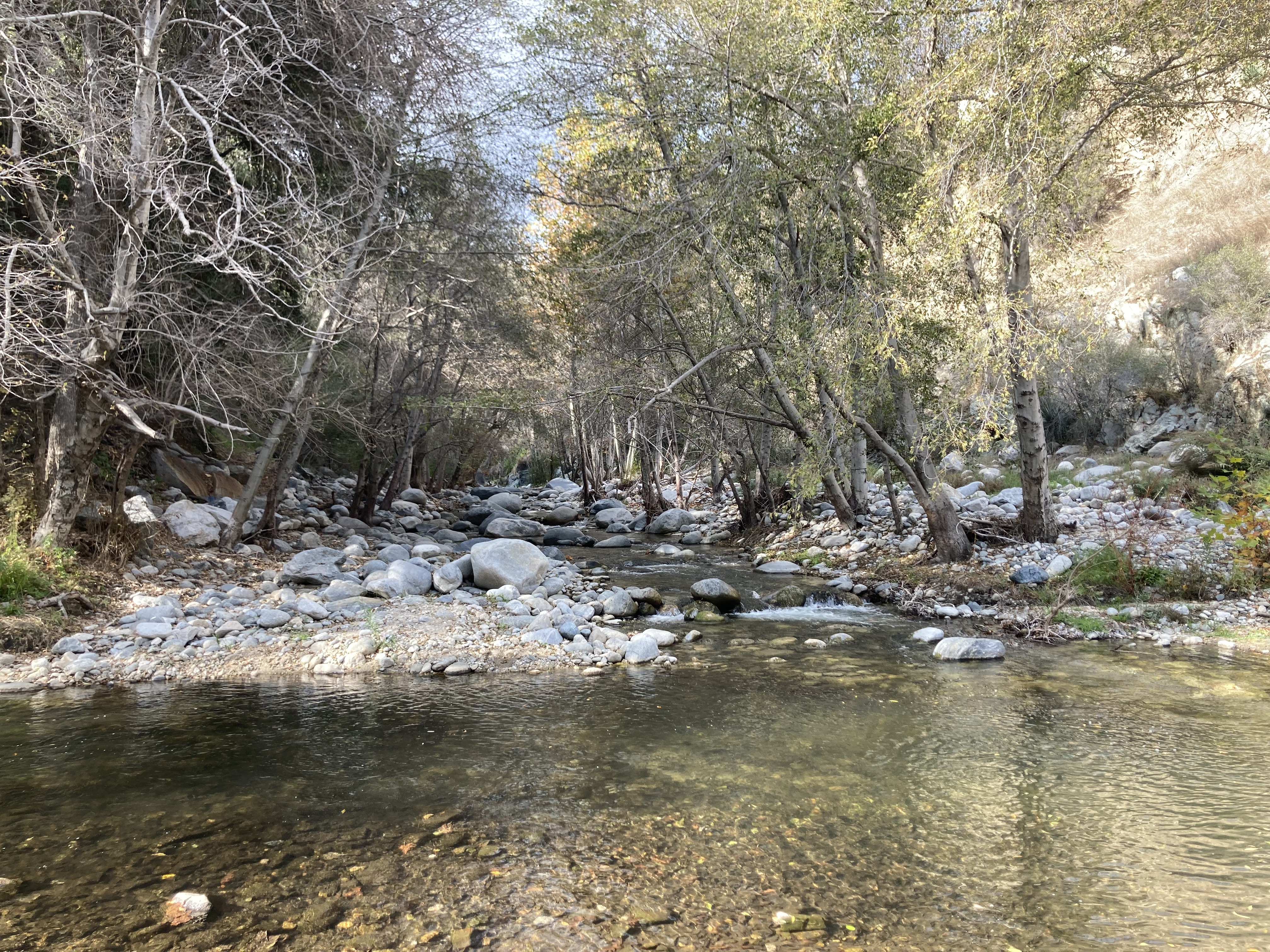
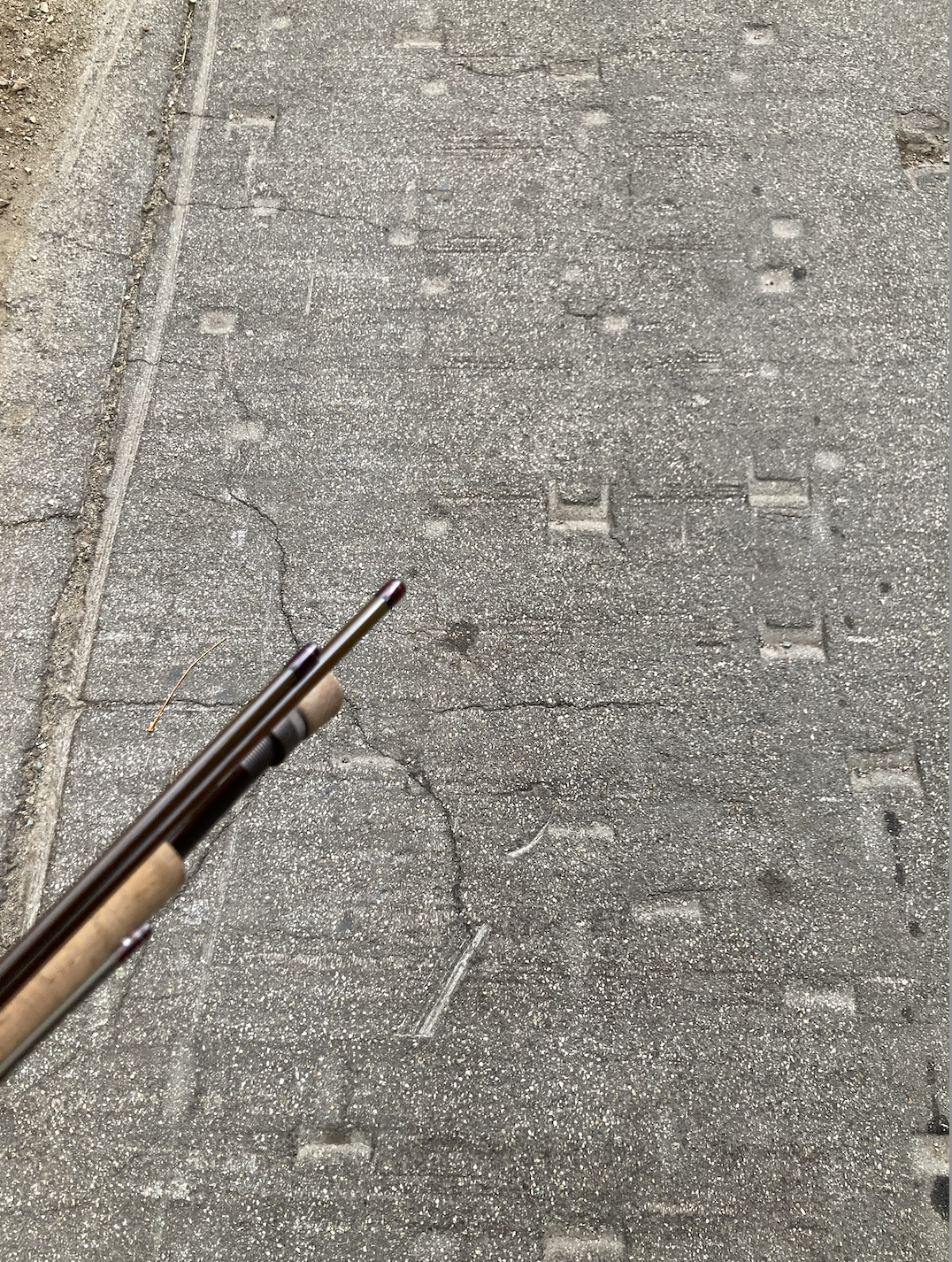
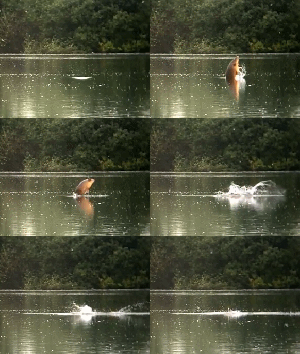
Oh, and don’t forget to fish! At the top, the left shot is from the West Fork and the right, from the East Fork.

See you on the river, Jim Burns


Larry Pirrone

When I first started fishing the West Fork I was returning from a long layoff from fishing local waters. I was just starting a new business and up the street was Alex Seimers fly fishing shop and Ray Bianco who got me back into fly fishing. Life was good. Then it started. A huge flush of mud released from Cogswell. Years later the stream was back and so was I. The Stream Born Fly Fishing club was still alive. I was catching fish on the WF again. I was catching two trout at a time on a two fly rig. Then it happened. The Center for Biological Diversity who could care less about human family fishing recreation helped kill off a load of trout. Who knows how we let this happen or why it happens. I am hoping that the fishing will get and stay healthy for me to recapture some of the good times. At 78 I don’t have a lot of time. How can we protect this great resource?


Jim Burns

Thanks for these great comments, Larry! What was the Stream Born Fly Fishing Club? As for protecting the WF, I think a lot of people have that same idea, but it is the “how” that hasn’t yet come into focus. John Tobin, Pasadena Casting Club’s former Conservation Chair, had this to say: “My big concern is the poor invertebrate recovery so far.  What are these fish eating, besides our flies?  I’ve turned over a few rocks and don’t see much yet.  We need an invertebrate survey.”

Scott Boller

Well said, Jim! Happy Holidays!


lariverboy

Jim,
What an honor to be mentioned. Having Rebecca by my side (and very much enthusiastic about the quest) and the added prod of CalTrout asking me to seek maximum clarity on these SoCal hills and their ever-persistent trout has kept me banging my shins and removing ticks for what seems to be forever and it is far from over. All in the name of locating even a tiny fish in a tiny trickle that has been “smote by God” as someone once said 😉 The Cogswell conversation is always entertaining. It is constantly manipulated and the entire region has these crazy moments of boom and bust. There’s little rhyme or reason except for the obvious one: if there’s some water then there’s some chance. I will bite my tongue with respect to the Bobcat Fire and the following winter’s muddy runoff. Simply mind-blowing how happy the WFSG was before that terrible volley of events. Gosh I could go on. 

As for age, time, etc. you know, a game I very often play is to challenge myself with the humor or irony of finding fish virtually roadside. This includes the access on the WFSG but there are a surprising collection of non-stocked trout populations; legal to fish for; within 500 feet of one’s parked car in So Cal. 

Scott,
I think the concern about invertebrate life as a food source is totally valid however it is not unheard of for a trout to make terrestrial’s a substantial percentage of their diet. Just throwing that out there for the sake of the discussion. Now, in the case of an area that is also denuded by fire then, sigh, yeah, we have very hungry fish and an ecosystem that needs some time to recover.

Larry,
Ray continues to appear from time to time at fly fishing events. His casting skills dazzle me and last time I saw him (less than a year ago) he sported some boots that even the Beatles would envy (with Cuban heel too by the way).

I am not intimately familiar with the center of biological diversity is actions of what you speak. There are a handful of moments in Southern California where they have influence the course of an ecosystem. I would be surprised if a deluge of silt or mud was intentional given how they are so fond of amphibians. Speaking of which, protections initiated by them for a particular So Cal endemic toad has actually done wonderful things to protect a few pockets of wild trout including some with primarily native genetics. * And not always resulting in an angling closure.

In closing …This last wet year has helped several local populations of trout get a breath of fresh water and if we have what amounts to an even “normal” winter, I think next year is going to be glorious in the “locals” and give us all some joy.

– Bernard

Dance of the rainbows on the East Fork

By Malachi Curtis, Guest Contributor

it was a pretty normal day on the East Fork for me. A few fish here and there, but not seeing any fish until they took my flies. When I came up on a spot that I had caught a nice one the weekend before, I saw these two fish swimming right in front of me, seemingly in their own world. I wasn’t moving particularly stealthily, but they didn’t seem to mind and came with three or four feet of me.

After a few minutes, they moved upstream and I continued on with the day. I was looking for other fish displaying similar behavior but those were the only fish I saw in the open that day.

I’m not too familiar with trout spawning, but as far as I could tell by some quick Google searches the earliest you normally see trout spawn is January, whereas this video was taken on Nov. 12. I know steelhead generally spawn a bit earlier so maybe this is their genetics kicking in here.

Either way super cool sight to see, and a good sign for the future of the population.

riverboy

Malachi – what great footage. 2023 has defied many rules. I have a report of RBT trying to jump a barrier in effort to “migrate” in early fall – prompted by an artificial dam release. I am always pondering this balancing act between seasonal behaviour and opportunistic behavior. You got to witness a curious moment – whatever they were up to. Stoked for you and a teeny bit envious 🙂

Monsters still lurk on the LA

Mayfly Project’s Jane Winer-Miller
caught this absolute beast back in
October on the LA. Pasadena Casting
Club’s Caroline Craven’s fly design turned out to be a real winner!
(Credit: Caroline Craven)

Fodor’s lists Monument as a ‘no go’ in 2024

This snap is actually from May, 2021, behind JPL, but it sums up our collective sentiments about trash. (Credit: Jim Burns)

It’s worse than being on the bad side of Santa’s naughty or nice ledger: the San Gabriel National Monument has joined the travel magazine Fodor’s “No List 2024.”

Sites land on the list for several reasons. For example, of the nine “winners” this year, Venice bellyflopped because of over-tourism. This is nothing new, but, as the mag says a five Euro tourism fee is likely to do little to curb the tourists-to-residents ratio that landed the beautiful city on the list last year and in 2018. It joins Athen and Mt. Fuji in this category.

Then there’s the “water quality and sufficiency” category that includes Lake Superior, the Ganges and Koh Samui, Thailand. Lots to write about here, but it’s too depressing to pen. You can read about it >>HERE.

Then finally the USA makes the list in “trash production,” along with Ha Long Bay, Vietnam, and Chile’s Atacama Desert.

Up until this point, Californians could be rightly proud of the many lists our state treasures have been included in, such as the National Geographic National Parks Road Trip, which features the Redwood National and State parks. Now?

Public outcry is the only way to save this beautiful area we all love. Get vocal. Get loud. This land truly is “our land,” as the song says, “this land was made for you and me.”

The beckoning entrance to Bear Creek last week, far from the madding and messy crowds of summer. The goal should be to keep the monument in pristine condition. This will take federal money, local money, grant money, a transparent Forest Service, many dedicated volunteer groups, a strong enforcement arm and public education to get off Fodor’s “No List.” (Credit: Jim Burns)

See you on the river, Jim Burns

At long last, West Fork reopens

IF THIS GRAFFITI bugs you, why not make a quick phone call to our friends at the Forest Service, (626) 574-1613? (Credit Jim Burns)

We Southern California steam fly fishers are a unique lot. If you’re reading this, you must love overcoming obstacles. After all, for a modest investment in an 8 weight, a decent waterproof reel, working on a longer cast and a sinking line, there’s the Pacific Ocean right in front of you, with its siren call of corbina runs, maybe a halibut and, for sure, a perch. (Just don’t bonk any beach joggers on the head when they absentmindedly walk into your back cast. That can lead to therapy — for both of you!)

Yet, here you are wandering the San Gabriel National Monument, doing the Curtis Creek sneak behind JPL, pondering a long drive to Deep Creek or scouting Piru Creek to the west. I mean, what’s with you?

Your friends up north, think you must be a bit daffy to get excited by a hand-size catch that takes a full-size outing to snag, or stiffle a chuckle when you tell them about the three (count them, three) fish passages in various stages of planning on the LA River.

They want to chase steelhead, dammit, on the Klamath or the Trinity; or bow a spey rod lifting a massive Lahontan Cutty at Pyramid Lake, or shiver through a UFO encounter and a fighting ‘bo on the Nature Conservancy water of the McCloud.

The heavy equipment that removed thousands of tons of debris are gone, but the scarring remains. (Credit Jim Burns)

The very fact we have a lot of water that can or might hold wild trout right here in dry, hot Southern California thrills you. You wonder if your ancient Orvis 2 wt. might work well as a Euro rod? Contemplate getting up at dark thirty, just to explore another skinny water and see if it holds trout. Wonder if that was actually a Trico on your windshield and then dream about how the stubborn finny friends who have survived, dams, drought, fire and trash, trash, trash might react to one on 7x tippet? Good lord, those little fellas could hold the genetic makeup of the endangered Southern California Steelhead!

Well, what can I say, I’m right there with you. We are both giddy optimists! I love exploring what we have here in So Cali. And, finally, at long last, tomorrow is opening day on the West Fork of the San Gabriel River. After so, so long being closed during weekdays for a Public Works rehab of the water and riparian habitat conflagrated by the Bobcat Fire, it’s back.

Oh, just don’t mention that part about the UFOs in Dunsmuir. It’s secret.

See you on the river, Jim Burns

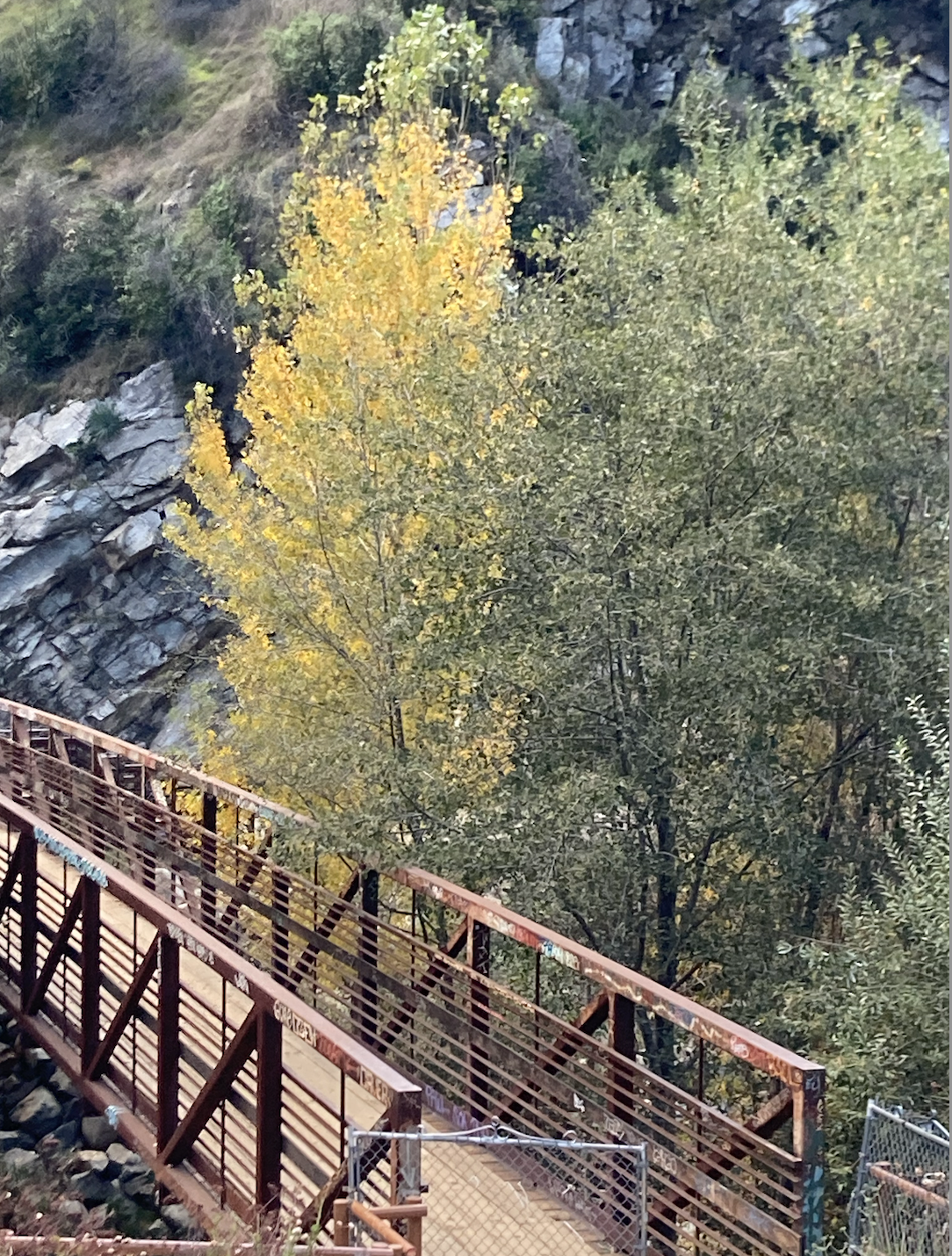
Only the truly optimistic So Cal stream fly fisher dreams of crossing a graffiti scarred footbridge to find paradise. (Credit Jim Burns)


Derek Paul Flor just commented
Tiring of the long and expensive trek up 395, I have decided fishing the local opportunities has it’s own charm. Catching fish then returning them to fight again, has it’s own charm, and in our pressured local waters, it just seems so right.

Who steps up to take down Monument graffiti?

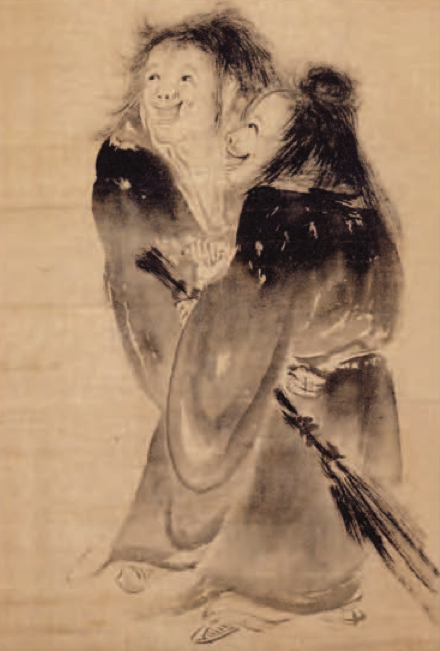
Way back in the day, some 1,200 years ago, an eccentric hermit and poet used to wander the mountains of eastern China’s Tiantai Mountains, and scratch his “songs” on the leaves of bushes, in the bark of trees and on the sides of caves. Think graffiti, but with a heart. Han Shan’s name (Cold Mountain in English) first appeared on our shores when Beat Generation author Jack Kerouac dedicated his delicious, infuriating and hugely successful 1958 novel, “The Dharma Bums” to him.

The book revolves around the semi-fictional relationship between Kerouac and Pulitzer-prize winning poet Gary Snyder as they mountaineer, drink, preach Zen, hike, carouse, drink, wallow and generally have a great time learning from each other. Snyder, one of the most influential Beat poets, translated and published Han Shan for the first time in English, while studying at UC Berkeley that same year.

With this as backstory, I must also add none of this was on my radar until reading about the connections between Han Shan, what we now call graffiti and the wilderness from a story by Bob Romano in the excellent UK mag, Fly Culture. Han Shan’s poems made Romero think minimalist in gear and fly box as he pursued Maine’s troutiful bounty.

Consider:

Can you imagine coming upon this poem on the West Fork? To read something on tree bark, or the side of a cliff that inspires you? Today’s graffiti in our wild places is ugly and sad. It leads to a sense of lawlessness, neglect, the opposite of the way I want to feel in the wild. No inspiration, no imagination, just a big, old nasty, “I was here” image that pollutes the mind, poisons the environment and makes you wonder what the hell is wrong with humanity.

“The Ledge” on the West Fork of the San Gabriel River is perennially despoiled by graffiti, yet it remains month after month, year after year. Where is the Forest Service? (Credit Jim Burns)

For this story, I contacted multiple agencies to discover their federal and local graffiti policies, and how it is removed from our Monument: the Forest Service, at the local and national level, Public Works, the Conservation Corps, Representative Judy Chu, it was a long list, with nary a substantive response. All I can say is I’m disappointed in the complete lack of transparency from these elected officials and agencies. Meanwhile, when I pass by The Ledge next time I’m going fishing, I’ll think of Han Shan’s beautiful words, not the graffiti no one in authority bothers to take down.

For the two images below, both from the East Fork, the one on the left is the angler fishing box, an integral part of the communication covenant between anglers and the Forest Service. Ranger Ken Low of the National Parks Service said by email, “For the signs, I would try the World’s Best Graffiti Removal Products’s Safewipes. They come in a package with a cloth. Wear a nitrile glove to be safe. For the wayside panel with nothing on it, I would get some matching paint (brown) and repaint over all the graffiti.”

Unfortunately, the National Park Service has no affiliation with our beloved national monument. My question: If the NPS has a simple solution to this awful problem, why doesn’t the agency in charge of the monument, the Forest Service?

See you on the river, Jim Burns

________________________________________________________________________________________________

Steve

7h ago

One of the unintended consequences of environmental regulation is that graffiti removal – or even graffiti coverup with a neutral coating – in the riparian area requires an environmental review and permit, due to concerns of paint or paint removal/covering contaminants eventually making their way into the river. Years ago, a gas-powered pressure washer was donated to the Forest Service. It sits unused for this reason.

So an ‘approved’ (employees contractors or formal volunteers) removal project just takes too long to process before the next graffiti comes along and it starts all over again.

The Forest Service can probably never go on record saying this, but I suspect they would not shed tears if some sneaky do-gooders just came in and removed or covered the graffiti on their own, as long as they didn’t get caught. It’s a forgiveness-vs-permission thing.

An appreciation: California Fly Fisher ceases after 31 years of publication

The facts are sobering: over the past few decades, more than 2,000 newspapers around the country have closed, according to PBS, leading to so-called “news deserts,” usually poorer areas in which the loss of a print edition doesn’t translate into an online edition filling the gap. The promise of an open Internet forum as a place for robust discussion is now a social media bust. Just check out top stories or headlines to see the results of not knowing who’s on first. I dread the next election cycle. 

As for magazines, there isn’t an exact number I could find, but when’s the last time you went to a newsstand? And Samir “Mr. Magazine” Husni, stopped writing his popular blog about the subject last month. 

Now there’s yet another publication closing, this one close to the fly rodders’ beating heart: Richard Anderson’s California Fly Fisher ceased publication this month, after 31 years of what must have been an adrenaline-pumping ride, full of the ups and downs of running a boutique publication. I know this from experience. My own publication, the Underground Wine Journal, closed soon after the towers came down.  

I found Ken Hanley’s old post from 2005 on Bill Kiene’s Fly Fishing Forum, in which he wrote, “Since we started the magazine without much money and publishing skills it has been a great journey. Thankfully the public enjoys what we created.

“Each issue is printed from a ‘paper plate.’ We don’t use metal plates on the press. Couldn’t afford them, plus the paper gets recycled.”

 He went on to write that the master was destroyed right after the printing was complete, which is bad news for anyone wanting to find back issues. One of the notable characteristics of Anderson’s mag was the yearly index of stories by month and author. How many magazines do that? 

“This is a brilliant publication, and I learned today its final issue, Mammoth guide and CFF contributor Chris Leonard wrote on Facebook.  “Richard Anderson is hanging it up. My all time favorite magazine subscription.”

Scrolling down, you find a list of well-known Cali. anglers and writers: Scott Sadil, for example, whose penned the popular “At the Vise” column and wrote several books, including one that was a finalist for the 2011 Oregon award; magazine writer and saltwater guy John Loo; the ubiquitous Glenn Ueda, who got his first article published in CFF; Corbina whisperer Al Q; so, so many more amazing anglers and writers; and me.

You can also read some heartfelt thanks on FB, from, for example, Tahoe Truckee Fly Fishers and San Diego Baja Fly Fishing. As the news travels, I’m sure there will be many more as the word gets out. 

Anderson responded to an email I wrote him after I learning of the closing, and I hope he doesn’t mind me sharing part of it.

“As you might guess,” he wrote, “the decision to close wasn’t easy, but after 31 years, it was time. You obviously understand the reasons why. My one regret is that I’m disappointing readers like you. An upside, though, is that I’m finally learning how much the magazine was valued by readers like you — which is gratifying, and humbling, and, of course, bittersweet.”

So how will we cope with our own fly fishing “news desert” now that CFF is hanging it up? I can tell you after 10+ years of writing this blog, it’s very hard to keep going; you miss all kinds of things you should probably write about; and blogs are no substitute for actual monthly publications. 

We’ll just have to wait and see. 

Fare thee well, Richard Anderson. You did us all a tremendous service and we will miss you and California Fly Fisher. 

See you on the river, Jim Burns

What ever happened to those 469 rescued rainbows?

The old adage, “all the news that’s fit to print” might be changed in the future to “all the bad news that never seems to end.”

First you read or watch the bad news — never good news — then you hardly ever hear what happened later. Weeks, months, years may go by with nary an update.

Well, this is one of those few and far between “what happened later” stories, about a cause celebre, at least one for those who love rainbow trout and their cousins, the “steelies.”

It was September, 2020, and God smote the San Gabriel mountains with his fury, namely an ongoing, record-breaking drought and the Bobcat Fire, one of the largest in L.A. County history. The fire broke out near Cogwell Dam at the top of the beloved West Fork of the San Gabriel River bike path. As it happened, a story I wrote about the WF had just come out in California Fly Fisher. A letter to the editor put it succinctly: “Unfortunately, shortly after the issue came out, much of that river’s watershed was reduced to charcoal and ash by the Bobcat Fire.”

The letter writer went on to predict what anyone who has lived here a while realizes: without vegetation to hold back mud and debris from our steep hillsides during even a moderate rain, streams quickly get hammered, creating sediment that kills fish and makes hard for those remaining to spawn.

Shortly after the fire, the Forest Service predicted as much greenlighting a rescue effort to save the rainbow trout population in the West Fork. As an influential genetics study put it, “ The WFSGR coastal rainbow trout population is recognized as a valuable genetic resource for Southern California Steelhead and native coastal rainbow trout.”

In other words, the trout swimming in our local mountains could eventually become steelhead trout, tragically few in number and endangered.

According to Joseph Stanovich, an environmental scientist with the California Department of Fish and Wildlife, “Over a period of four electrofishing efforts, 1,365 coastal rainbow trout were rescued, 469 of which were translocated to Arroyo Seco Creek on Nov. 24 and Dec. 1.”

Since then, CDFW biologists have snorkeled Arroyo Seco Creek the last three years to see if this bold rescue worked. And, fellow fishers, here’s that good news to come out of a tragedy — it has.

The numbers vary by year, but Stanovich’s team found a total of 657. Here’s what the data look like:

Why the overall drop from 2022 to this year? What’s interesting to me is the precipitous decrease in fry (under 2.9 inches) and the increase of the last three categories.

“Most of the population’s size is less than 2.9 inches. This could be attributed to the fact that drought conditions i.e., thermal shifts, low DO, and minimal water availability, may have stunted growth in fish or caused mortality in larger fish,” Stovich said. “Furthermore, prey availability may also be a contributing factor to the concentration of smaller size fish. Lastly, based on the results of size class distribution there appears to be successful recruitment across all size classes.”

So dream with me for a minute. We have two fish passages, one close to downtown, the other near Paramount down river, that eventually could help steelhead return to spawn in our mountains. Slower currents, resting areas and shade are all on the drawing board. Now, there could be a third piece to the puzzle.

According to Natalie Ouwersloot, the Engineering Manager with Pasadena Water and Power, the $15 million Arroyo Seco Canyon Project, a bypass fishway is also in the works, about a half-mile into the canyon behind Jet Propulsion Laboratory.

“We will remove the existing concrete structure and in its place construct an operable gate that will be lowered to bypass sediment and raised to take in water to the infiltration basins. Here is also where we are working with the California Department of Fish and Wildlife (CDFW) on a bypass fishway for the rainbow trout,” Ouwersloot said in an email. “We are currently working on finalizing designs, applying for grant funding, and applying for CDFW permits.”

The project, which was halted and revised because of a lawsuit from the Arroyo Seco Foundation and Pasadena Audubon, could be completed by 2027.

In other words, the dream of Lewis MacAdams, co-founder of Friends of the LA River, to see steelhead freely swimming from ocean berms to mountain tops, is a little closer today, thanks to the efforts of the smart, dedicated people you never hear about in the news. More on this story soon.

Lewis MacAdams by his beloved Los Angeles River.

See you on the river, Jim Burns

Volunteers needed on National Public Lands Day (Sept. 23) in Angeles National Forest

Do you love the Angeles National Forest? Would you like to find a way to help share that love and care for the forest for a few hours? If so, please volunteer to help forest staff and volunteer groups in one of three locations on the morning of Saturday, Sept. 23, on National Public Lands Day! Locations include Santa Clarita and Azusa, CA. Registration is required, as space is limited!

1. Azusa – The Angeles National Forest, Fisheries Resource Volunteer Corps, Pasadena Casting Club, East Fork’s Golden Preservation and San Gabriel Mountains Trailbuilders invite you to volunteer along the East Fork of the San Gabriel River from 8 a.m.-noon. Tasks include cleaning up litter, painting over graffiti, and restoring natural habitats by removing user-created dams. Lunch will be provided to volunteers between noon-1 p.m.
Registration & More Info:
https://www.eventbrite.com/e/celebrate-national-public-lands-day-in-the-east-fork-tickets-713994164767

Santa Clarita – The Angeles National Forest, National Forest Foundation, and Saint Francis Dam National Memorial Foundation invite you to volunteer at the Saint Francis Dam Disaster National Memorial & National Monument from 8:30 a.m.-noon. Tasks include picking up micro-trash, painting over graffiti, and clearing weeds. Lunch will be provided to volunteers from noon-12:30 p.m.
Registration & More Info: 
https://www.eventbrite.com/e/celebrate-national-public-lands-day-and-volunteer-in-your-backyard-tickets-690488057367
For questions, please call 626-574-5226 or email sm.fs.anfvolunteers@usda.gov.

Three days of fishing for invasives begin at Malibu Creek State Park