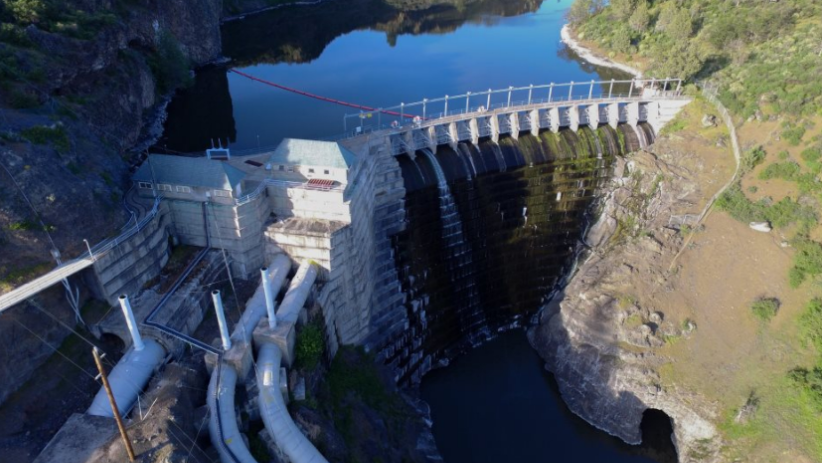
PacifiCorp’s four lower dams, Iron Gate, Copco No. 1, Copco No. 2 and J.C. Boyle in both California and Oregon are slated for removal. (Credit: Klamath River Renewal Corporation)
U.S. regulators approved a plan Thursday to demolish four dams on a California river and open up hundreds of miles of salmon habitat that would be the largest dam removal and river restoration project in the world when it goes forward.
The Federal Energy Regulatory Commission’s unanimous vote on the lower Klamath River dams is the last major regulatory hurdle and the biggest milestone for a $500 million demolition proposal championed by Native American tribes and environmentalists for years. The project would return the lower half of California’s second-largest river to a free-flowing state for the first time in more than a century. READ MORE
WHEN OUR river gets angry, watch out. (Credit: Bob Blankenship)
FEBRUARY 1938 WAS a wet month in Los Angeles. The ground, where it hadn’t been paved over, was saturated, which meant rain had nowhere to go except into the streets, canals and washes. On the 27th, a storm arrived. During the following days, the city received its second-highest 24-hour rainfall in history. Reservoirs overflowed, dams topped out and floodwaters careered down Pacoima Wash and Tujunga Wash toward the Los Angeles River. By the time the river peaked at Long Beach, its flow exceeded the Mississippi’s at St. Louis. “It was as if the Pacific had moved in to take back its ancient bed,” wrote Rupert Hughes in “City of Angels,” a 1941 novel that climaxes with the flood. In an instant, the Lankershim Bridge in North Hollywood collapsed, and five people were swept away. Sewer and gas lines ruptured; communications were cut; houses were lifted straight off their foundations and sank into the water. In all, 87 people died. Read More.
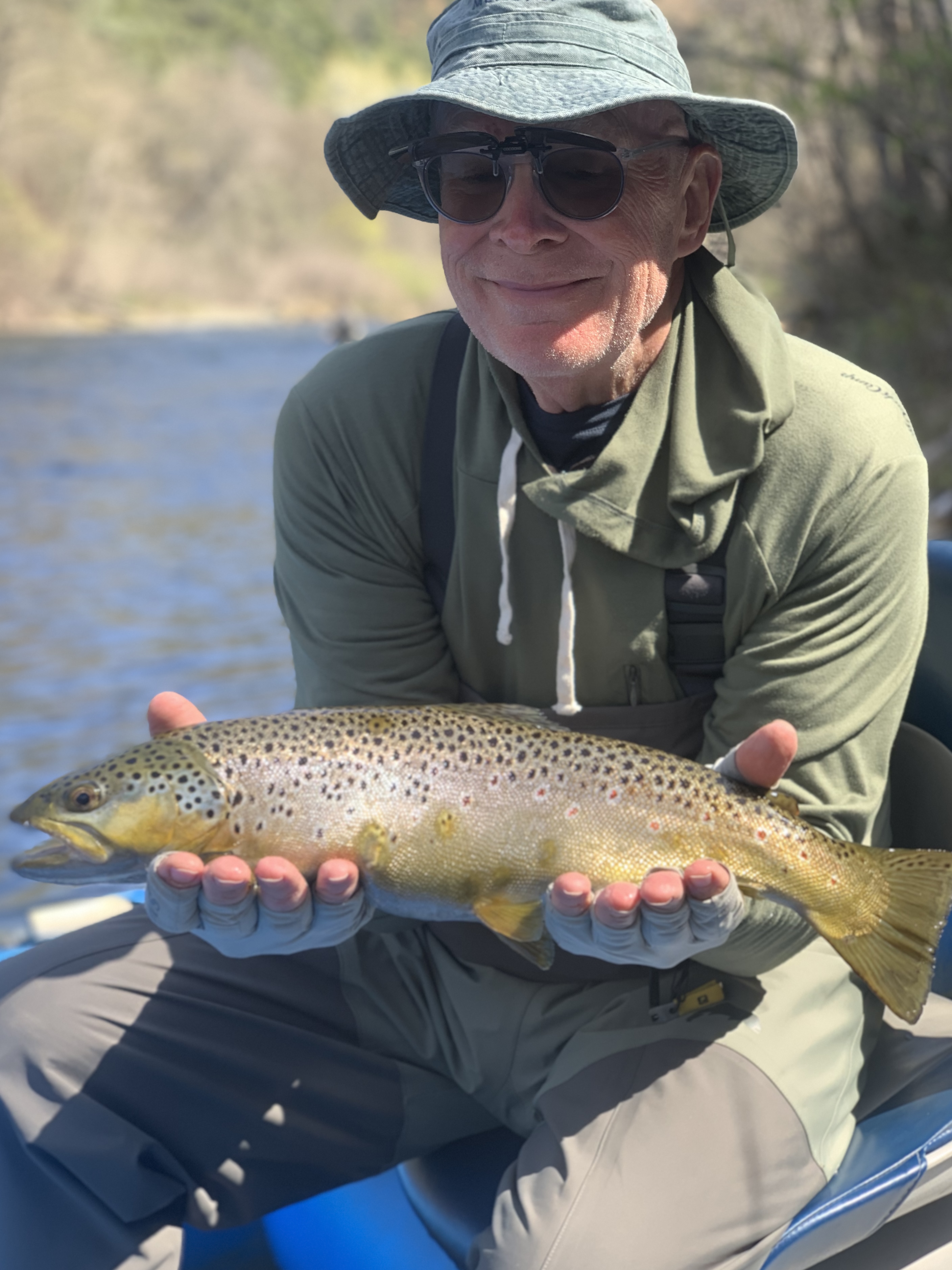
It costs California residents more to legally catch a brown than in any other state, like this beauty from the Trinity River. Sometimes your goofy hat is free. (Credit: Darren Victorine)
A few weeks ago, I was in Mammoth at my favorite fly fishing store, hoping to get a free replacement 2022 fishing license, since I’d thrown mine out by accident. All those pieces of paper, so little time.
Well, my replacement license cost $11.88, no kindness from the DFW for those of us who throw stuff out by accident.
As I waited to get my new license printed out, I told the clerk how excited I was that next year you could buy a resident license in California and it would be good for 365 days, instead of the way it is now, in which no matter when you buy the license from the first day in January to the last day in December it will still cost you $54. And even after the many efforts of Pasadena Casting Club member Ron Escue to get a senior discount, the state still says, “fuggettaboutit.”
That fifty-four bucks makes it the most expensive fresh-water resident fishing license in the U.S with other Western states (Colorado, $36.71; Arizona, $37; Utah, $34; Montana, $21, for example) much cheaper. So … isn’t it a good thing to switch from the calendar year to the 365 model? Apparently, that’s why Assemblymember Jim Wood (D-Healdsburg) introduced AB 817 in February 2021, because fewer anglers were buying licenses precisely because of this inequity. Since 1980, annual resident sport fishing license sales have declined 55 percent while the state’s population has increased more than 60 percent, according to Wood’s website. Also, apparently we will join the 21st Century with a mobile app for renewal, instead of the annual trek to Big 5.
So, all of this seemed good news to me, but not the guys behind the counter.
“Hey, then you’ll have to remember when you renewed,” said the one.
Uh-huh.
“And it’s not really that great a deal when you consider all the winter months when we don’t fish anyway,” said the other.
Um, yeah, I guess.
As I paid up, I wondered why all the resistance to a great idea?
Since I didn’t ask, now I don’t know, but I suspect politics must be involved.
Anyway, I’ll gladly take the 365 license, which is available Nov. 15 for 2023, wait for someone in comments to tell me how the app works, as well as hold my breath for that magical senior rate.
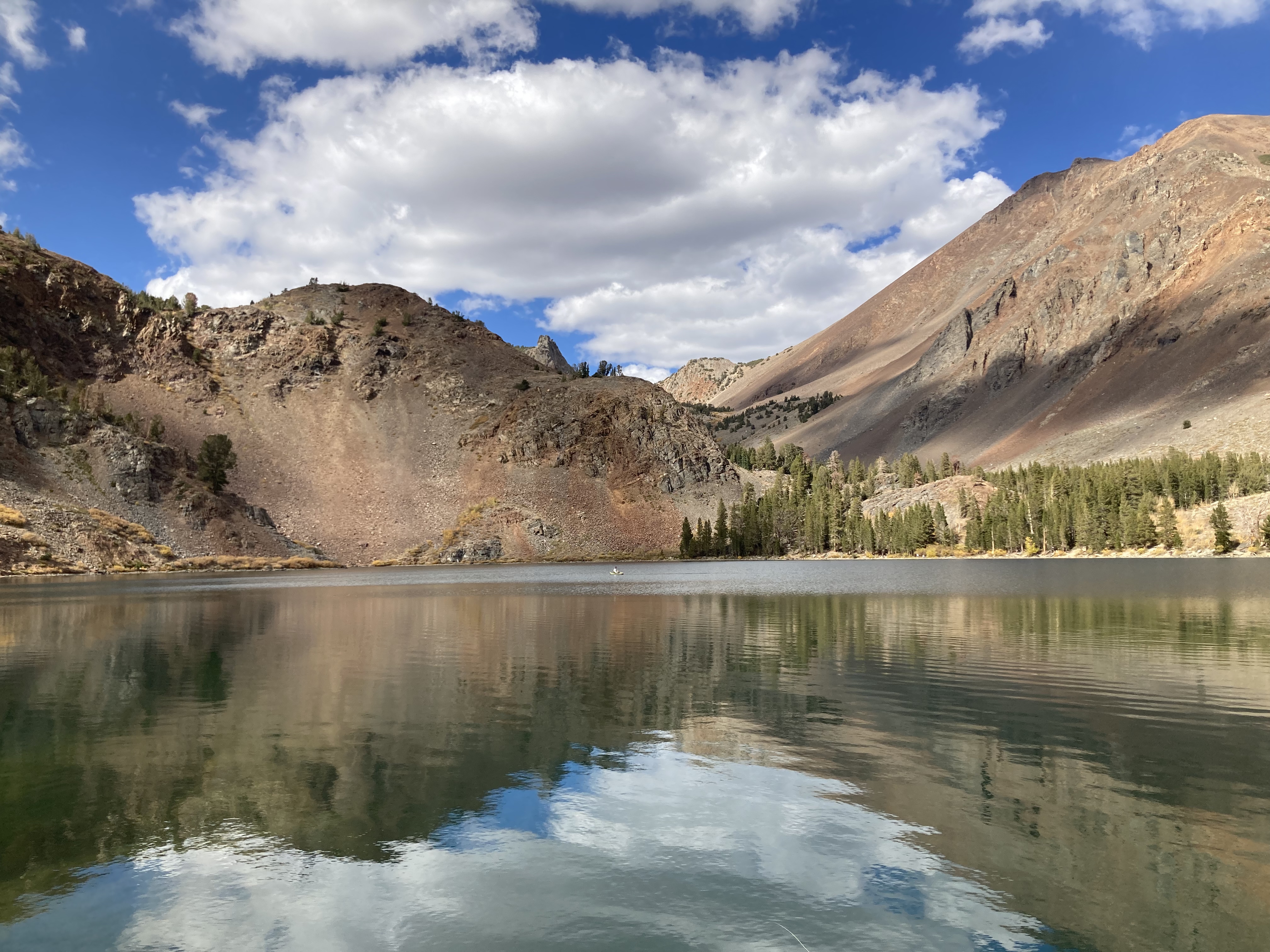
VIRGINIA LAKES: Actually a basin of lakes, their clear waters can hold elusive trout. (Credit: Jim Burns)
On the East Walker River a few days back, fishing with a bunch of longtime and new TU friends, I waited as a downstream drift effortlessly moved my tippet toward me, big Caddis on top, zebra midge below. Moving water takes on its own life when you wait. Cast. Wait. Cast. Wait, attention so focused, an electric spark of attentiveness.
Three days of fishing had yielded only meager results: Day One, skunk; Day Two, two brownies so small they both went through the holes in my net; now the last day was upon us. Late morning on one of the Virginia Lakes yielded spectacular scenes of granite majesty, made us think about geologic time, not human digital.
A lone cutty with beautiful red cheeks held so close to that lake bank, I grabbed my cell to take a shot, then, wondering what I was doing, raced to get my rod, cast the fly back in the water. No dice. The whole morning was like that, cruising fish, with no takers. My fishing bud, Rick, got so frustrated he slapped his rod tip in the water at a cruising fish, who didn’t even acknowledge the impact, so he tried again on trout’s next pass with the same result. He’d caught four-pounders at this very spot. He was generous enough to share it with me.
Late afternoon brought me back to the West Walker, as low, hot sun baked me to sweat and glare made me double blink. Enchanted by the music of singing water, no waders, yet I couldn’t help but submerge my boots on slippery rocks, just to satisfy that trout fever.
Don’t slip; set each foot down like balancing on a bowling ball; watch the bank-side scrub brush try to grab that airborne fly for its own.
CALIFORNIA FALL COLOR: A stand or group of aspen trees is considered a singular organism with the main life force underground in the extensive root system, according to the National Forest Foundation. (Credit: Jim Burns)
The guy in the town fly shop told us the “football trout,” rainbows who gorge themselves on plentiful bugs below the dam and into the Miracle Mile, were all gone. Too hot. He, himself, also thought about becoming a goner and moving out to North Dakota, tired of fire and endless drought.
In a watery burst, what draws so many of us to fishing happened to me: a flash of majesty and a solid hungry grab. A 12-inch or so football-shaped trout gleamed silver in that brutally reflective water, hooked and reluctantly riding the current toward me.
“Net!” I pleaded to another fishing bud, Bob, as I guided the trout in current to the bank. Bob was right there and then — just like that — the rainbow fatty was off my barbless hook and swimming freely away.
Over in a minute, what had consumed three days of my life, just like that.
Relief.
No matter what, the skunk needs to go.
Fly fishing is certainly about catching trout, but maybe more about renewal, is it not? It’s about connecting with nature in a special way, a hunting way, a caring way that yanks us from our cocooned lives and into the present moment, maybe, into that geologic time where we can see more clearly that we are small, but our impact on nature is increasingly outsized, like that caldera spewing lava some 700,000 years ago, altogether changing the landscape that was.
As a mostly solo fly fisher, usually that burst of calm knowing called renewal comes from water, fish, weather, skill, lack of skill, patience, flashes of angry frustration and a rhythm removed from my urban life. My spiritual battery turns out to be blessedly rechargeable.
SIZE DOES MATTER: And this little Brown slipped through a hole in my net! (Credit: Jim Burns)
Yet on this trip, renewal came from group experience, new and old friends. Collectively, we laughed, got bored, got pissed, got frustrated, learned new things, forgot the old. We hiked in, we ate out, we wondered where in the hell the trout were, caught them on occasion, and tipped our hats to their elusive, wily nature. Everything, just right. We marveled together at the majesty of the Sierra, but I think secretly we marveled at how wonderful it is to be human in a time when honesty, generosity and compassion illuminate our best outcome, our path forward through the dark.
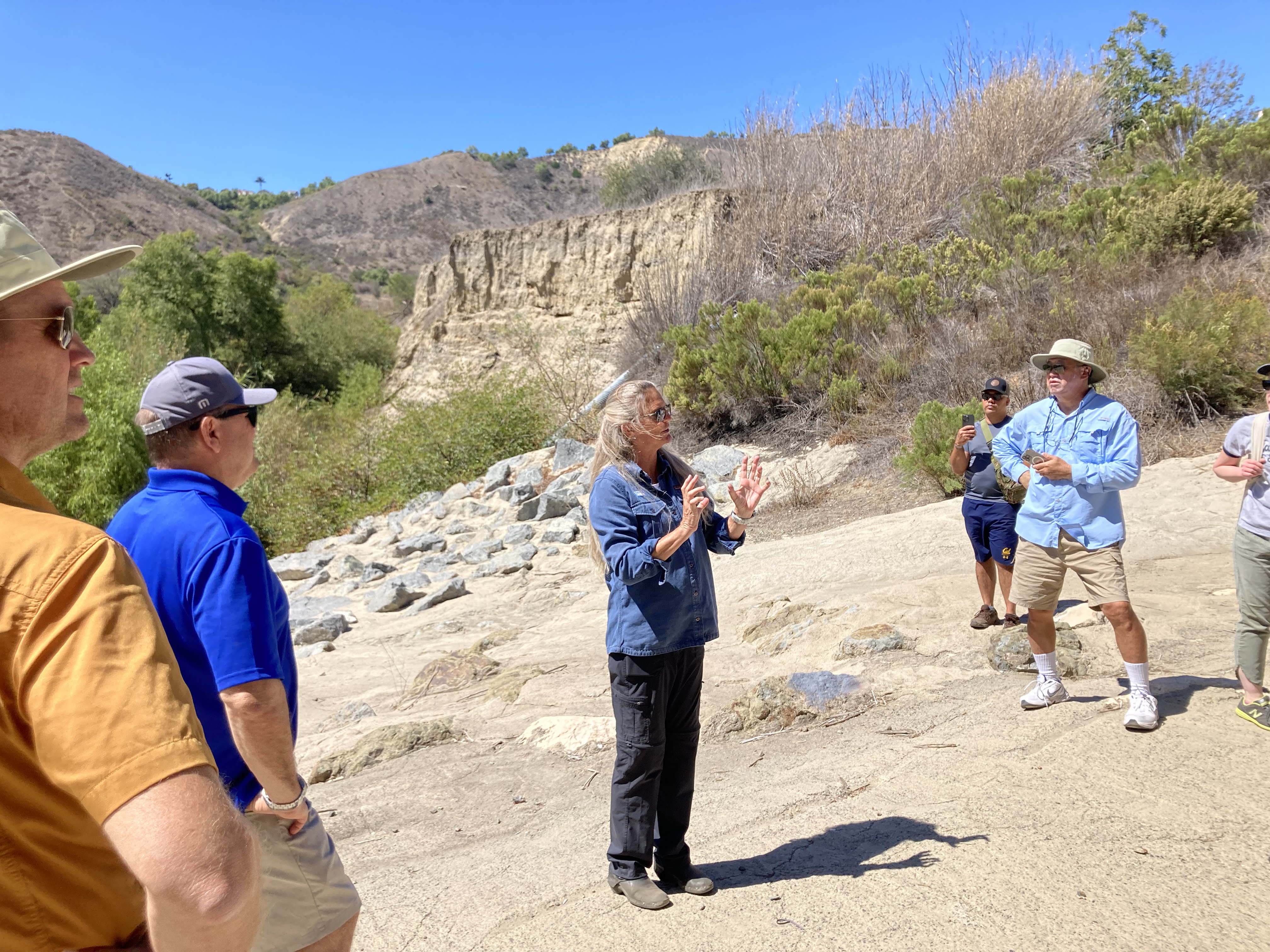
CalTrout’s Dr. Sandra Jacobson explains what’s involved in the design stage of the I-5 fish passage in San Juan Capistrano to a group of donors on Sept. 21. Efforts to remove barriers to the endangered Southern California Steelhead are coming to fruition, invigorated by the spotlight on removal of the obsolete Rindge Dam in Malibu, which has blocked steelhead passage from Malibu Lagoon to the Santa Monica Mountains for the past 80 years. (Credit: Jim Burns)
Start the day with the five-person team tournament on the mighty Kern River. Check-in will be at the Kern River Fly Shop at 7 a.m. You can pick up any last-minute fly-fishing supplies, scorecards and listen to general tournament announcements.
Turn in the scorecard at the shop by 2 p.m. sharp and head over to Rivernook Campground for the afternoon and evening festivities starting at 3 p.m.
This year there will be ticket sales, for a nominal price, for the post tournament festivities.
The evening festivities will have raffles galore, vendors, team parade, fly fishing games, tournament awards, and beverages & LIVE MUSIC from Par Avion and the Stoneflys.
Everyone in attendance will be eligible to play Heads or Tails for a custom fly rod build by Chiaki Harami.
COST / FEES benefitting Casting for Recovery So.Cal & Kern Valley Search & Rescue
$250 for a 5 person team or $50 per person. Includes dinner, concert & festivities.
$20 for non-participant dinner, concert & festivities.
$10 for non-participant concert & festivities.
Start the day with the five-person team tournament on the mighty Kern River. Check-in will be at the Kern River Fly Shop at 7 a.m. You can pick up any last-minute fly-fishing supplies, scorecards and listen to general tournament announcements.
Turn in the scorecard at the shop by 2 p.m. sharp and head over to Rivernook Campground for the afternoon and evening festivities starting at 3 p.m.
This year there will be ticket sales, for a nominal price, for the post tournament festivities.
The evening festivities will have raffles galore, vendors, team parade, fly fishing games, tournament awards, and beverages & LIVE MUSIC from Par Avion and the Stoneflys.
Everyone in attendance will be eligible to play Heads or Tails for a custom fly rod build by Chiaki Harami.
Check out FoLAR‘s free evening of LA River fun and film at River Fest 2022 on Sunday, 5 p.m.-9 p.m.,https://www.eventbrite.com/e/river-fest-2022-tickets-381235745377?aff=ebdsoporgprofile celebrating LA River’s deep connection to art, environmental justice, community health, and climate adaptation. This open-air festival will be hosted at the scenic LA State Historic Park, bringing together the best of LA’s food truck scene, environmental films (on a 45-foot screen) and booths.
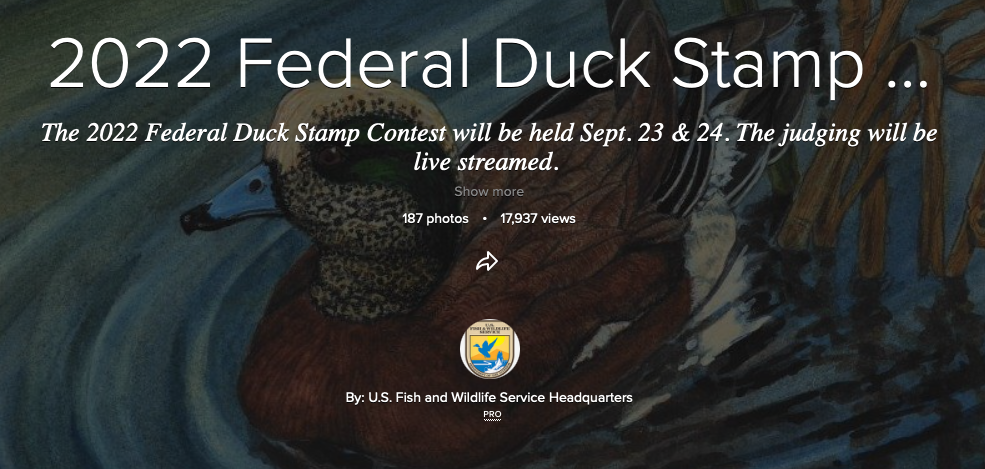
Join us at the quack of dawn for the 2022 Federal Duck Stamp Art Contest! 🦆
Whose art will help raise tens of millions of dollars for wildlife conservation? Join us for this free streaming event on Sept. 23 and 24 to find out! http://ow.ly/cA3o50KPR1t
Every Duck Stamp sold contributes directly to habitat conservation that supports migratory birds and other wildlife. Put your stamp on conservation: http://ow.ly/ZKWq50KPR1s
The beginnings of the East Fire on Aug. 25 (Credit Jim Burns)
As regular readers of this blog know, I had a scare several weeks ago when I hiked back down from a local stream to the parking lot here in Southern California — plumes of smoke rose about a quarter mile down the road. A narrow bridge connects this parking lot to the also narrow main road.
I raced to get in my car and get out as fast as I could. Only a couple of years ago, another fire, the Bobcat, decimated a nearby fishing stream I’ve gone to for some 30 years.
As I passed the intensely hot fire, still small, I asked a couple watching it burn if they had “called it in,” meaning contacted 911. They said, “No signal.” My cell didn’t have a signal either and it wasn’t until I’d drive about 10 miles down the canyon that I got one. By that point, green forest service trucks with the lights and sirens flashing were making their way up to the fire.
That one has been put out, but I saw in the news another has just started basically in the same mountainous, very dry brush area.
A friend of mine recently said, “After all the fires of the last few years, we all have PTSD when it comes to flames and smoke.”
I never thought of it in that way, but I’ll tell you my heart was racing as I drove over the parking lot bridge, worried for myself and the hikers still somewhere on the trail.
As I passed the first green Forest Service emergency vehicle on the way down, I wondered who had called 911 – and how?
For answers, I turned to the Trout Unlimited Trout Community Forum, which includes many dedicated and knowledgeable anglers from around the country. I include some of their responses below.
By far the forum’s most popular company that gives fly fishers the ability to contact the outside world in case of an emergency is Garmin. This Swiss-based company began by providing consumers with GPS for autos in 1989, a market that largely dried up with the advent of the IPhone.
Today, the company offers lots of tech for everyone, including gear that gives bicyclists emergency “crash detection” if they have an accident and need help, motorcyclists a reason to not use their cellphones on the road, truck drivers cozy headphones and runners a smarter screen on their sports watches.
For fly fishers and those who enjoy the wilderness out of cell range, Garmin offers peace of mind, as commenter Jeff Greenberg wrote on the forum:
“Can only echo previous comments regarding the Garmin InReach. We bought ours after my wife had a run-in with a rattlesnake on a hiking trail in Arizona and she carries is with her when she hikes.”
Closer to home, Tim Huckaby wrote a harrowing rescue story about a juvenile rattlesnake bite during this year’s annual trip of the San Diego Fly Fishers to the Upper Kern. With the help from two Garmin InReach devices, a young man was helicoptered to a hospital and is alive today.
Garmin offers different models, all lightweight and compact. The main feature of the InReach is its emergency SOS, if you need help, but there is also a track back feature, in case you get lost, as well as different levels of battery life, which can be important for back-country fishers who will be off grid for an extended period. The company the battery life will last for two weeks.
Although reasonable for some, others complained the Garmin is too expensive – The Mini is about $400 with plans ranging from $11.95 a month for the Safety plan, $24.95 for Recreation and $49.95 for the Expedition.
A relative newcomer to the two-way satellite space is SPOT X, which has stepped up its game since 2007, when, according to Switchback Travel, they were made famous (or infamous) early on for their implication in accidental SOS calls and non-emergent rescue initiations. The device offers rescue services and messaging to your contact list over satellite. The cheapest plan is $11.95, with Spot Gen 4 costing $170. It’s battery life, according to the company, is 240 hours.
“You can also send a text for help in a non-life-threatening situation such as a vehicle breakdown,” wrote Rob Murthiah on the forum. “SPOT has insurance and will come retrieve you or your vehicle in most places in the world.”
Cellphones are the great business disrupters of our age and I’m sure both Garmin and SPOT execs are wondering how the new IPhone 14 will affect sales to wilderness lovers.
The latest IPhone release includes two-way emergency satellite communication, with the caveat that you need to point the phone at the satellite to get a connection. Apple also includes location tracking date for free the first two years.
According to its release notes, the average emergency message takes less than 15 seconds to send, if you have a clear view of the sky. The user holds the phone in the air, and it finds a satellite so you can communicate with rescuers and share your location.
The price, including trade-in of your old phone, is $799, off contract, and before trade in, which will bring it under $500.
Also, on the horizon, T-Mobile and Starlink are joining up to offer emergency text communication through its satellite network.
Another forum user is a CB radio operator and reminded us that a vhf/uhf is also an option, if the area you’re in has radio coverage. Also, remember that ham operators need a license.
My brush with that wildfire convinced me to invest in one of these systems and I’m thinking seriously about SPOT.
One forum user, however, remained unconvinced, even in the face of all of this new tech. “Sticking with smoke signals,” he wrote.










 lariverflyfishing