(Forest Service News Release) The entire Angeles National Forest is temporarily closed for public safety and the protection of natural resources from today, January 8, at 5 p.m. through Wednesday, January 15, at midnight. During this time, the following acts are prohibited within the Angeles National Forest and San Gabriel Mountains National Monument:
1. Going into or being upon the Angeles National Forest. 36 C.F.R. § 261.52(e). 2. Being on any National Forest System Road within the Angeles National Forest. 36 C.F.R. § 261.54(e). 3. Being on any National Forest System Trail within the Angeles National Forest. 36 C.F.R. § 261.55(a).
Pursuant to 36 C.F.R. § 261.50(e), the following persons are exempt from this order:
1. Any Federal, State or local officer, or member of an organized rescue or fire-fighting force in the performance of an official duty. 2. Persons with Forest Service Permit No. FS-7700-48 (Permit for Use of Roads, Trails, or Areas Restricted by Regulation or Order), specifically exempting them from this Order.
Persons with a valid California Campfire Permit are not exempt from the prohibitions listed above.
These prohibitions are in addition to the general prohibitions in 36 C.F.R. Part 261, Subpart A.
A violation of these prohibitions is punishable by a fine of not more than $5,000 for an individual or $10,000 for an organization, or imprisonment for not more than six months or both 16 U.S.C. § 551, and 18 U.S.C. §§ 3559, 3571, and 3581.
True love is picking up used toilet paper from the infamous Poop Tree in the Monument with a bunch of other FRVC volunteers. It’s not nearly as fun as it looks, but hanging out with the other volunteers is a blast.
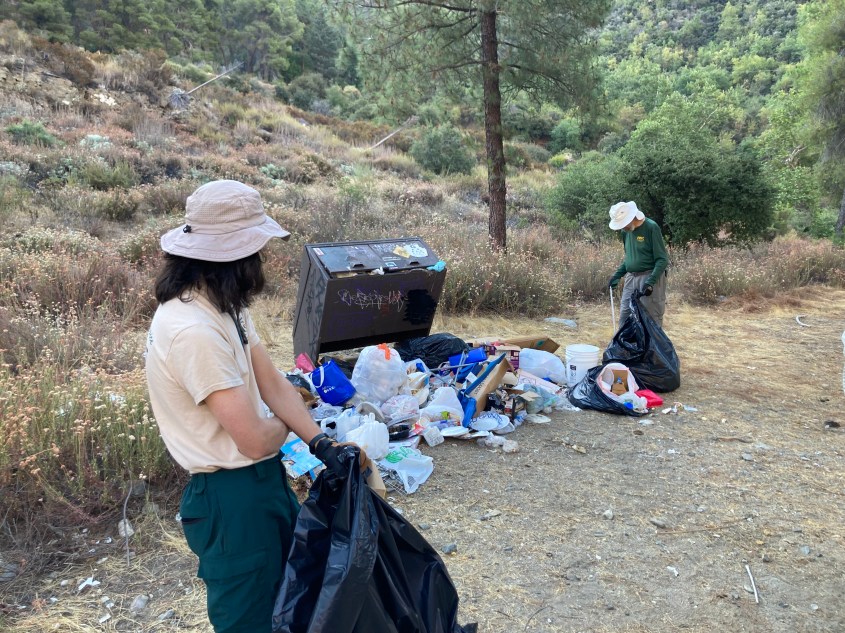
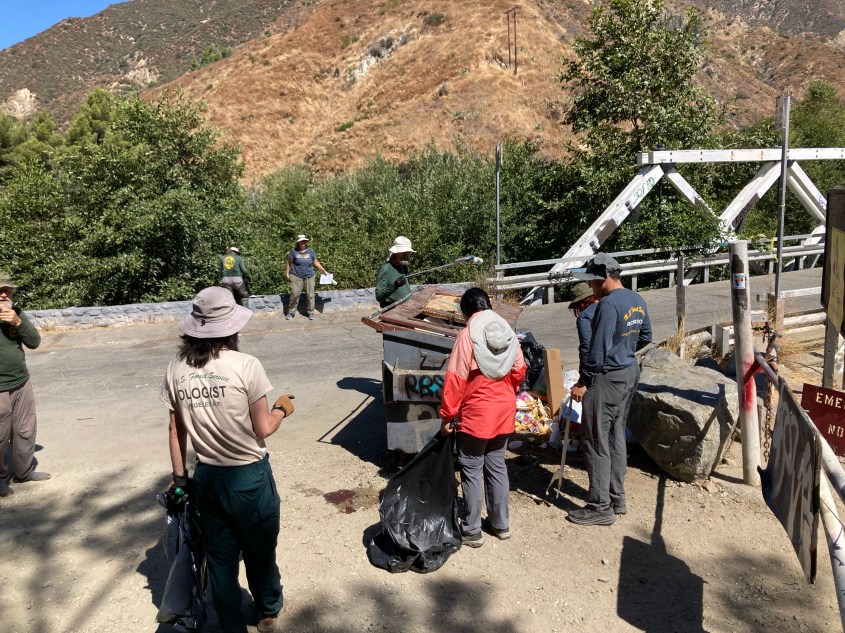
Last week, I logged my last Fisheries Resources Volunteer Corps mission. About a dozen of us began at 7 a.m. and completed the Total Maximum Daily Load measurements at four different spots by 2:30. We skipped lunch because we all wanted to “get ‘er done” and the temperature was hot as blazes in the San Gabriel Mountains National Monument. Plenty of sunscreen couldn’t hide the true grit of this group. It’s nasty, hot, brutish work.
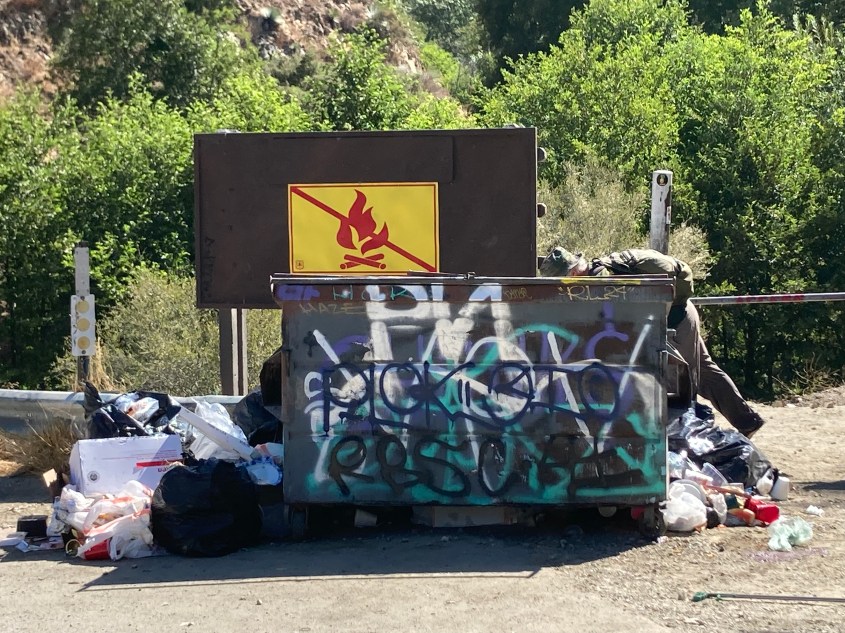
For a TMDL survey FVRC volunteers record all the garbage by category and by pound within a 100-foot stretch of what should be pristine water flowing from Mount Baldy into the East Fork of the San Gabriel River. A TMDL was my first patrol last year and I couldn’t believe how positive these folks were about a dire situation. After all, who can say that they actually had fun cleaning up human waste, plastic bags, dozens of straws, discarded socks, kids pool toys, cigarette butts, beer bottles galore, in other words all the leftovers from those who visit our Monument and should know better than to leave it all behind.
Each time we go out, we dutifully bag several hundred pounds of consumer society’s discards, lug them uphill from the stream, weigh each bag, then drive the bags to the dump. I joked with Craig, a dedicated volunteer, about what a good time we had doing this and he said,
“Yup, my friends ask me if I’ve done something wrong? If that’s why I’m out here collecting garbage.”
If you knew Craig and his daughter, Haley, you’d realize all they seem to do is what’s right.
Each year, FRVC forwards the survey of how many pounds of soft plastics, hard plastics, threats to human health and all the other TMDL categories to the Forest Service. I think this is the second year of of three year study, but don’t quote me. At the end of the study, the powers-that-be will be able to ascertain what anyone on one of these patrols–as well as anyone visiting the East Fork during summer– already knows: we are overrun with garbage, graffiti, illegal stream dams, fire rings, illegal parking and all the rest of it.
That’s why I was particularly heartened to hear from a Forest Service employee who also volunteered that day; there are plans by the FS to actually take action. One idea is to designate parking spaces that would be accessed by a reservation system. Your car would get a numbered parking spot for the day that was just for you and nobody else.
Sounds familiar, right? Parks and camping areas all over California use the same fee-based system. Then—very important—there would be enforcement from the Sheriff’s Department or the California Highway Patrol. In all the years I’ve fished the Sab Gabes, I’ve never seen a cop give anyone a ticket for anything.
Another idea is to create a kiosk and gate where visitors would stop and pay a fee for the day at the nearly invisible Visitors’ Center at the start of the canyon on Hwy. 39. Again, this is a system anyone who visits our state parks is familiar with: You pay a fee, get a map and speak with the rangers to get oriented.
Or both might be implemented.
The point is that even though implementation will require wading through layers and layers of bureaucracy and a public review before we all see any changes, it seems the FS is finally taking notice that the status quo can’t continue.
As a concrete example, expect to see a net stretched downslope of the bridge before the East Fork parking area in the near future. That’s a direct result of the monthly TMDL studies that FRVC carries out. Who knows if it will keep the hundreds of pounds of summer trash out of the water, but trying solutions, even when they fail, can lead to more and better remedies.
Hey, fishers, the East Fork area and East Fork Road are closed today, so it’s a good idea to stay off Highway 39. Last night, although Camp Williams wasn’t evacuated, area hikers and campers were, so the situation is once again very hot and dire for our mountains, the visitors who frequent them, our firefighters, the fish we all love and hopefully, not for homes and residents. News reports, as I write, say 300 acres have burned so far, CalFire has called in air support, and containment is at zero.
Don’t we all dread these times? Biologists say that fire is natural and a good thing, but that the burn cycle is 20 years between events. Ash fertilizes the ground for seeds to grow, Giant Sequoias have a natural fire retardant in their bark and the jack pine depends on fire to release their seeds, according to the National Forest Foundation.
If an area continues to burn, say every three or four years, the habitat becomes less able to support the rich land and aquatic life we all enjoy. Wildlife die or flee in search of better habitat and food. Even worse in long term, grasses and shrubs colonize what used to be a forest of trees. Invasives can then get a leg up as well.
If you’ve been to the WF recently, you’ve noticed that the flow is way down because of construction efforts to control the Bobcat Fire debris in Cogswell Dam. The water clarity is not great, and it is way hot.
We are in the fourth year of a five-year emergency debris clean-up project, and because of the turbidity, the California Department of Fish and Wildlife’s surveys on the West Fork in the last two years haven’t been completed.
“CDFW has just recently completed a 2024 annual survey of the WFSGR and results are still pending,” CDFW Environmental Scientist Joseph Stanovich said in an email. “There has been internal discussion regarding the status of the wild trout populations and plans to help it rebound, but with the current conditions and keeping the wildlife resources in mind, it doesn’t seem to be feasible right now.”
I know we’re all anxious to take a look at that report when it is released.
You can keep an eye on local flows >>HERE. I’m not sure if the West Fork gauge is broken or what, but taking a look at the flow, it ain’t good.
I’ve been hearing much better things about fishing the EF, so let’s all hope that firefighters get the Fork Fire out soon and that these precious habitat treasures for wild trout and all our animals come out of this all right.
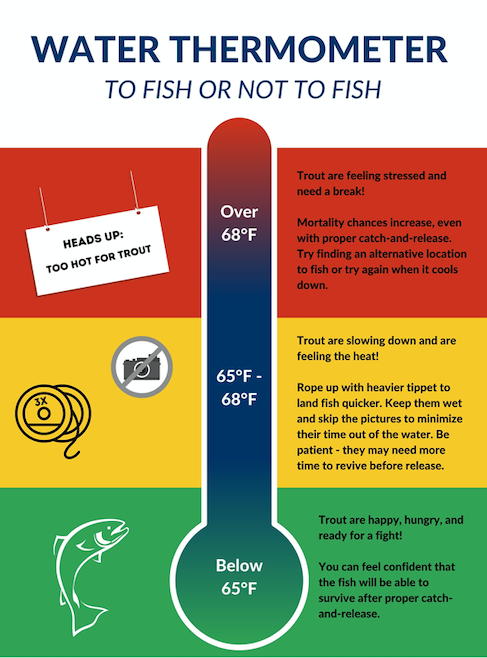
When a good fisher friend texts you that the water temperature is 68 degrees at 7 a.m., you know it’s July in the San Gabes. Dawn Patrol is a great way to get into lots of our beautiful, wild trout before the summer hordes descend. But, remember the limit for safe fish handling is 70 degrees.
I broke my water thermometer and need to buy a new one. For those who care about our local waters’ health in summer, it’s as important a piece of equipment as a leader billfold or a hemostat.
Many of you savvy anglers already know what “hoot owl” restrictions are. I first heard about them on Montana’s Big Hole River, a waterway that struggles each summer with allocating enough water for ranchers, fishers and trout. They’ve done an amazing job over the years, sharing their watershed and keeping it alive and healthy.
Hoot Owl restrictions recommendations, according to CDFW, mean being active as an angler during times of day when owls can still be heard hooting. These times are typically earlier in the day when weather conditions are cooler.
Keep Fish Wet goes farther with its “No Fish Dry July” campaign .
“No Fish Dry July encourages anglers to rethink their interactions with fish during hot summer months and challenges everyone to make a month-long commitment to “do better”. Whether it is by not taking a single photo of fish for July, using best practices for each fish we catch, or by only targeting warm water species each angler can find a way to participate.”
Whatever you decide to do, remember that once the water hits 70 degrees, it’s better to hang up the rod for a bit, grab a cold one and wait to hear that hoot owl. The trout will thank you and so will your fellow conservation-minded fishers.
I’d never seen a Santa Ana Sucker until today when I found this one downriver of this ruined fishing platform. (Jim Burns)I’m not sure what killed this fish, but it looked healthy. Got any ideas? Post below. (Jim Burns
This is where the forks flow into the main San Gabriel River, behind the earthen San Gabriel Dam, which is currently dry. Note the difference in color between the East Fork, on the left, that flows from Mount Baldy, at 10 ,000 feet, and the West Fork that flows from Cogswell Dam. (Credit: Jim Burns)
If you’ve ever thought, “I should give stream fishing a try locally,” now’s the time to do it. After back-to-back water years, our canyons await, with more trout than we’ve had in years. (Jim Burns)
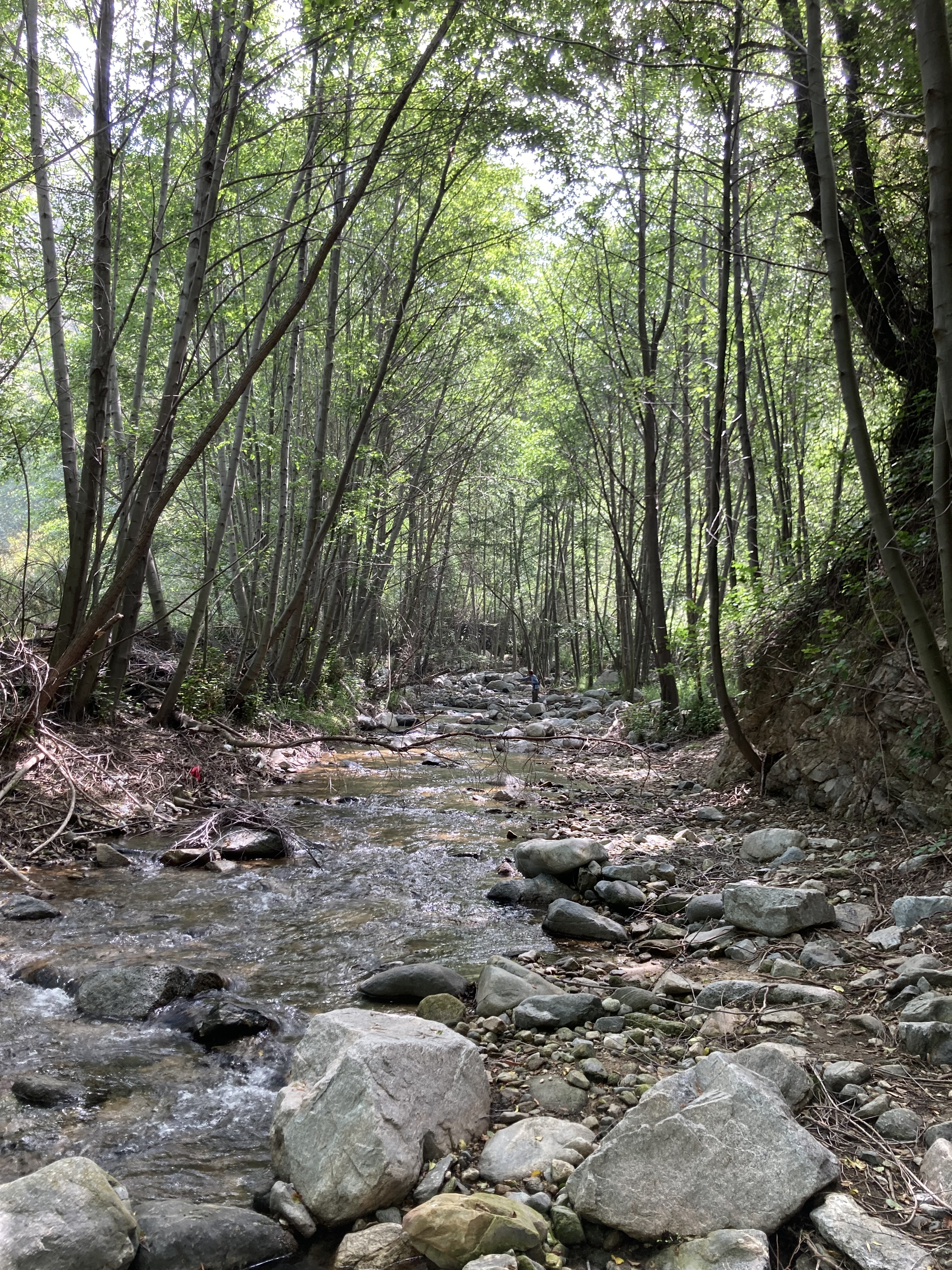
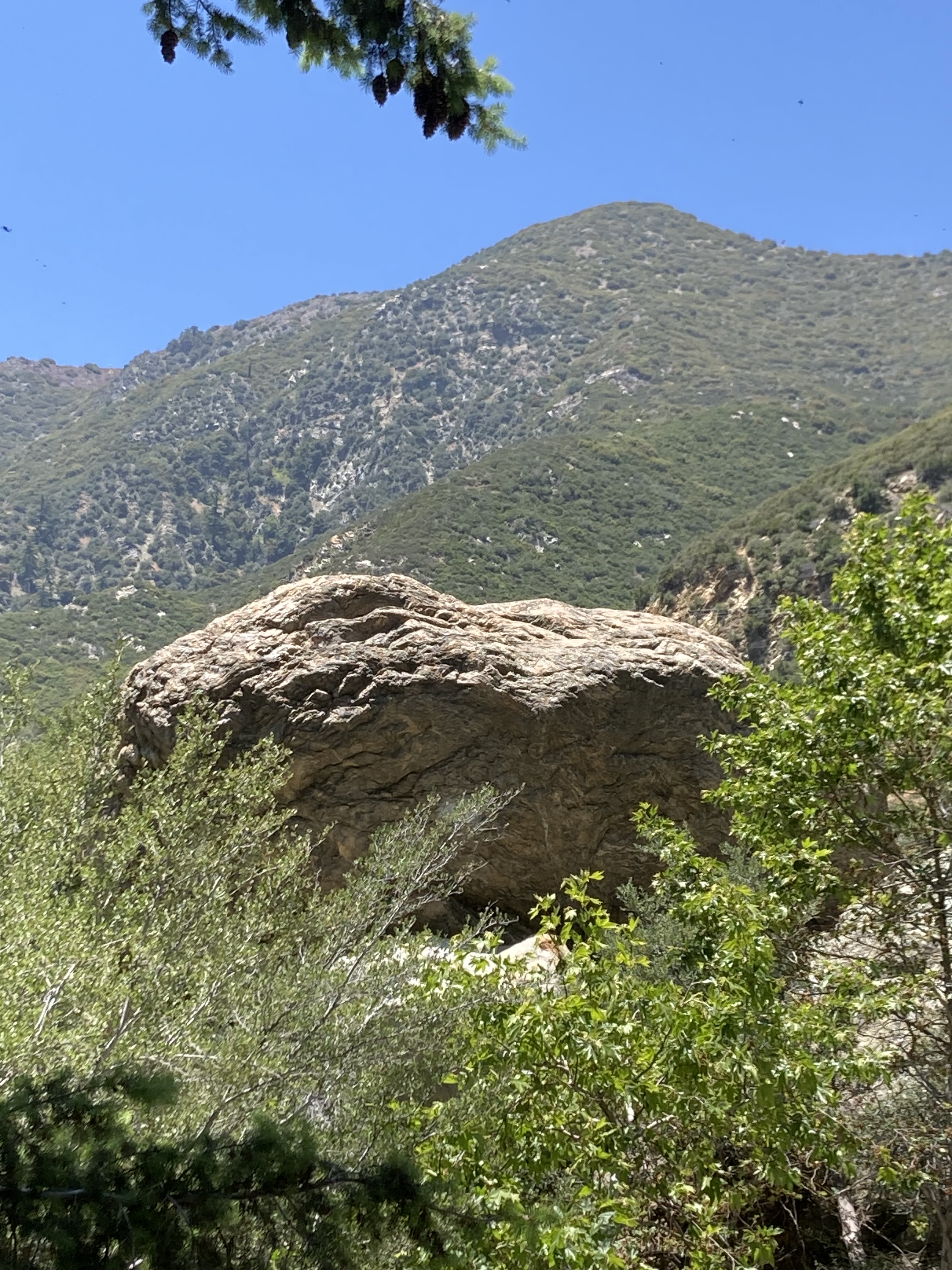
With fishing buddy Jim the Man(oledes) on the East Coast for the summer, I decided to solo it on a canyon fly-fishing adventure today. I strayed from my usual places, the forks of the San Gab. The verdict: if you live anywhere near the expanded Monument, live to fly fish, and, well, you know, actually have a terrible case of fish fever, get on out there!
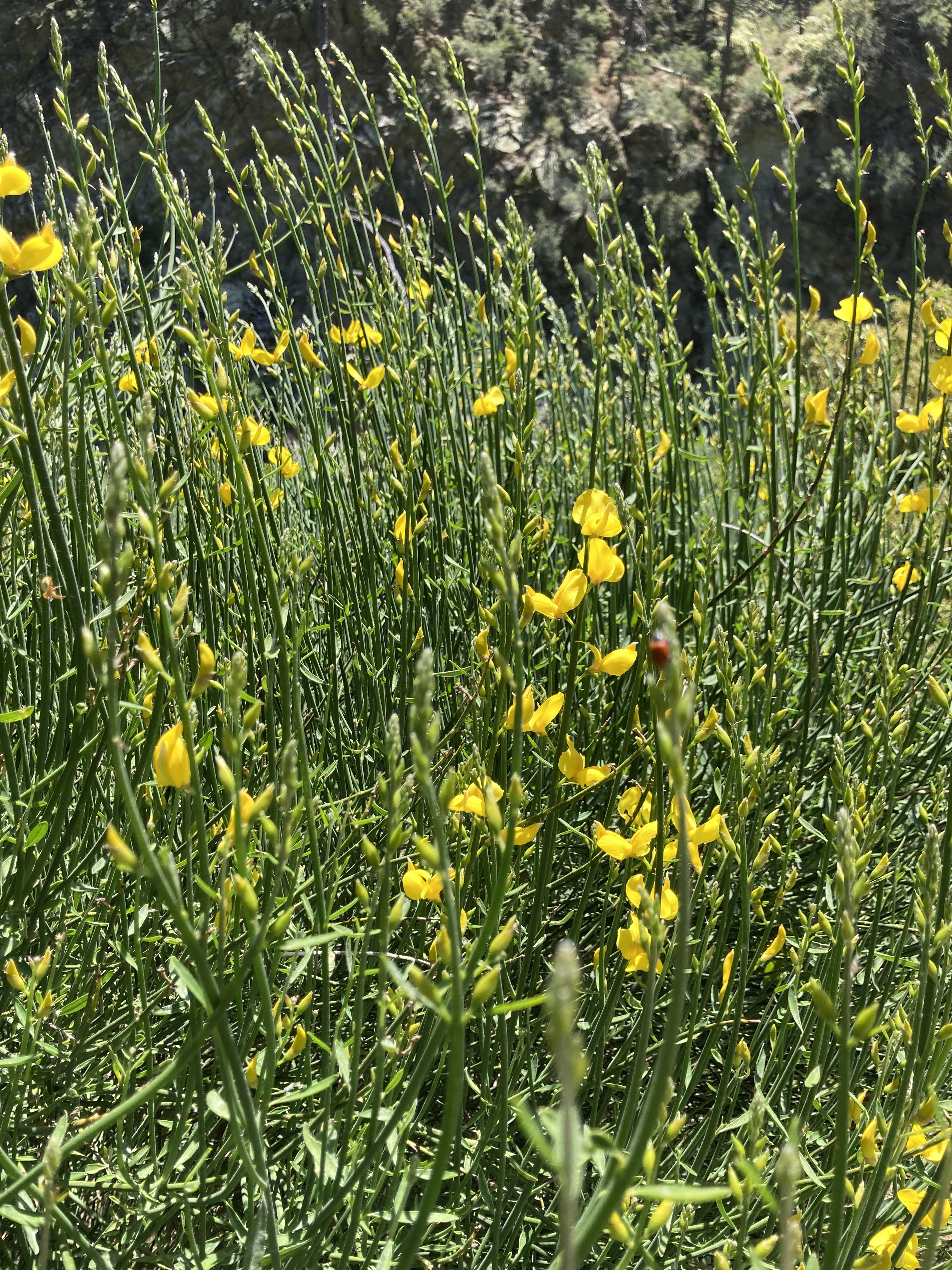
Although the pic (third row, Scotch Broom) doesn’t even begin to do the hatch justice, I saw literally thousands of — ladybugs! — swirling around all over the canyon. At first, I had no idea what I was looking at. They appeared to be tiny round orange flying buttons. When one finally landed, I couldn’t believe it.
Also, I didn’t get a shot of two snakes coiled like a legendary Cadeusus in everyone’s favorite springtime activity. That was amazing.
So, head out early to avoid the coming heat; bring lots of water, sunscreen, a decent hat, and a great lunch. Don’t wear shorts or short sleeves because we have a whole lot of poison oak and stinging nettles. If you don’t know what they look like, safe your skin some real agony and look the up.
I now take my Zoleo with me into areas without a cellphone signal. I’m also crazy about two apps: the amazing Merlin Bird ID from Cornell Lab and the in-need-of-an-update Seek connected to INaturalist.
Be super mindful of snakes. Little rattlers are just starting to grow up, and you don’t want to inadvertently put your hand in a crevice or step on one. Their rattles are still immature, and they don’t yet know how to control their venom flow.
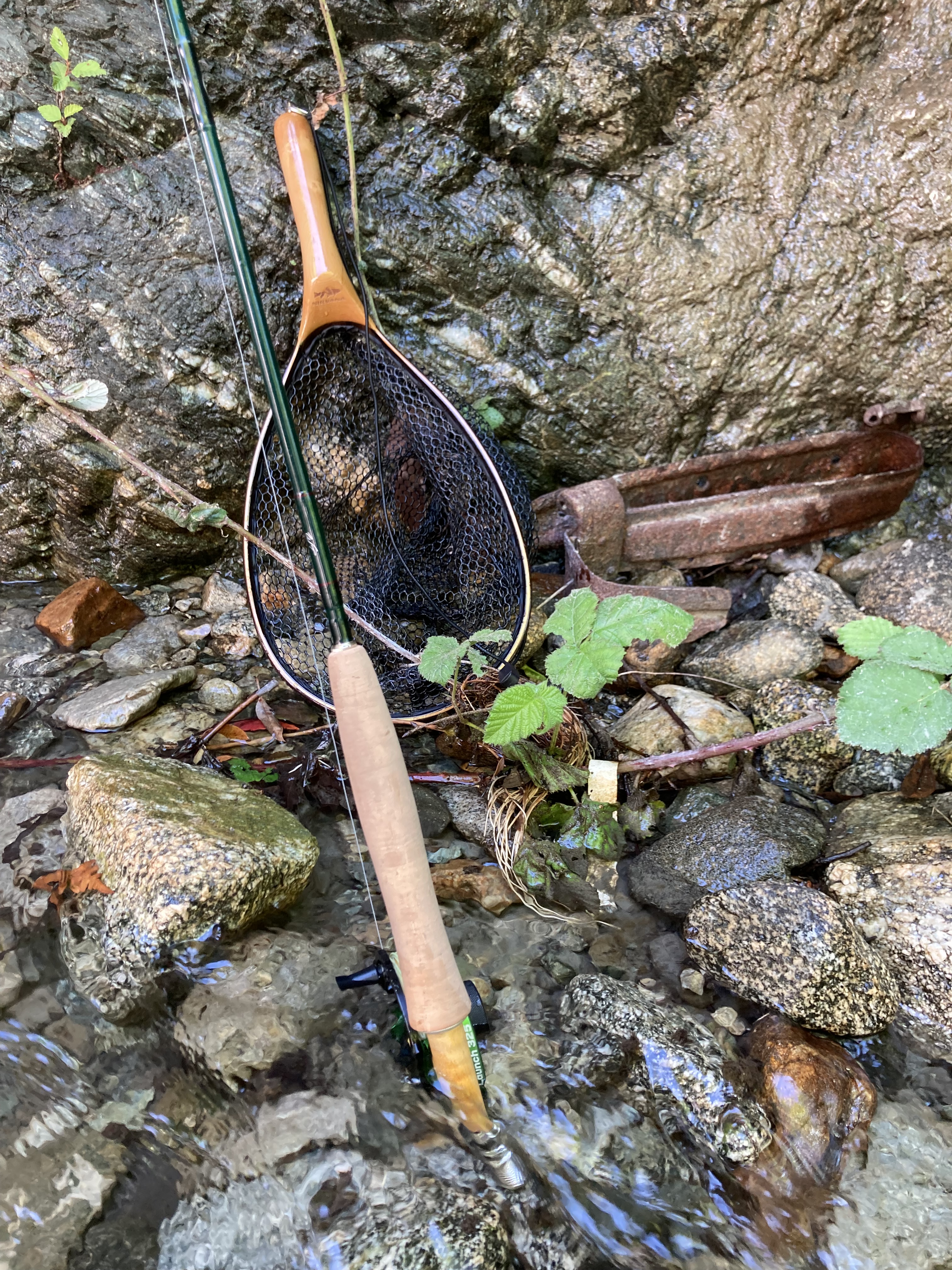
I Euro-nymphed and pulled in seven in about an hour and change. The trout were still hanging way down. The biggest (second row) was a porker and dove straight into a deep pool, which was a thrill. Technically, I guess I was nymphing because I used a 4 wt., eight-footer, but what the hell, it’s all high sticking, anyway. There was not another soul on the water but me. Now that’s fishing.
I’m not going to name this spot, but if you email me, I’ll give it to you.
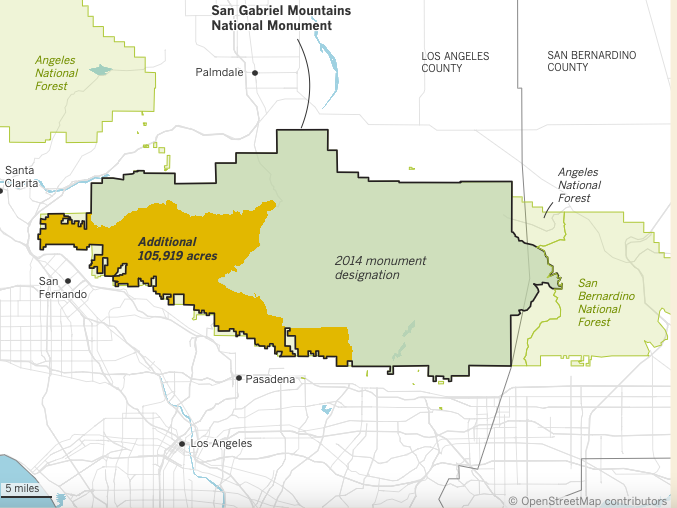
President Biden on Thursday expanded San Gabriel Mountains National Monument by nearly a third in an action that was widely praised by the Indigenous leaders, politicians, conservationists and community organizers who had long fought for the enlargement of the protected natural area that serves as the backyard of the Los Angeles Basin. To that end, Thursday’s announcement included a commitment from the federal government that it would step up funding and staffing for the monument, including hiring additional field rangers and visitor engagement positions, and investing $2.3 million from the Great American Outdoors Act to renovate barracks and provide other housing for National Forest staffers. Read the whole story >>HERE.
THE ARROYO CHUB FISHING PLATFORM is the closest platform to Cogswell Dam, some seven miles from the parking lot. (Credit: Jim Burns)
The West Fork of the San Gabriel River, within the National Monument, is a place like no other: close to a major metropolitan area; protected as part of a national monument; accessible to biking fly fishers along a seven-mile stretch of a beautiful Southern California canyon. It holds a state designation of a “wild and scenic river,” one of two in SoCal, and is home to four iconic fishing platforms meant to enhance the outdoor experience for disabled fishers. In the past, the Forest Service, which is tasked with its upkeep, offered a key for those disabled fishers who wished to drive past the locked gate up the canyon to use the ramps. In all, this was one of the most accessible areas in which to catch wild trout.
“I don’t know of any other place in the state of California where (people in wheelchairs) can go and fish on a wild-trout stream,” William Brown, a U.S. Forest Service biologist, told the Los Angeles Times in 1992. I know there are other facilities in Northern California where you can fish on a regular stream, but on a wild-trout stream, this is it.”
THE STATE OF DISREPAIR of the Arroyo Chub Fishing Platform, as well as the other three iconic platforms on the West Fork, make their use impossible. (Credit: Jim Burns)
Built in the 1970s, before the Americans with Disabilities Act defined disability rights as civil rights, the platforms’ creation used public and private money to offer a unique experience open to everyone.
Yet as of this writing, each of the four fishing platforms is unusable. It’s a situation Dave Baumgartner, president of the volunteer group Fisheries Resources Volunteer Corps, finds both frustrating and untenable.
“FRVC and possibly other conservation volunteer groups routinely maintained these ramps through 2019 with no interference from the federal and state agencies,” Baumgartner said in an email. “After the Bobcat Fire in 2020 the West Fork was closed to the public until 2022 (my best recollection). Once the public was allowed access, FRVC inspected the ramps and informed the Forest Service of our plans to remove the sediment and vegetation from the ramps.”
But that renovation never happened, for several reasons, including the presence of Santa Ana sucker habitat, a threatened species. This small fish lives in only three Southern California river basins, San Gabriel, Los Angeles and Santa Ana.
“Lots of factors delayed potential removal and replacement of the fishing platforms along the West Fork of the San Gabriel River,” Forest Service Public Affairs Officer Dana Dierkes said. She cited several reasons including moving earmarked funds for the diabled ramps granted through The Great American Outdoors Act to other more expeditious projects, continued Bobcat Fire debris removal by Public Works and “additional consultation … needed with the U.S. Fish and Wildlife Service (USFWS), due to threatened and endangered species that inhabit the project area.”
Jennifer Pareti, a senior environmental scientist with the California Department of Fish and Wildlife, agreed, saying, “The Angeles National Forest is federal land, and typically CDFW is not involved with USFS maintenance actions.” But the Santa Ana Sucker, a federally threatened species, is protected by the Federal Endangered Species Act (ESA) through the US Fish and Wildlife Service. The Forest Service “is required to have a Biological Opinion through a Section 7 Consultation.” A Section 7 Consultation basically means that any action taken by the Forest Service can’t harm the Santa Ana Sucker.
Federal bureaucracy can make any restoration effort a challenge, including restoring the four disabled fishing platforms. This permitting process can take several months to several years.
Yet, as Bumgartner noted, “The real frustrating aspect to this whole scenario is that the Forest Service allows OHV stream crossings across SAS habitat. They allow, or have made little or no steps to mitigate recreational dam building on all San Gabriel River forks, which severely impacts SAS habitat and disrupts spawning success.”
Project Healing Waters is “a leading nonprofit in therapeutic outdoor recreation, using the sport of fly fishing as an intervention,” according to its website. When asked about the situation on the West Fork, local leader Cruz Orlenas replied,
“Anytime access to a fishing location is made available, it is always welcomed by Veterans.
“Keep in mind that many Vets are not wheel chair bound but have difficulty in walking. Access ramps are always helpful for easy access to fishing spots. Many Vets use walkers or canes or have artificial arms or legs and benefit from ramp use. Anytime a Vet can have easy access, it makes that Vet feel that someone cares and wants them to continue to enjoy the sport of fly fishing and the comrades they fish with.”
Meanwhile, The Carlsbad Fish and Wildlife Office proposes to reestablish the Santa Ana sucker at Devil’s Canyon near Cogswell Dam in the Angeles National Forest.
The Santa Ana Sucker (Courtesy Los Padres Forest Watch)
“CDFW Region 5 is generally in support of Santa Ana sucker recovery actions that will benefit the recovery of Santa Ana sucker and move toward the species being removed from the endangered species list,” Pareti said. “The Santa Ana sucker co-evolved with our other native Southern California species, including rainbow trout. These two species are present together throughout the West, North and East forks of the San Gabriel River.”














 lariverflyfishing