Category: News

Assemblyman Gatto wins funding for initial piezoelectric test

Interesting press release from Mike Gatto:

After two years of work, Assemblyman Mike Gatto (D-Los Angeles) has found a new partner in the fight for green transportation and domestically produced alternative energy.  Building on an idea of Gatto’s, the California Energy Commission (CEC) has announced that it will fund preliminary research on the potential of using California’s roadways to generate green electricity.
 
The research will focus on the large-scale energy-harvesting capabilities of piezoelectric materials, which are currently used in everything from lighters to smart phones.  The research stems from a bill authored by Gatto, AB 306, which passed the legislature in 2011 with bipartisan support but was vetoed by Governor Brown because of a lack of funding for the project.  In the veto message, the Governor encouraged Gatto to work through the CEC’s grant process to obtain funding for the project, and a year later, the assemblyman has successfully secured the funding.
 
“I am excited to see movement on this important research,” said Gatto.  “California is the car capitol of the world.  Just think how much energy we could create if we can harness some of the wasted energy produced by cars and trucks as they rumble down the roads.”
 
The science of piezoelectric roads works as follows: When a car or truck passes over pavement, the pavement vibrates.  By placing relatively inexpensive piezoelectric sensors underneath a road, the vibrations can be converted into electricity to power roadside lights, call boxes, and neighboring communities.  It may sound like something out of science fiction, but this technology has been used for years in sonar, and is used every day in touch-screen phones to convert pressure into electrical impulses.  There is no extra energy needed for the car to transverse piezoelectric highways, because the sensors are located in the pavement itself.
 
Several countries have experimented with a road-based version of piezoelectric technology, including Israel, which has already placed this technology under some of their highways.  In 2009, the East Japan Railway Company installed piezoelectric flooring in their Tokyo railway station.  The energy generated by passing pedestrians is sufficient to power all the displays in the station.  More recently, Italy has signed a contract to place the technology under a stretch of the Venice-to-Trieste Autostrada and a dance club in San Francisco has piloted the technology under their dance floor to run their lighting.  Then-Mayor Gavin Newsom worked on piloting the technology in pedestrian walkways in downtown San Francisco.
 
“Now, California can join the ranks of nations who are actively seeking uses for this exciting new technology,” said Gatto.  “Thirty years ago, very few people would have believed that black silicon panels left in the desert could generate ‘solar’ power.  And just ten years ago, people were skeptical when you described a Bluetooth device.  This technology is very real.  I’m glad the state is taking steps to keep California on the cutting edge of energy policy and I’m very pleased the CEC has embraced the possibility.”
 
The Energy Commission should complete initial research on the technology by the end of January, 2013 and will determine, based on their findings, if a small-scale-test project will be conducted by the State.
 
See you on the river, Jim Burns
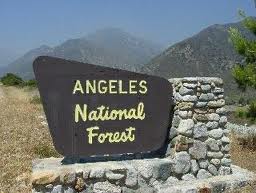
San Gabriel Mountains inch closer to national park service protection

Could this sign soon include “national recreation area”? (Courtesy Forest Camping)

UPDATE: President Obama created the newest national monument on Oct. 10, 2014, by setting aside 346,000 acres in the San Gabriel Mountains.

Los Angeles’s natural resources have been on fire lately, with a burn that isn’t whipped up from a blistering fall Santa Ana. In June, the Urban Waters Federal Partnership chose the L.A. River as one of seven polluted city waterways to clean up, then the U.S. Army Corps of Engineers allowed a pilot kayak and canoe program on the river in August. And now the National Park Service is determining whether our own San Gabes might be suitable for a national recreation area.

According to its website, “The National Park Service (NPS) prepared the Draft San Gabriel Mountains and Watershed Special Resource Study to determine whether all or part of the study area is significant, suitable, and feasible for designation as a unit of the national park system. Congress authorized this study in 2003.

“The study area covers approximately 700,000 acres of land in the greater Los Angeles metropolitan region, including urban communities, local and regional parks and open space, and 415,000 acres of the Angeles National Forest.”

While stopping short of recommending national park protection, the NPS suggests four alternatives:

— expand the current Angeles National Forest to include the area

— turn the vast watershed into a national recreation area

— partner with other agencies to create something else

— or don’t budge.

In our era of downsized America, don’t think the last option might not appeal. After all, California is in the midst of closing 70 state parks to save money, and the national park system remains woefully underfunded. The department’s annual budget is $2.9 billion and includes some 28,000 full-time employees and over 2 million volunteers. President George Bush campaigned on a promise to wipe out an estimated $5 billion backlog in park maintenance projects, which had swelled to $9 billion by 2009, according to CNN, and was reduced by $1 billion through American Recovery and Reinvestment Act of 2009 funds.

Michael Kellett, director of the New National Parks Project, told the liberal website Remapping Debate that he would like to see more federal land be made into national parks and be brought under the umbrella of NPS protection, a change he thinks might actually save the tax payers money.

Lovin’ the East Fork of the San Gabriel River at sunset (Jim Burns)

“What is missing from the conversation of the costs of new parks,” he said, “is that we are already paying to manage these lands and that it would probably be cheaper to make them national parks,” because many places adjacent to parks or that could be potential parks are already federally owned. Many are national forests, which are owned by the public but are logged, mined, or otherwise used by private business for small fees. The government maintains the roads and infrastructure of these areas and charges businesses for a permit to used the lands.

In her story, KPCC reporter Kitty Felde tells us that at least two major dems are on board:

Democratic Sen. Barbara Boxer said she was “pleased the National Park Service is taking the next step toward preserving the unique natural resources of the San Gabriel Mountains and Puente Hills,” while Democratic Rep. Judy Chu said she was, “glad to see that the study has incorporated many of the comments voiced by the public, local stakeholders, and members of Congress.”

So … why don’t you get your opinion on the record? The public comment period kicks off at the El Monte Senior Center (odd place for a kick off …) Saturday, Oct. 29, and runs through mid-December.

See you on the river, Jim Burns