
Way back in the day, some 1,200 years ago, an eccentric hermit and poet used to wander the mountains of eastern China’s Tiantai Mountains, and scratch his “songs” on the leaves of bushes, in the bark of trees and on the sides of caves. Think graffiti, but with a heart. Han Shan’s name (Cold Mountain in English) first appeared on our shores when Beat Generation author Jack Kerouac dedicated his delicious, infuriating and hugely successful 1958 novel, “The Dharma Bums” to him.
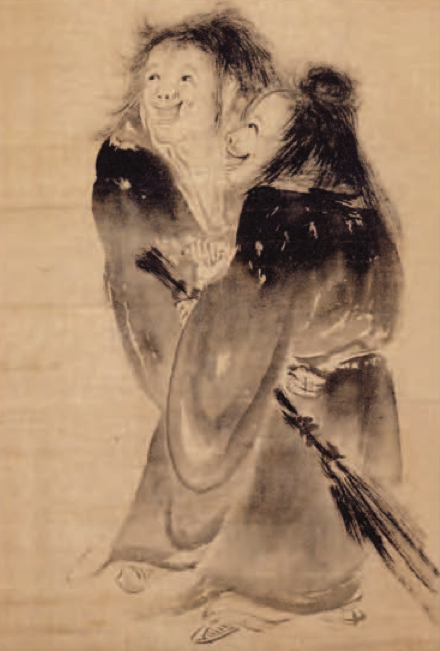
The book revolves around the semi-fictional relationship between Kerouac and Pulitzer-prize winning poet Gary Snyder as they mountaineer, drink, preach Zen, hike, carouse, drink, wallow and generally have a great time learning from each other. Snyder, one of the most influential Beat poets, translated and published Han Shan for the first time in English, while studying at UC Berkeley that same year.
With this as backstory, I must also add none of this was on my radar until reading about the connections between Han Shan, what we now call graffiti and the wilderness from a story by Bob Romano in the excellent UK mag, Fly Culture. Han Shan’s poems made Romero think minimalist in gear and fly box as he pursued Maine’s troutiful bounty.
Consider:
Thatch on rafters, I live in the wilds.
Carts and horses that pass here are few.
The grove is quiet, a place birds flock:
The creek is deep, so fish wait there.
There are wild fruits the boy and I can pick,
hard rocky fields the wife and I will hoe.
And in the house, what else?
Just a single shelf of books.
Can you imagine coming upon this poem on the West Fork? To read something on tree bark, or the side of a cliff that inspires you? Today’s graffiti in our wild places is ugly and sad. It leads to a sense of lawlessness, neglect, the opposite of the way I want to feel in the wild. No inspiration, no imagination, just a big, old nasty, “I was here” image that pollutes the mind, poisons the environment and makes you wonder what the hell is wrong with humanity.

For this story, I contacted multiple agencies to discover their federal and local graffiti policies, and how it is removed from our Monument: the Forest Service, at the local and national level, Public Works, the Conservation Corps, Representative Judy Chu, it was a long list, with nary a substantive response. All I can say is I’m disappointed in the complete lack of transparency from these elected officials and agencies. Meanwhile, when I pass by The Ledge next time I’m going fishing, I’ll think of Han Shan’s beautiful words, not the graffiti no one in authority bothers to take down.
For the two images below, both from the East Fork, the one on the left is the angler fishing box, an integral part of the communication covenant between anglers and the Forest Service. Ranger Ken Low of the National Parks Service said by email, “For the signs, I would try the World’s Best Graffiti Removal Products’s Safewipes. They come in a package with a cloth. Wear a nitrile glove to be safe. For the wayside panel with nothing on it, I would get some matching paint (brown) and repaint over all the graffiti.”
Unfortunately, the National Park Service has no affiliation with our beloved national monument. My question: If the NPS has a simple solution to this awful problem, why doesn’t the agency in charge of the monument, the Forest Service?


See you on the river, Jim Burns
________________________________________________________________________________________________
Steve
One of the unintended consequences of environmental regulation is that graffiti removal – or even graffiti coverup with a neutral coating – in the riparian area requires an environmental review and permit, due to concerns of paint or paint removal/covering contaminants eventually making their way into the river. Years ago, a gas-powered pressure washer was donated to the Forest Service. It sits unused for this reason.
So an ‘approved’ (employees contractors or formal volunteers) removal project just takes too long to process before the next graffiti comes along and it starts all over again.
The Forest Service can probably never go on record saying this, but I suspect they would not shed tears if some sneaky do-gooders just came in and removed or covered the graffiti on their own, as long as they didn’t get caught. It’s a forgiveness-vs-permission thing.
 lariverflyfishing